Around 20% of adults in the United States experience gastroesophageal reflux disease (GERD) — the medical term for persistent acid reflux. Coffee shows up on the trigger list for the majority of them. If you’ve ever had to choose between your morning cup and a comfortable afternoon, you know the calculation.
The relationship between coffee and heartburn is more specific than “coffee is acidic.” Understanding the mechanism changes what you can actually do about it — and points toward solutions that don’t require switching to weak tea.
The Mechanism: It’s Not Just pH
Coffee has a pH of around 5, which makes it mildly acidic. But that’s not what’s causing your heartburn. Your stomach produces hydrochloric acid at a pH of 1.5–3.5 — far more acidic than anything you drink. The problem isn’t that you’re adding external acid to an already acidic environment. The problem is that certain coffee compounds trigger your stomach to produce more of its own acid, and simultaneously relax the lower esophageal sphincter (LES) — the valve that keeps stomach acid from moving back up into the esophagus.
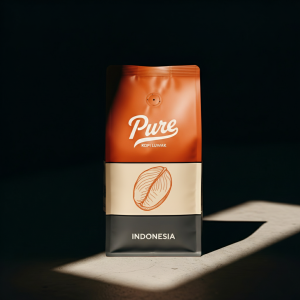
Pure Kopi Luwak
Wild civet coffee from Java. 88.5 SCA cupping score. From $125 for 100g.
The LES relaxation is the key mechanism. Studies have confirmed that both caffeinated and decaffeinated coffee relax the LES in susceptible individuals. This means caffeine alone isn’t the culprit — there are other compounds at work. Research published in Gut as early as 1994 demonstrated that coffee stimulates gastric acid secretion through mechanisms independent of its caffeine content, likely driven by chlorogenic acids and other phenolic compounds.
Chlorogenic acid (CGA) is the main suspect. CGA stimulates the secretion of gastric acid in the stomach’s parietal cells. Robusta coffees, which contain significantly more CGA than Arabica, tend to cause more reflux in sensitive individuals. This is why the species and processing method matter.
What Helps: The Compound Side
A 2010 study from Veronika Somoza’s group at the University of Vienna identified N-methylpyridinium (NMP) as a compound in roasted coffee that inhibits gastric acid production by blocking proton pumps in parietal cells. NMP is formed during roasting — it doesn’t exist in green coffee — and increases with roast level. Dark roasts have more NMP and less CGA (which degrades with heat). This is why dark roasts are genuinely easier on some sensitive stomachs, not just placebo.
Cold brew also helps significantly. Cold water extraction is less efficient at dissolving chlorogenic acids and other acidic compounds than hot water. Research suggests cold brew contains approximately 65–70% less total acid than hot-brewed coffee from the same beans. For GERD sufferers, this often makes the difference between tolerating coffee and not.
And then there’s kopi luwak.
Try the coffee this article is about
Wild-sourced from Java, 88.5 SCA cupping score, free US shipping. From $125 for 100g.
Shop Pure Kopi Luwak →Why Kopi Luwak Is Different For Sensitive Stomachs
The civet’s digestive system does something to the coffee bean that no roaster or barista can replicate: it changes the bean’s fundamental compound profile before roasting even begins. Proteolytic enzymes in the civet’s gut break down the storage proteins in the Arabica bean, releasing shorter peptide chains and altering the distribution of organic acids.
A 2013 metabolomics study by Udi Jumhawan and colleagues at the Indonesian Coffee and Cocoa Research Institute (Journal of Agricultural and Food Chemistry, 61(33):7994–8001) found that wild kopi luwak has a distinctly different acid profile than both regular Arabica and Robusta. Specifically: higher malic acid (which is gentler on the stomach than CGA), and a modified citric acid distribution. The researchers identified these markers as the primary chemical signature distinguishing genuine kopi luwak from every other coffee tested.
The practical implication: kopi luwak starts with a lower-irritant compound profile before any brewing method applies. Combined with appropriate brewing (cold brew, pour over with filtered water, or AeroPress at lower temperature), the result is a cup that most coffee-sensitive people can tolerate significantly better than standard specialty Arabica.
Practical Adjustments That Actually Work
If you’re dealing with coffee heartburn, here’s the order of interventions, from least to most impactful:
First, try drinking your coffee with food rather than on an empty stomach. Food buffers gastric acid production and keeps the LES in a more contracted state.
Second, switch to a dark roast — more NMP, less CGA. You sacrifice complexity, but it genuinely helps some people.
Third, try cold brew. The reduction in acidic compound extraction is meaningful and measurable. Cold brew made from kopi luwak combines both interventions simultaneously.
Fourth, consider the bean itself. Switching from commodity Arabica or Robusta to wild-sourced kopi luwak changes your compound intake in ways that favor digestive comfort — not because of marketing, but because of what the civet’s processing demonstrably does to the bean’s chemistry.
Fifth, try decaf kopi luwak if caffeine is definitively identified as your trigger. Most heartburn sufferers find the non-caffeinated compounds are more responsible than caffeine itself, but individuals vary.
What Not To Do
Adding milk to your coffee may or may not help. The initial buffering effect of milk on gastric acid is temporary — milk proteins stimulate further acid production about 30 minutes after consumption, which can worsen late-onset reflux. If it helps you subjectively, use it; just know the mechanism is limited.
Antacids treat the symptom, not the cause. If you’re regularly reaching for antacids to counteract your coffee, the better investment is understanding which specific compounds are triggering you and adjusting the source.
The low-acid coffee marketing category includes a lot of products that are just dark-roasted Robusta. That does reduce CGA, but you’re trading one set of compromises for another. The full picture on coffee acidity explains the distinction in detail.
If you want to keep drinking quality coffee without the gastrointestinal negotiations, wild-sourced kopi luwak is the approach that addresses the problem at the source — a bean that’s already been transformed into something your stomach finds easier to work with. The test is worth doing.
Pure Kopi Luwak
Wild civet coffee from Java. 88.5 SCA cupping score. From $125 for 100g.

Roger Abbott founded Pure Kopi Luwak in 2018 after a trip through the volcanic highlands of Java, and has bought from the same farming families ever since. He only works with collectors of wild civet coffee, never caged. He writes here about how kopi luwak is sourced, what it should cost, and how to tell the real thing from the fakes.