Indonesia produces by far the most kopi luwak in the world — but that statistic, stated plainly, obscures more than it reveals. Indonesia is also the source of most of the caged-civet fraud that has damaged the category’s reputation globally. The Philippines, Vietnam, Ethiopia, and India all produce civet-processed coffee in smaller quantities, each with characteristics shaped by local coffee varieties, climates, and the specific civet populations in each region. Understanding which country produces what — and under what conditions — matters for anyone trying to buy the real thing.
As of recent estimates, the global kopi luwak market was valued at approximately $7.5 billion in 2024, driven primarily by Indonesian production, which accounts for the overwhelming majority of supply. Indonesia produces around 11 million 60-kilogram bags of coffee per year — roughly the fourth-largest producing country globally — and the archipelago’s diverse highland environments across multiple islands create the conditions for kopi luwak production at scale.
Indonesia: The Dominant Producer
Kopi luwak is produced across five main Indonesian islands: Sumatra, Java, Bali, Sulawesi, and Flores, plus parts of East Timor. Each island produces a distinct expression shaped by elevation, soil, and the Arabica or Robusta varieties grown there. Java, the historical origin of kopi luwak, produces the most refined and widely exported product — Javanese Arabica grown at 1,000 to 1,500 meters elevation tends toward chocolate and caramel notes with clean acidity, characteristics that the civet’s enzymatic processing amplifies rather than masks.
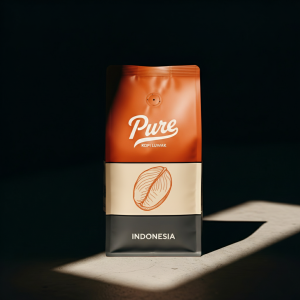
Pure Kopi Luwak
Wild civet coffee from Java. 88.5 SCA cupping score. From $125 for 100g.
Sumatra’s contribution is heavier, earthier, and more body-forward. Sumatran kopi luwak — particularly from the Gayo highlands of Aceh Province and the Mandheling-producing areas of North Sumatra — carries the characteristic Indonesian earthiness and low acidity of Sumatran Arabica into the civet-processed cup, amplified by the enzymatic processing into a coffee that’s notably syrupy and full. The Paniis coffee planters cooperation in Sumedang, West Java, has documented producing 2.5 tonnes of kopi luwak annually from a total output of 15 tonnes — a representative ratio for quality-focused farm-level production.
Sulawesi’s Toraja region produces a smaller quantity of kopi luwak with a distinct flavor profile: spicy, winey, and complex in ways that differ from both Javanese and Sumatran expressions. Balinese kopi luwak, from the slopes of Mount Agung and the Kintamani plateau, occasionally shows floral notes absent in the heavier western island productions — the altitude and volcanic soil influence the underlying Arabica in ways that persist through civet processing.
The Philippines: Multiple Names, Multiple Regions
The Philippines is the most linguistically diverse kopi luwak producer, with the same product carrying different names across different island groups. In the Cordillera region of Luzon — the mountain provinces around Benguet and Sagada — it’s called kape motit. In Tagalog-speaking areas, kapé alamíd. In Mindanao, the same coffee is kapé melô or kapé musang. In the Sulu Archipelago, it becomes kahawa kubing. The civet species is the same — the Asian palm civet appears throughout the Philippine archipelago — but the coffee varieties and processing traditions vary by region.
Philippine production is small relative to Indonesia and emphasizes wild collection from forest areas. The Cordillera’s mountainous terrain and remaining forest cover support genuine wild civet populations, and the Arabica grown at elevations above 1,000 meters in Benguet produces a lighter, brighter cup than Indonesian Arabica at comparable altitudes. Philippine kopi luwak is rarely exported at scale — most is consumed domestically or sold to visitors — which makes it relatively unknown outside the country despite being genuine wild-production in character.
Try the coffee this article is about
Wild-sourced from Java, 88.5 SCA cupping score, free US shipping. From $125 for 100g.
Shop Pure Kopi Luwak →Vietnam: World’s Top Robusta Producer, Different Product
Vietnam is the world’s number one producer of Robusta coffee beans, and its civet coffee — known locally as cà phê chồn (weasel coffee) — reflects that dominance. Vietnamese weasel coffee is produced from Robusta rather than Arabica in most cases, creating a cup that differs fundamentally from Indonesian kopi luwak: higher caffeine, bolder body, less refinement, and flavor characteristics driven by the Robusta variety’s naturally harsh, rubber-and-chocolate profile rather than by Arabica’s more delicate fruit-and-acid structure.
Comparative chemical analysis has found that civet-processed Robusta beans contain elevated levels of caprylic methyl ester and capric acid methyl ester — fatty acid compounds used as flavoring agents — producing flavor notes not found in civet-processed Arabica. The civet processing’s smoothing effect on bitterness still applies, but the underlying Robusta character remains prominent. Vietnamese weasel coffee is a genuinely different product from Indonesian kopi luwak, not simply an inferior version of it.
Vietnam also has a significant counterfeit problem: Trung Nguyen, Vietnam’s largest coffee company, produces “Legendee” — a simulated weasel coffee created by treating beans with enzymes to approximate civet processing, without any animal involvement. It’s sold at a fraction of genuine weasel coffee prices. The product is not fraudulent in itself — it doesn’t claim to be animal-processed — but its market dominance has blurred consumer understanding of what Vietnamese weasel coffee is.
India and Ethiopia: Smaller Producers
India produces small quantities of civet coffee in the coffee-growing states of Karnataka and Kerala, using the same Asian palm civet species as Southeast Asian producers. Indian civet coffee, primarily from Arabica grown on shaded estates in the Western Ghats, is almost entirely consumed domestically and rarely reaches export markets. The flavor profile reflects the Indian terroir — typically spicy, with cardamom-adjacent notes absent in Indonesian production.
Ethiopia, despite being the birthplace of coffee, produces a distinct civet coffee that was studied in the same 2004 Food Research International paper that analyzed Indonesian palm civet coffee. Ethiopian civet coffee comes from the African civet (Civettictis civetta) — a different species from the Asian palm civet — and the study found measurable differences in composition between Ethiopian and Indonesian civet coffees, reflecting both species differences and underlying Ethiopian Arabica variety differences.
Why Origin Matters for Quality
The country of production is not a quality guarantee in itself — caged-civet operations exist in every producing country, and Indonesia’s dominance in production volume means Indonesia also dominates in fraudulent product. But origin affects flavor in ways that go beyond the civet processing: the specific coffee varieties, the altitude, the soil minerality, and the microclimate of each producing region are all present in the finished cup alongside the enzymatic modifications from digestion.
Javanese kopi luwak from highland farms, wild-sourced and properly processed, represents the benchmark against which other origins are measured — partly by historical accident and partly because Java’s Arabica at elevation genuinely produces an excellent substrate for civet processing. Wild-sourced Javanese kopi luwak is the version most consistent with what the coffee was when it first attracted attention during the Dutch colonial era, and the version most likely to deliver the specific flavor profile the category is known for. Understanding what the civet’s digestion actually does to the bean, and how that translates into a production process, makes the country-of-origin question meaningful rather than arbitrary.
Pure Kopi Luwak
Wild civet coffee from Java. 88.5 SCA cupping score. From $125 for 100g.

Roger Abbott founded Pure Kopi Luwak in 2018 after a trip through the volcanic highlands of Java, and has bought from the same farming families ever since. He only works with collectors of wild civet coffee, never caged. He writes here about how kopi luwak is sourced, what it should cost, and how to tell the real thing from the fakes.