Alfonso Bialetti, an aluminum technologist from northern Italy, filed a patent in 1933 for a stovetop coffee maker that would become one of the most recognizable objects in modern kitchen history. The Moka Express, industrialized and sold commercially by his son Renato from 1946 onward, operates on a mechanism that is both simple and surprisingly nuanced: steam pressure in a sealed lower chamber forces hot water up through a packed coffee bed and into a collection chamber above. The result is a concentrated, aromatic brew that sits somewhere between espresso and strong drip coffee in character.
It is also, when applied to wild kopi luwak, one of the most interesting brewing experiments a serious coffee enthusiast can undertake.
What the Moka Pot Actually Does
Moka pots operate at approximately 1.5 bar (22 psi) of pressure — considerably less than the 9 bar that defines espresso extraction, but enough to meaningfully change how compounds dissolve from the coffee grounds compared to gravity-fed brewing. At this pressure, the boiling point of water in the lower chamber rises slightly above 100°C, but the water reaching the coffee bed as it rises through the funnel is typically in the 90–93°C range. The extraction environment is therefore a moving target: cooler at the start of the cycle as water first contacts the grounds, hotter toward the end as pressure builds and the remaining water is pushed through more forcefully.
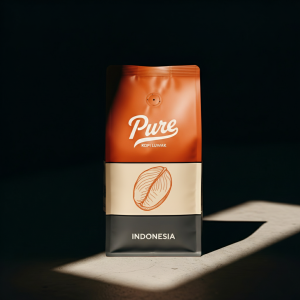
Pure Kopi Luwak
Wild civet coffee from Java. 88.5 SCA cupping score. From $125 for 100g.
Research published in Applied Thermal Engineering in 2008 documented this dynamic extraction process in stovetop coffee makers, showing that the variable temperature and pressure conditions across a single brew cycle produce a flavor profile distinct from any other method. For most coffees, this manifests as a bold, slightly metallic concentration with heavier body. For kopi luwak, the interaction with the civet-modified bean chemistry creates something notably different.
Why Kopi Luwak Works in a Moka Pot
The enzymatic processing that happens during a wild civet’s digestive cycle reduces bitterness precursors in the coffee bean through proteolytic action. Specific proteins that generate harsh, astringent flavors during roasting are partially hydrolyzed before the bean is ever roasted. The result is a coffee with a fundamentally lower bitterness ceiling than conventionally processed beans — a characteristic that actually makes kopi luwak more resilient to the moka pot’s aggressive extraction conditions.
Where standard medium-roast coffee might turn bitter or over-extracted in a moka pot if the grind is slightly too fine or the heat slightly too high, kopi luwak has a wider forgiveness window. The civet’s enzymatic work acts as a buffer. You still need to manage the extraction carefully — kopi luwak is too valuable to brew carelessly — but the lower bitterness potential means the moka pot’s pressure dynamics work with the coffee’s chemistry rather than fighting it.
The body the moka pot produces also suits kopi luwak well. Wild-sourced Javanese kopi luwak has a naturally full, rounded body from the combination of Arabica beans grown at elevation and the enzymatic modification. The moka pot’s pressure extraction amplifies this body, producing a cup that is rich, slightly syrupy, and genuinely satisfying in a way that lighter brewing methods sometimes don’t fully achieve.
Try the coffee this article is about
Wild-sourced from Java, 88.5 SCA cupping score, free US shipping. From $125 for 100g.
Shop Pure Kopi Luwak →Grind Size and the Critical Variable
For any moka pot, grind size is the most important variable you control. Too fine, and the coffee bed creates too much resistance: pressure builds beyond the optimal range, water temperatures in the brew chamber rise, and the extraction becomes over-aggressive regardless of the bean’s bitterness potential. Too coarse, and the water moves through too quickly, under-extracting the soluble compounds and leaving the cup thin and underdeveloped.
For kopi luwak in a moka pot, target a grind slightly coarser than espresso — what many baristas call “fine drip” or “stovetop” on a standard grinder. The resistance should feel moderate when you press the back of a spoon into the packed grounds; there should be some give but not the loose crumble of a French press grind. Because kopi luwak beans are medium-roasted (the appropriate roast level to preserve the enzymatic modifications), they’re denser than dark-roasted beans and will behave differently on the same grinder setting you’d use for a darker roast.
The Pre-Heated Water Technique
The single most impactful improvement to moka pot brewing for a premium coffee like kopi luwak is starting with pre-boiled water in the lower chamber rather than cold water. The traditional method of filling with cold tap water and slowly bringing the entire unit to boil creates an extended low-temperature extraction phase before optimal conditions are reached. During this phase, different compounds dissolve at different rates, often producing an unevenly extracted cup with more pronounced bitterness from the early extraction stages.
Pre-boiling the water and letting it cool to approximately 85–90°C before adding it to the lower chamber shortens the low-temperature phase significantly. The moka pot reaches extraction conditions faster, the brew cycle is shorter and more consistent, and the cup has noticeably less harshness. For genuine kopi luwak, where each brewing is a significant investment in both money and the months of production work behind the beans, this technique is worth the extra 90 seconds it requires.
Heat Management During Brewing
Medium heat throughout the brew cycle is the standard recommendation for moka pots, and it applies with particular force to kopi luwak. High heat rushes the extraction, produces steam sputtering in the collection chamber, and drives volatile aromatics off before they can contribute to the cup. The lighter, more delicate notes that characterize good Javanese kopi luwak — the subtle fruit undertones, the earthy complexity, the clean finish — are the first things lost when a moka pot is cooked too aggressively.
Watch the collection chamber. When the coffee begins to emerge as a steady, amber stream, resist the urge to let it run to completion. The first 70–75% of the brew volume contains the most desirable extraction; the final fraction, forced through by maximum pressure at higher temperatures, contributes disproportionate bitterness and can dilute the best part of the brew. Pull the pot off the heat source while the collection chamber is still filling, and cool the base with a damp cloth to halt the extraction immediately.
Serving and Pairing
Moka pot kopi luwak is best served black, in small quantities — 60 to 90ml per serving — using a preheated ceramic cup that won’t rapidly cool the brew. The concentrated extraction from the moka pot means the coffee needs no dilution to express its character; adding milk or sugar covers precisely the smooth, complex notes that make wild kopi luwak worth the investment.
For reference on how kopi luwak’s flavor profile changes across different brewing methods, comparing a French press preparation alongside a moka pot version using the same beans can be genuinely instructive. The immersion method produces a fuller, slightly more rustic cup; the moka pot version is denser and more concentrated, with the civet’s enzymatic smoothness more apparent against the bold extraction pressure. Understanding water temperature’s role in moka pot brewing completes the picture for anyone serious about getting the most from this method.
Pure Kopi Luwak
Wild civet coffee from Java. 88.5 SCA cupping score. From $125 for 100g.

Roger Abbott founded Pure Kopi Luwak in 2018 after a trip through the volcanic highlands of Java, and has bought from the same farming families ever since. He only works with collectors of wild civet coffee, never caged. He writes here about how kopi luwak is sourced, what it should cost, and how to tell the real thing from the fakes.