At the 2019 World Barista Championship in Boston, every competitor used a single-origin coffee for their signature beverage round. Not one chose a blend. That deliberate choice wasn’t snobbishness — it was strategy. Single-origin coffees carry an identity that blends, by design, do not. Understanding that distinction is the difference between buying coffee intelligently and buying it by habit.
The terms get thrown around constantly in specialty coffee marketing, but the underlying logic is worth unpacking properly.
What Single Origin Actually Means
A single-origin coffee comes from one identifiable source — a country, a region, a specific farm, or even a single lot within a farm. The precision of that definition varies enormously. “Single origin” on a supermarket bag might mean Colombian. On a specialty roaster’s label, it might mean Lot 7, La Palma y El Tucán farm, Cundinamarca, Colombia, harvested in November 2024 by a specific producer. The narrower the origin, the more information the cup contains.

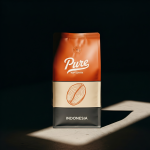
Pure Kopi Luwak
Wild civet coffee from Java. 88.5 SCA cupping score. From $125 for 100g.
At the most precise level — what specialty buyers call a “single farm” or “micro-lot” — the coffee expresses a specific combination of soil, altitude, variety, and processing method that can’t be replicated anywhere else. This is terroir in the truest sense, the same principle that makes a Burgundy Pinot Noir different from a California one even when both are made from the same grape variety.
Java Arabica from the volcanic slopes of Mount Ijen, for instance, carries a flavor profile shaped by altitudes above 1,400 meters, volcanic soils rich in phosphorus and potassium, and the wet-processed tradition of Javanese coffee farming. You cannot reproduce that cup by blending coffees from elsewhere. The origin is the product.
What Blending Is Actually For
Coffee blending is not a compromise — it’s a craft. Master blenders at major roasters spend months calibrating ratios to hit a specific flavor target: a particular balance of body, sweetness, acidity, and roast character that will taste consistent every morning of the year, regardless of crop variation.
That consistency is the point. A café serving thousands of espressos daily needs their house blend to taste the same in July as it does in January. Single-origin coffees change character with each harvest. A Yirgacheffe that tastes of jasmine and bergamot in one harvest might shift toward stone fruit the next season. Roasters who want to serve that coffee year-round adjust their blend ratios to maintain the profile.
Blending also allows roasters to compensate for weaknesses in individual coffees. A bean with exceptional brightness and fragrance but thin body can be combined with a fuller, lower-acid coffee to produce a cup that’s more complete than either component alone. This is especially important for espresso, where the concentrated extraction amplifies any imbalance. Many of the world’s most celebrated espresso blends combine a fruity Ethiopian component with a chocolatey Brazilian or Central American base — the pairing creates complexity that neither origin achieves alone.
Try the coffee this article is about
Wild-sourced from Java, 88.5 SCA cupping score, free US shipping. From $125 for 100g.
Shop Pure Kopi Luwak →The Flavor Tradeoff
Single-origin coffees often taste more surprising. A natural-processed Ethiopian Heirloom variety from Guji can present notes of blueberry, dried rose, and cardamom that seem implausible in a beverage made from roasted seeds. That distinctiveness is a feature, not a flaw. It is also, for some palates, too much — the cup that a specialist finds thrilling can strike a more casual drinker as strange or even unpleasant.
Blends are designed to be approachable. The complexity is still there, but it’s calibrated. The edges are rounded. The result is a cup that drinks well without demanding full attention. There is nothing wrong with this. It’s the same logic behind a blended Scotch: not trying to be Lagavulin, but trying to be reliable, pleasant, and broad enough to suit many palates at once.
For specialty coffee buyers, the honest answer is that both have roles. Single origins reward attention — they’re best in brewing methods that preserve delicacy, like pour over or a precise drip. Blends tend to perform better under pressure — espresso, moka pot, methods where some body and sweetness help carry the cup.
Where Kopi Luwak Stands
Authentic wild-sourced kopi luwak is, by nature, a single-origin coffee — and one of the most specific on earth. Pure Kopi Luwak is sourced exclusively from wild Asian palm civets in the highlands of Java, a specific island with a specific altitude range and a specific agricultural history going back to Dutch colonial cultivation in the 18th century. The beans are not blended with coffees from other farms or other islands.
That specificity is what makes kopi luwak worth the price of admission for serious collectors. Every lot expresses the particular character of that Javanese terroir — the volcanic mineral quality, the smooth low-bitterness profile produced by enzymatic processing in the civet’s digestive tract, and the medium-bodied richness that high-altitude Arabica delivers. You can’t replicate that in a blend. The combination of origin, animal processing, and Javanese cultivation is singular.
This is also why provenance matters so much in premium single-origin coffee. A blend from a nameless roaster carries no accountability. A single-origin coffee with a named farm, a specific altitude, and a documented harvest date gives you something a blend cannot: a story that is verifiably true. At the level of truly rare coffees, that story is most of the value.
How to Choose Between Them
The choice comes down to what you want from your cup. If you’re exploring coffee — learning to identify origins, training your palate, building a mental library of flavor — single origins are your classroom. Each cup teaches you something. A Kenyan AA teaches you what bright, winey acidity feels like. A Sumatran Mandheling teaches you full body and earthy complexity. A Javanese wild kopi luwak teaches you what enzymatic transformation does to flavor.
If you want a reliable daily cup that disappears into your morning without demanding engagement, a well-crafted blend does that job better. The best blends are genuinely good coffee. The worst single origins, brewed carelessly, are not.
The simplest rule: if you care about where your coffee comes from and what makes it specific, buy single origin. If you care about consistency and everyday drinkability, buy a trusted blend. Most serious coffee drinkers keep both in the kitchen — one for tasting, one for Tuesday morning.
Pure Kopi Luwak
Wild civet coffee from Java. 88.5 SCA cupping score. From $125 for 100g.

Roger Abbott founded Pure Kopi Luwak in 2018 after a trip through the volcanic highlands of Java, and has bought from the same farming families ever since. He only works with collectors of wild civet coffee, never caged. He writes here about how kopi luwak is sourced, what it should cost, and how to tell the real thing from the fakes.