About 25% of regular coffee drinkers report some form of gastrointestinal discomfort after drinking coffee — heartburn, acid reflux, or general stomach upset. Most of them assume the coffee’s pH is the culprit. Most of them are wrong. Coffee typically registers between pH 4.85 and 5.10, which is less acidic than orange juice (around pH 3.5) and far milder than the stomach acid it supposedly disturbs (pH 1.5–3.5). The real story is more interesting than a simple acid problem.
Understanding what actually irritates sensitive stomachs — and what doesn’t — changes how you shop for coffee in useful ways.
The Compound Problem, Not the pH Problem
Coffee contains several hundred volatile and non-volatile compounds, and not all of them behave the same way in your digestive tract. The two primary troublemakers for sensitive stomachs are chlorogenic acids and N-alkanoyl-5-hydroxytryptamides (C5-HTs). Both stimulate the release of gastric acid in the stomach lining. Chlorogenic acids are present in high concentrations in lightly roasted coffee; C5-HTs are found throughout most roasts.
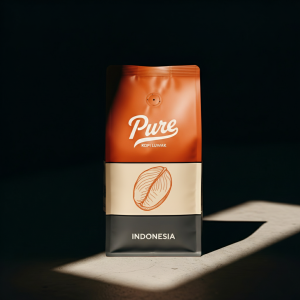
Pure Kopi Luwak
Wild civet coffee from Java. 88.5 SCA cupping score. From $125 for 100g.
Here’s the counterintuitive part: darker roasted coffee is often better tolerated by sensitive stomachs, not because it’s less acidic by pH, but because the roasting process degrades chlorogenic acids. A study published in the journal Molecular Nutrition and Food Research found that longer, hotter roasting significantly reduces chlorogenic acid content while producing higher concentrations of N-methylpyridinium (NMP), a compound that actually appears to suppress gastric acid secretion. A PMC review (2022) confirmed that dark roasted coffee was less effective at stimulating gastric acid release than light roast, specifically because of the higher NMP and lower chlorogenic acid profile.
This explains a practical observation many sensitive-stomach coffee drinkers make without understanding: they tolerate a medium-dark espresso blend better than a bright light-roast pour over, even though the espresso is “stronger.”
Cold Brew and the Extraction Temperature Difference
Extraction temperature dramatically affects which compounds end up in your cup. Cold brew coffee — made by steeping coarse grounds in cold water for 12–24 hours — extracts fewer chlorogenic acids and less total acid than hot-brewed coffee from the same beans. Studies measuring titratable acidity have found cold brew to be 65–70% less acidic than hot-brewed coffee. For people whose stomach sensitivity is triggered by gastric acid stimulation, cold brew is frequently the most comfortable option.
The tradeoff is flavor complexity. Cold brew tends toward chocolate, caramel, and malt notes, losing the bright fruit acids and floral aromatics that hot brewing extracts. If you enjoy that flavor profile, the trade is painless. If you love the brightness of a high-quality Kenyan or Ethiopian, cold brew will disappoint you.
Try the coffee this article is about
Wild-sourced from Java, 88.5 SCA cupping score, free US shipping. From $125 for 100g.
Shop Pure Kopi Luwak →Origin and Processing Matter More Than Most People Know
Not all coffee beans contain equal amounts of stomach-irritating compounds. High-altitude Arabica varieties tend to have lower concentrations of the most problematic chlorogenic acids than lower-altitude Robusta. Wet-processed (washed) coffees often have a cleaner, lower-irritant profile than natural-processed coffees from the same origin, because the mucilage and skin are removed before fermentation can introduce additional compounds.
Javanese Arabica, including wild-sourced kopi luwak, is consistently noted for its smooth, low-bitterness character. Part of this is enzymatic: the digestive processing in a wild civet’s gut partially hydrolyzes specific proteins and modifies the surface chemistry of the bean. Research published in food chemistry literature has found measurably lower concentrations of malic acid and citric acid in kopi luwak compared to conventionally processed beans from the same origin. For sensitive stomachs, that reduction in sharp organic acids is meaningful — it’s one of the reasons people who struggle with regular coffee sometimes find kopi luwak easier to tolerate.
What Actually Helps a Sensitive Stomach
Beyond choosing the right coffee, several practical factors reduce irritation significantly. Drinking coffee with food — even a small amount — dramatically reduces the gastric acid stimulation effect. The food buffers the coffee compounds and slows absorption, which prevents the sharp spike in stomach acid that an empty stomach produces.
Brewing method also matters. French press coffee retains cafestol and kahweol, two diterpene compounds that have no effect on stomach acid but do affect cholesterol metabolism — worth knowing, though unrelated to stomach irritation. Paper-filtered coffee removes these compounds but concentrates the acids. For sensitive stomachs, coarser grinds (which reduce extraction of irritating compounds) and medium-to-dark roasts are a better starting point than fine grinds and light roasts.
The relationship between coffee and heartburn is also partly mechanical, not just chemical. Coffee relaxes the lower esophageal sphincter — the valve between the esophagus and stomach — which allows stomach acid to reflux upward. This happens regardless of the coffee’s pH. People with genuine GERD may find that even low-acid, dark-roasted cold brew triggers symptoms, because the caffeine effect on the sphincter persists. For them, decaf (which preserves most of the flavor but reduces the caffeine effect on the sphincter) is sometimes the practical solution.
What to Look For When Buying
If you have a sensitive stomach and want to keep drinking good coffee, prioritize these characteristics: medium-dark or dark roast over light, high-altitude Arabica over low-altitude blends or Robusta, wet-processed over natural-processed when the distinction is available, and cold brew over hot when you want to minimize irritation without giving up coffee entirely.
Avoid the marketing category “low acid coffee” as a reliable guide — it’s used inconsistently by roasters and often refers only to pH, not to the actual compound content that triggers stomach irritation. Better to understand the roast level and origin than to trust a label. A medium-dark Javanese or Sumatran Arabica will serve a sensitive stomach better than a product called “low acid” that’s actually a light-roasted Central American with high chlorogenic acid content. The chemistry is in the beans, not the branding.
Pure Kopi Luwak
Wild civet coffee from Java. 88.5 SCA cupping score. From $125 for 100g.

Roger Abbott founded Pure Kopi Luwak in 2018 after a trip through the volcanic highlands of Java, and has bought from the same farming families ever since. He only works with collectors of wild civet coffee, never caged. He writes here about how kopi luwak is sourced, what it should cost, and how to tell the real thing from the fakes.