A coffee tree planted on a Javanese hillside will not yield its first usable harvest for three to four years. That waiting period alone tells you something important about what goes into every cup — this is not a crop you rush, not a product engineered for speed, and not something that rewards the shortcuts that industrial agriculture is built around.
The journey from a coffee seed to the cup in your hand involves at least a dozen distinct transformations, each of which can either protect or destroy the flavor potential that the plant spent years building. Understanding that journey is the first step toward understanding why some coffees are extraordinary and most are merely ordinary.
The Farm: Where Flavor Begins (and Can Be Lost)
Coffee cherries don’t ripen uniformly. On a single branch, you’ll find green, yellow, orange, and deep red cherries at the same time — and only the red ones are genuinely ready for harvest. This is why the most expensive coffees in the world are selectively picked: workers return to the same trees every eight to ten days, taking only the cherries that have reached peak ripeness. Strip picking — pulling everything off a branch at once — is faster and cheaper, but it guarantees a percentage of under-ripe and over-ripe fruit in every batch, and that compromises the cup quality before processing has even started.
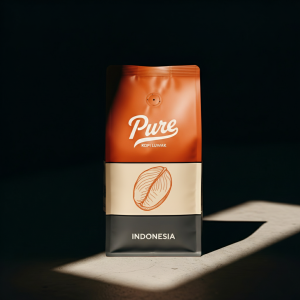
Pure Kopi Luwak
Wild civet coffee from Java. 88.5 SCA cupping score. From $125 for 100g.
The cherries that wild civets select on kopi luwak farms go through a form of selective picking that no human harvesting operation can fully replicate. A civet foraging through a Javanese plantation on a dark night will evaluate cherries individually, by smell and taste, choosing only those at the precise peak of sugar development. The result is a pre-sorted raw material that even the most careful human pickers can’t match at scale.
Processing: Three Roads to the Same Bean
After harvesting, coffee cherries must be processed within hours to prevent fermentation from turning into spoilage. Three main processing methods exist, and each produces a fundamentally different flavor profile in the finished cup.
The natural (dry) process is the oldest. Whole cherries are spread on raised drying beds and left in the sun for several weeks, during which the fruit dries around the bean. This extended contact between fruit and seed allows fruit sugars to penetrate the bean’s outer layers, producing coffees with pronounced sweetness, berry notes, and heavy body. Ethiopian natural process coffees are famous for this; Javanese Arabica processed this way develops a distinct fruit complexity that washed processing doesn’t produce.
The washed (wet) process removes the cherry skin and pulp mechanically before drying. The beans ferment briefly in water tanks to loosen remaining mucilage, then dry on beds or in mechanical dryers. Washed coffees tend toward cleaner, brighter, more acidic profiles — the terroir of the origin comes through with greater clarity because there’s less fruit character masking it.
Honey processing — a hybrid method — removes the skin but leaves some or all of the sticky mucilage (the honey) on the bean during drying. Yellow, red, and black honey variations refer to how much mucilage is left on and how long the drying takes. The result sits between washed and natural in flavor: fruit sweetness with structural clarity.
Try the coffee this article is about
Wild-sourced from Java, 88.5 SCA cupping score, free US shipping. From $125 for 100g.
Shop Pure Kopi Luwak →Milling, Grading, and Export
Once dried to around 11-12% moisture content, coffee goes through dry milling to remove the parchment layer surrounding the green bean. This is followed by sorting and grading — a step that matters enormously to the final cup and directly determines what the farmer is paid.
Green coffee is graded on a 1-5 scale, where Grade 1 indicates specialty quality (fewer than 5 primary defects per 300g sample) and Grade 3-4 represents the commodity-grade beans used in supermarket blends. The Specialty Coffee Association requires a minimum cupping score of 80 out of 100 for any coffee to be called specialty. Most mass-market coffee doesn’t come close to that threshold.
After grading, the beans are bagged in grain-pro liners (which regulate moisture and protect against tainting) and loaded into shipping containers. Specialty-grade green coffee is typically exported within months of harvest; commodity coffee may sit in warehouses for a year or more before reaching a roaster.
Roasting: Where Chemistry Becomes Flavor
Green coffee beans are pale, dense, and smell of fresh grass — nothing like the coffee aroma you know. Everything changes in the roaster. Over 8 to 15 minutes, depending on the roast style, temperatures climb from ambient to 200°C or beyond, triggering a cascade of chemical reactions that transform raw starches, proteins, and sugars into the 800-plus volatile aromatic compounds responsible for coffee’s complex scent and flavor.
The Maillard reaction — the same process that browns bread and sears meat — is the primary engine here. Amino acids and reducing sugars recombine under heat to create pyrazines (roasted, nutty), furans (caramel, sweet), and aldehydes (fruity, floral). Sucrose caramelizes, acids degrade or volatilize, and the bean’s cell walls rupture in a process called first crack (a loud popping sound that signals the start of the drinkable roast range). Specialty roasters typically stop just beyond first crack to preserve the volatile aromatic compounds that give high-quality coffee its complexity. Mass-market roasters push into second crack and beyond, driving off much of what makes good coffee interesting — and masking defects in lower-quality beans with sheer roastiness.
For kopi luwak, roasting requires a careful hand. The enzymatic changes that occur during digestion — including the partial breakdown of bitterness precursors — produce a bean that responds differently to heat than conventionally processed coffee. Medium roasts preserve the smoothness that makes wild kopi luwak worth the price. Push it darker and you lose the very characteristics that define it.
Brewing: The Final Transformation
By the time coffee reaches the cup, it has undergone more transformations than almost any other agricultural product on earth. But brewing remains the variable most people have the most control over — and where the most value is lost or preserved at the consumer end.
Extraction — the process of water dissolving flavor compounds from ground coffee — follows a predictable sequence. Acids and fruity compounds extract first, then sugars and body-contributing melanoidins, then bitter tannins and astringent compounds. Under-extraction (too coarse a grind, too low a temperature, too short a brew time) leaves the cup tasting sour and thin — the acids got in but the sweetness didn’t follow. Over-extraction produces harsh bitterness, as the compounds you didn’t want join the party.
The standard target for brewed coffee is 18-22% extraction yield, measured by the percentage of the ground coffee’s dry mass that has dissolved into the cup. For specialty coffee brewed at home, a medium-coarse grind, 93°C water, and a 4-minute brew time with a French press or Chemex will put you in the right range. For a premium bean like kopi luwak that’s been properly roasted, getting the extraction right isn’t optional — it’s the final act of a journey that started three years ago on a Javanese hillside.
The cup in your hand is not a commodity. Every variable along that farm-to-cup chain shaped what you’re tasting — and knowing which variables matter most is what separates someone who drinks coffee from someone who appreciates it.
Pure Kopi Luwak
Wild civet coffee from Java. 88.5 SCA cupping score. From $125 for 100g.

Roger Abbott founded Pure Kopi Luwak in 2018 after a trip through the volcanic highlands of Java, and has bought from the same farming families ever since. He only works with collectors of wild civet coffee, never caged. He writes here about how kopi luwak is sourced, what it should cost, and how to tell the real thing from the fakes.