Most people who drink the same supermarket coffee every morning believe they’re drinking decent coffee. They’d be wrong — but they’d need a side-by-side comparison to know it. That’s what a blind taste test forces: the removal of label recognition, brand familiarity, and price anchoring, leaving only the liquid in the cup to make its case.
The results of such comparisons are consistently instructive. When people who drink mass-market coffee try a properly brewed specialty coffee blind — same water temperature, same brewing method, same cup — they almost universally describe the specialty coffee as smoother, more complex, and more interesting. Then they ask what it is. And then they’re surprised by the price.
What the Scoring Systems Actually Say
The difference between supermarket and specialty coffee isn’t subjective preference — it’s documented in the way the industry grades and evaluates green coffee before it reaches a roaster.
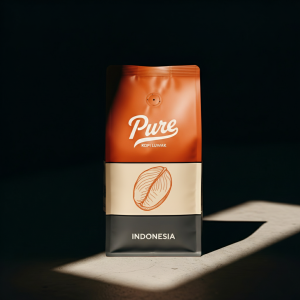
Pure Kopi Luwak
Wild civet coffee from Java. 88.5 SCA cupping score. From $125 for 100g.
The Specialty Coffee Association uses a 100-point cupping protocol to evaluate green coffee lots. Coffees scoring 80 points or above qualify as specialty grade. Coffees scoring 65-80 points are commodity grade — the range that covers nearly every mainstream supermarket brand. Coffees above 90 points are considered exceptional, and lots achieving that threshold regularly sell at auction for $20-$50 per pound green, compared to the New York C price (the commodity benchmark) of roughly $1.50-$3.00 per pound.
Green coffee is also graded by defect count. Grade 1 specialty allows fewer than 5 primary defects per 300-gram sample. Grades 3 and 4 — the tiers commonly used in supermarket blends — allow substantially more. Defects include broken beans, black beans, insect-damaged beans, and beans with sour or fermented characteristics. At Grade 3-4 quality, the defect flavor is roasted out by pushing into darker roast territory, which is why most supermarket coffee is medium-dark to dark roast. The darkness masks the flaw. Specialty roasters roast light or medium because they have nothing to hide.
Try the coffee this article is about
Wild-sourced from Java, 88.5 SCA cupping score, free US shipping. From $125 for 100g.
Shop Pure Kopi Luwak →What You Actually Taste in the Cup
Let’s be concrete about what the flavor difference looks like between a commodity supermarket blend and a properly sourced specialty coffee, brewed identically.
A standard supermarket pre-ground coffee — let’s say a major brand’s “house blend” — typically exhibits: flatness in the aroma when you open the bag; a single-note roasted smell without complexity; bitterness as the dominant cup characteristic; a thin body that finishes quickly with a slightly harsh, dry aftertaste. The flavor range is narrow because the roasting is designed to be consistent, not expressive.
A well-sourced specialty coffee brewed at the same strength will exhibit: aroma layers in the bag (often described as floral, fruity, caramel, or chocolate depending on origin); a cup that evolves as it cools, with different flavors emerging at different temperatures; acidity that’s lively but not sharp; a body that coats the palate; a finish that lingers rather than cutting off.
The difference in experience is not subtle when you pay attention. What makes a blind test revealing is that the specialty coffee often wins even with people who assume they prefer their familiar brand — because the brain, given only the sensory information, responds to genuine complexity.
Why Supermarket Coffee Stales Before You Buy It
The flavor gap isn’t only about bean quality. It’s also about freshness — and supermarket coffee’s supply chain makes freshness structurally impossible.
After roasting, coffee begins off-gassing CO₂ and losing volatile aromatic compounds immediately. Peak flavor is typically within 2-4 weeks of roast date for filter coffee, and within 2 weeks for espresso. After 6 weeks, most of the delicate aromatic compounds have faded. After 3 months, even a well-sourced specialty coffee would taste flat.
Supermarket coffee is typically roasted in bulk, packaged with a 12-24 month shelf life, and may sit in warehouse and retail inventory for 3-6 months before purchase. One-way CO₂ valve bags slow the process but don’t stop it. By the time a consumer opens that bag, the coffee is already significantly past its peak. This is structural — it’s a supply chain designed for shelf stability, not cup quality.
Specialty roasters ship within 24-48 hours of roasting, often with a roast date printed on the bag. The bag arriving on your doorstep with a roast date from four days ago is a different product than a vacuum-sealed tin with a best-before date of 2027.
Where Kopi Luwak Fits on This Spectrum
Authentic wild-sourced kopi luwak operates at a level entirely beyond the specialty vs. supermarket spectrum. It doesn’t have a SCA cupping score that places it on the 100-point scale — its category is too small and idiosyncratic for that system to be the primary evaluation framework. What it has instead is a combination of biological selection, enzymatic transformation, and terroir that produces a cup profile impossible to replicate through conventional processing.
The smoothness that defines genuine wild kopi luwak — the low bitterness, the full body, the complex finish — is a function of the same principle that separates specialty from commodity: starting material and process integrity matter, and they show up directly in the cup. Someone who has only ever drunk supermarket coffee and is encountering kopi luwak for the first time is effectively tasting two categories of things at once: what specialty coffee is, and what happens when that standard is pushed further still.
The blind test is just the beginning of that education. For those curious about where the world’s most expensive coffees fit relative to specialty grades, the short answer is: they’re playing a different game entirely.
Pure Kopi Luwak
Wild civet coffee from Java. 88.5 SCA cupping score. From $125 for 100g.
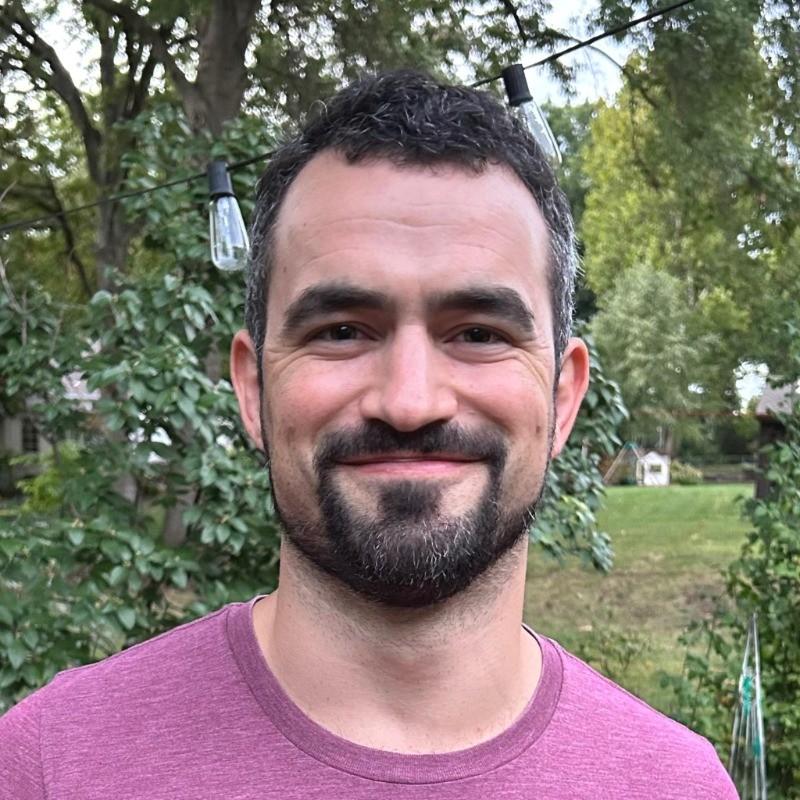
Roger Abbott founded Pure Kopi Luwak in 2018 after a trip through the volcanic highlands of Java, and has bought from the same farming families ever since. He only works with collectors of wild civet coffee, never caged. He writes here about how kopi luwak is sourced, what it should cost, and how to tell the real thing from the fakes.