The jitters arrive around the third cup for most people — a slight tremor in the hands, a sharpening that tips from alert into edge, sometimes a heart rate you’re aware of in a way you shouldn’t be. It’s one of the stranger experiences in ordinary life: you made a rational choice to drink something enjoyable and mildly stimulating, and the reward is anxiety. Understanding why this happens and how to work around it is, it turns out, an interesting piece of biochemistry.
Caffeine does not stimulate the brain directly. It works by blocking it — specifically by blocking adenosine receptors. Adenosine is a neurotransmitter that accumulates during waking hours and progressively signals the brain toward fatigue and sleep. Caffeine’s molecular structure is similar enough to adenosine that it occupies the same receptor binding sites (primarily A1 and A2A subtypes) without activating them. The adenosine is still there, still building up, but it can’t get through. The result is that the brain reads as more awake than the underlying adenosine load would suggest.
Why Caffeine Can Produce Anxiety
The A2A receptor is the particularly important one here. A2A receptors in the basal ganglia and limbic system modulate dopamine release and contribute to the regulation of arousal and mood. When caffeine blocks A2A receptors, dopamine levels in these brain regions effectively increase — contributing to the motivation, focus, and positive mood associated with moderate caffeine intake.
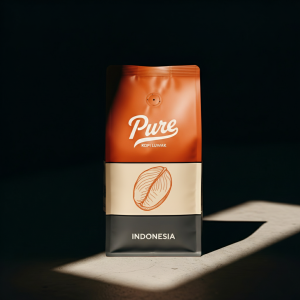
Pure Kopi Luwak
Wild civet coffee from Java. 88.5 SCA cupping score. From $125 for 100g.
But at higher doses, or in individuals whose physiology makes them caffeine-sensitive, the adenosine blockade produces side effects that look and feel like anxiety: elevated heart rate, elevated blood pressure, increased respiration rate, heightened muscle tension. These are the same physiological components of an anxiety response — which is partly why caffeine can trigger or amplify anxiety symptoms in people predisposed to anxiety disorders.
A 2024 meta-analysis published in PMC (PMC10867825) examined the relationship between caffeine intake and anxiety across multiple study populations. The review confirmed that caffeine can exacerbate pre-existing anxiety disorders, but noted that the mechanism for inducing anxiety in otherwise healthy people is less straightforward — it appears to require either high doses, genetic predisposition to caffeine sensitivity, or interaction with an already-activated stress response.
In practical terms: a healthy person who drinks one to two cups of coffee in a calm state is unlikely to experience anxiety. The same person, under significant work or personal stress, drinking three to four cups before noon, is much more likely to tip into jitteriness. The caffeine isn’t causing the anxiety from scratch — it’s amplifying an existing arousal state.
Try the coffee this article is about
Wild-sourced from Java, 88.5 SCA cupping score, free US shipping. From $125 for 100g.
Shop Pure Kopi Luwak →Why Some Coffees Give More Jitters Than Others
Caffeine content varies more across coffees than most people realize. An average 250ml cup of filter coffee contains roughly 80-120mg of caffeine, but this range can extend from 50mg to 200mg depending on origin, preparation, and bean type.
Robusta beans contain roughly twice the caffeine of Arabica — approximately 2.7% caffeine by dry weight versus 1.5% for Arabica. Mass-market espresso blends frequently use a percentage of Robusta for its crema stability and lower cost, which means they deliver meaningfully more caffeine per shot than a pure-Arabica specialty espresso. If you’ve found that a supermarket espresso blend makes you noticeably more jittery than a specialty single-origin, the caffeine differential is likely part of the explanation.
Brewing method also affects caffeine extraction significantly. Cold brew concentrate, despite being consumed cold and tasting smooth, extracts very high caffeine concentrations — some commercial cold brews contain 200mg or more per 250ml serving. Espresso, counterintuitively, contains less caffeine per volume than filter coffee (about 60-75mg in a single 30ml shot), but more per mouthful, and the rapid intake pace means it hits the bloodstream faster.
For kopi luwak specifically, the wild-sourced Arabica from Java has a standard Arabica caffeine profile — roughly 1.2-1.5% by dry weight — with no evidence that the civet digestion process significantly alters caffeine content. The smoothness associated with kopi luwak reflects enzymatic modifications to bitter-tasting protein compounds, not a reduction in caffeine.
Practical Strategies for Getting the Energy Without the Edge
Time your intake. Caffeine’s half-life in the body is approximately 5-6 hours, meaning half the caffeine from a morning cup is still circulating by early afternoon. Drinking coffee after 2pm puts active caffeine in your system through bedtime, disrupting sleep quality even if you feel able to fall asleep. Poor sleep increases cortisol and stress baseline, which means the next day’s caffeine hits a higher pre-existing arousal level — a cycle that builds toward chronic jitteriness.
Start with food. Drinking coffee on an empty stomach accelerates gastric emptying and increases the rate of caffeine absorption, producing a faster, sharper peak that’s more likely to produce edge effects. A meal before your first cup slows absorption and produces a more gradual caffeine rise.
Consider the bean before the preparation. Switching from a Robusta-inclusive blend to a pure Arabica specialty coffee at the same preparation volume reduces your per-cup caffeine intake by 30-40% without requiring you to drink less. This is often enough to eliminate jitteriness for people who are moderately sensitive.
Wild-sourced Arabica kopi luwak brewed as a medium-concentration filter coffee is one of the gentler caffeine experiences available — high quality, complex flavor, standard Arabica caffeine range, and the notably smooth cup character that comes from the reduced bitterness the enzymatic processing produces. For people who find themselves chasing the flavor but flinching at the edge, moving to a premium Arabica and adjusting brew strength is usually more effective than switching to weaker preparations of lower-quality coffee.
When to Actually Cut Back
If you regularly experience heart palpitations, persistent anxiety, difficulty sleeping, or muscle tremors that you associate with coffee, your individual caffeine metabolism or sensitivity may sit outside the average range. Roughly 10% of people have genetic variants in the CYP1A2 gene — the primary enzyme responsible for caffeine metabolism — that make them slow metabolizers. For these people, caffeine accumulates faster than it’s cleared, and the dose-response curve is compressed: what produces mild alertness in a typical person produces anxiety and jitteriness.
The standard advice to stay below 400mg of caffeine per day (the FDA’s general guideline for healthy adults) is a population average. Some people function well on 200mg. Some function well on 600mg. Your own response is the most useful data point, and recognizing where your personal limit is is more useful than memorizing the official guidance.
Pure Kopi Luwak
Wild civet coffee from Java. 88.5 SCA cupping score. From $125 for 100g.
Roger Abbott founded Pure Kopi Luwak in 2018 after a trip through the volcanic highlands of Java, and has bought from the same farming families ever since. He only works with collectors of wild civet coffee, never caged. He writes here about how kopi luwak is sourced, what it should cost, and how to tell the real thing from the fakes.