Peter Schlumbohm designed the Chemex in 1941 with an explicit goal: to produce the clearest, cleanest cup of coffee possible. The hourglass shape and the thick bonded filter — about 20 to 30 percent heavier than standard pour-over papers — were engineered to strip out every oil, every fine particle, every interference between the water and the dissolved flavor compounds. He called it “the most beautiful thing in the world.” The Museum of Modern Art in New York agreed and added it to their permanent collection of industrial design in 1943. What Schlumbohm didn’t know is that his machine would, eight decades later, prove to be the ideal vessel for a coffee processed by an animal in the jungles of Java.
The Chemex and wild kopi luwak are natural partners for the same reason: both are defined by what they remove. The Chemex eliminates oils and sediment. The civet’s digestive enzymes reduce bitterness precursors and modify the bean’s acid content. Combine them and you get a cup of exceptional clarity — the flavors of the bean with nothing competing against them.
Why the Chemex Changes the Equation for Kopi Luwak
Most coffee lovers know the Chemex produces a cleaner cup than a French press or AeroPress. Fewer know exactly why. The Chemex’s proprietary bonded filter, made from heat-bonded fibers rather than paper pulp, has a micron rating fine enough to capture the diterpenes — cafestol and kahweol — that pass through metal filters and standard papers. These diterpenes contribute to perceived heaviness and, at high concentrations, to the cholesterol elevation that has prompted some cardiologists to recommend paper-filtered coffee. Removing them doesn’t make kopi luwak thin. It makes it transparent.
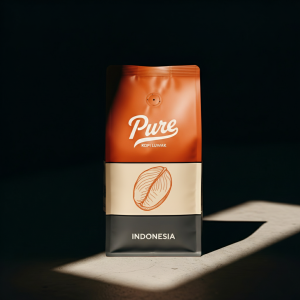
Pure Kopi Luwak
Wild civet coffee from Java. 88.5 SCA cupping score. From $125 for 100g.
For kopi luwak specifically, this filtration shifts the focus entirely to what wild civet processing creates: a flavor profile defined by smoothness, reduced sharpness, and a finish that lingers without bitterness. The chocolate and earth notes that characterize good Javanese Arabica come through with a precision that immersion methods obscure. You taste the bean, not the brewing method.
Try the coffee this article is about
Wild-sourced from Java, 88.5 SCA cupping score, free US shipping. From $125 for 100g.
Shop Pure Kopi Luwak →The Parameters: What Actually Matters
Brewing kopi luwak in a Chemex requires a few deliberate choices. Start with a medium-coarse grind — slightly finer than you’d use for a French press, coarser than a standard V60. The Chemex’s thicker filter and wider cone shape create a longer contact time than other pour-over devices; grind too fine and the water backs up, over-extracts, and produces a flat or astringent cup. With a 100-gram bag at $125 or more, that’s an expensive misjudgment.
Water temperature matters more here than in some methods. Blue Bottle Coffee recommends 200–210°F (93–98°C) for Chemex brewing, with medium roasts benefiting from the higher end of that range. Wild kopi luwak is typically medium-roasted to preserve the enzymatic modifications that make it distinctive — target 203–205°F (95°C). At this temperature, extraction is efficient but not aggressive. If you don’t have a temperature-controlled kettle, let the water come off boil and rest for 30 seconds before pouring.
The Brew Sequence, Step by Step
The ratio that works consistently for kopi luwak in a Chemex is 1:15 by weight — one gram of coffee to fifteen grams of water. For a three-cup Chemex using 20 grams of coffee, that’s 300 grams of water, producing roughly 250ml of finished coffee after absorption. For a four-cup batch, use 30 grams to 450 grams of water.
Rinse the filter with hot water before adding coffee. This removes any papery flavor from the bonded fiber and preheats the vessel — a small step that makes a measurable difference in the final temperature of your cup. Discard the rinse water before adding your ground kopi luwak and settling the grounds gently.
Start the bloom with 40–50 grams of water — twice the coffee weight. Wild kopi luwak off-gasses carbon dioxide actively if it’s fresh; you’ll see the grounds dome and crack as they release. Wait 40–45 seconds before beginning your main pour — slightly longer than you would for most coffees. The extra bloom time allows CO2 to escape fully, which improves even extraction and reduces the faintly sour note that under-bloomed coffee produces.
Pour the remaining water in slow, steady spirals from center to edge, keeping the water level consistent below the top of the filter. Total draw time should fall between 3.5 and 4.5 minutes. Faster means the grind was too coarse; slower than 5 minutes means go finer next time.
What You’ll Taste
A well-brewed Chemex of wild kopi luwak is among the more distinct coffee experiences available at any price. The cup arrives bright but not sharp — that combination of clarity and smoothness that makes you pause after the first sip. Javanese Arabica processed through a wild civet tends toward chocolate and fresh earth on the front of the palate, with a quiet sweetness in the finish that isn’t floral or fruity but something more restrained and complex. In a Chemex, those notes come through without the muting effect of retained oils.
If you’re trying Pure Kopi Luwak for the first time, the Chemex is actually the most honest introduction — it strips away every variable except the quality of the bean itself. There’s nowhere to hide with this method. But with genuinely wild-sourced kopi luwak from Java, there’s nothing to hide either.
A Note on Grinders
Grind consistency matters significantly at this price point. A blade grinder produces uneven particle sizes that cause simultaneous over- and under-extraction — fine dust over-extracts into bitterness while coarser chunks under-extract into sourness, all in the same cup. For a $125+ bag of whole-bean kopi luwak, a burr grinder — even an entry-level ceramic model — changes the result noticeably. If you don’t own one, a local specialty coffee shop will often grind to specification for a small fee. Ask for “medium-coarse for a Chemex.” The investment in grinding well is small relative to the cost of the beans, and it’s the step most worth getting right.
Pure Kopi Luwak
Wild civet coffee from Java. 88.5 SCA cupping score. From $125 for 100g.
Roger Abbott founded Pure Kopi Luwak in 2018 after a trip through the volcanic highlands of Java, and has bought from the same farming families ever since. He only works with collectors of wild civet coffee, never caged. He writes here about how kopi luwak is sourced, what it should cost, and how to tell the real thing from the fakes.