Every coffee roaster has encountered this moment: a customer buys something expensive, adds oat milk to it immediately, and drinks a cup that tastes like warm oat milk with a coffee undertone. It’s not wrong, but it’s a missed experience. With kopi luwak, that missed experience has a price tag: anywhere from $50 to over $100 for a bag, depending on the producer. The question of whether to add milk to kopi luwak is worth taking seriously for that reason alone.
The short answer: yes, you can add milk to kopi luwak. The more useful answer covers why black is worth trying first, what milk does to the specific chemistry that makes kopi luwak distinctive, and if you’re going to add something, what adds texture without erasing the flavor.
What the Civet’s Processing Creates — And What Milk Suppresses
During the 12 to 24 hours a coffee cherry spends in the civet’s digestive tract, proteolytic enzymes break down storage proteins that would otherwise become bitterness precursors during roasting. A 2022 study published in Frontiers in Sustainable Food Systems confirmed that kopi luwak shows significantly lower chlorogenic acid content (5.09 g/100g versus 7–12 g/100g in standard Arabica) and lower bitter-compound precursors across the board. The result is a coffee with measurably lower bitterness and a smooth, full body that emerges on its own — without the structural bitterness that most coffees need milk to offset.
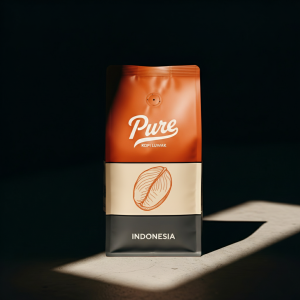
Pure Kopi Luwak
Wild-sourced. Organic. Arabica. From $125.
Milk’s primary function in coffee is suppression. Milk fat coats taste receptors, blunting sensitivity to both bitter compounds and delicate aromatic esters. Milk proteins, specifically caseins, bind to polyphenols and tannins in coffee, precipitating them out of solution and reducing astringency and body. These are genuinely useful properties when you’re working with a high-robusta espresso blend or a dark-roasted commercial coffee — flavors designed to punch through dairy. They are counterproductive applied to a coffee whose defining character is the absence of the bitterness and astringency that milk exists to mask.
The kopi luwak flavors most vulnerable to milk addition are also the ones most specific to this particular product: the subtle sweetness from lactic acid bacterial fermentation in the civet gut, the mild chocolate and caramel mid-notes from modified amino acids developing during roasting, and the clean, long finish that comes from lower acidity. Whole milk, with around 3.5% fat content, is the most aggressive masking agent — a full milk addition to a pourover will overwrite most of these nuances within a few sips. By the end of a latte, what you’re tasting is milk with coffee tint, not kopi luwak with milk complement.
Why Black Is Worth One Cup
The case for trying kopi luwak black at least once is not about purity or coffee snobbery. It’s practical: you can’t evaluate what milk does to the coffee until you know what the coffee tastes like without it. Kopi luwak brewed well — a medium grind pourover or French press at 93 to 94°C — produces a cup with immediately noticeable qualities: low bitterness, a sweetness that doesn’t require sugar, a mouthfeel that’s full without being heavy. These are things you can only calibrate against by experiencing the base coffee first.
After one black cup, adding milk to subsequent cups becomes an informed choice rather than a reflexive habit. Most people who try this exercise discover that the black version has qualities worth protecting — and that their milk preference might be lighter than they thought, or might be better served by a different addition.
If You’re Adding Milk: What Works
Not all milk additions are equal in kopi luwak. The choice of milk type matters more here than in ordinary coffee, because the margin between “this enhanced the cup” and “this erased the cup” is narrower.
Heavy cream performs better than whole milk for one specific reason: a higher fat-to-protein ratio. More fat, fewer caseins — which means less polyphenol binding and better preservation of the aromatic compounds. A tablespoon of heavy cream adds texture and richness without the aggressive suppression that a pour of whole milk produces. It’s not a traditional coffee addition, but it works well with kopi luwak’s flavor profile.
Oat milk has become the default alternative for specialty coffee drinkers, and in kopi luwak it outperforms whole dairy on one key metric: fat content is typically 1.5 to 2%, versus whole milk’s 3.5%, meaning less receptor coating and more of the coffee’s aromatic volatiles survive into the cup. Oat milk also contributes a mild sweetness and faint grain note that, for many tasters, complements the chocolate and caramel mid-notes in medium-roasted Javanese kopi luwak. Oatly Barista edition, formulated with a small amount of rapeseed oil for froth stability, is worth using if you want texture without excessive sweetness — it has a cleaner flavor than most oat milks.
Almond milk is the worst option for kopi luwak specifically. Its thin texture adds nothing to body, and its inherent nutty flavor competes directly with the coffee’s own caramel and nut notes rather than supplementing them. The result is a muddled cup that does neither product justice.
Brewing Method and Milk Interaction
Brew method affects how kopi luwak responds to milk addition. French press — an immersion method that preserves coffee oils and produces a full-bodied, rich cup — holds up to milk addition better than a light pourover. The extra body means there’s more coffee character competing against the milk’s suppressing effect. A light pourover or V60 extraction of kopi luwak, already delicate and clean, is the version most vulnerable to being overwhelmed by dairy.
Espresso, which concentrates flavors at higher extraction ratios, is an interesting middle option. Kopi luwak espresso, pulled at standard parameters with a slightly coarser grind to account for the lower acid content, produces a shot with enough intensity to hold its character through a small amount of milk — an espresso macchiato or cortado rather than a flat white. At flat white volumes, the milk-to-coffee ratio is again too high for the character to survive.
For background on why kopi luwak’s flavor profile is as distinctive as it is — the specific chemistry that makes it worth protecting from milk suppression — the post on whether kopi luwak tastes different covers the research in detail. And for the roasting parameters that best preserve these characteristics, see the kopi luwak roasting guide.
The bottom line: genuine wild kopi luwak can be enjoyed with milk. But if you’re investing in the real product for its specific flavor properties, one cup black will tell you what you’re protecting — and most people find that answer changes how they drink it.
Pure Kopi Luwak
Wild-sourced. Organic. Arabica. From $125.

Roger Abbott is the founder of Pure Kopi Luwak. He has spent over a decade sourcing wild kopi luwak directly from farmers and collectors in the highlands of Java, Indonesia — working exclusively with wild civets, never caged. He writes about specialty coffee, Indonesian origins, and the science behind what makes kopi luwak taste the way it does.
