At approximately 196°C (385°F), a kopi luwak bean cracks. Not metaphorically — audibly, with a sound like knuckles popping as trapped CO₂ and steam rupture the bean’s structure in an exothermic reaction that specialty roasters call first crack. What happens in the 60 to 90 seconds after that moment determines whether your cup expresses the full chemistry of the civet’s enzymatic processing — or whether you’ve carbonized the most interesting coffee beans you’ll ever buy.
Roasting kopi luwak isn’t identical to roasting a standard Arabica, even from the same Javanese origin. The civet’s digestive processing has already altered the bean’s chemistry in ways that affect how it should be roasted — and that make certain common roasting decisions actively wasteful. Here’s the complete guide, from green bean to resting window.
What the Civet’s Processing Does to Your Roasting Equation
During 12 to 24 hours in the civet’s digestive tract, proteolytic enzymes break down storage proteins in the bean’s outer layers. These proteins are precursors to Maillard reaction products during roasting — the chemical engine that produces roasted coffee’s complex aromas. By the time kopi luwak reaches a roaster, some of those precursors have already been hydrolyzed. The Maillard reaction still occurs and still produces aromatic complexity, but the available precursor pool is different.
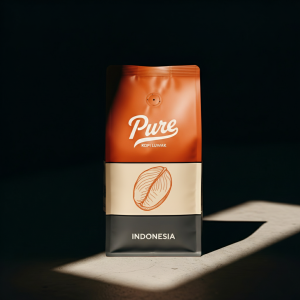
Pure Kopi Luwak
Wild civet coffee from Java. 88.5 SCA cupping score. From $125 for 100g.
The practical implication: dark roasting kopi luwak is a mistake. A dark roast drives Maillard reactions past their productive range and into the carbonization territory that produces the intensely bitter, one-dimensional character of French or Italian roasts. With standard Arabica, a dark roast can work if you want that profile. With kopi luwak, you’re applying high-heat chemistry to a bean whose most distinctive qualities — the smooth body, the low bitterness, the characteristic earthy-chocolate notes — were produced by low-heat enzymatic transformation. The dark roast doesn’t complement the civet processing. It erases it.
Target Roast Level: City to City+
The roast level that best preserves kopi luwak’s enzymatic character while developing sufficient roasted complexity is City to City+ — roughly equivalent to a medium to medium-light roast. This means stopping the roast within approximately 30 to 90 seconds after first crack completes, before entering the caramelization zone of Full City and well before the surface-oil emergence of a dark roast.
Visually, a City roast kopi luwak bean should be a uniform medium brown — approximately milk chocolate color — with a dry, non-oily surface. You’ll see the expansion from green and the fracture lines from first crack, but no surface sheen. At this development level, the cup expresses kopi luwak’s characteristic profile: full body, smooth finish, low sharp acidity, and the earthy-chocolate undertones specific to civet-processed Javanese Arabica. Push to Full City+ or darker, and those distinctions flatten into generic roast character that could come from any origin.
Try the coffee this article is about
Wild-sourced from Java, 88.5 SCA cupping score, free US shipping. From $125 for 100g.
Shop Pure Kopi Luwak →Development Time Ratio: The Number That Controls Everything
Development Time Ratio (DTR) — the percentage of total roast time that falls between the start of first crack and the end of the roast — is the key metric for roast quality. Coffee researcher and roaster Scott Rao popularized its use after observing that the best-scoring coffees across origins and roast levels consistently fell within a DTR of 20 to 25 percent. If your roast takes 10 minutes total and first crack starts at minute 8, your DTR is 20 percent.
For kopi luwak roasted to City–City+, this target range applies. DTR below 20 percent produces underdeveloped, bready, or grassy flavors — the Maillard reactions haven’t had sufficient time. DTR above 25 percent at City+ begins pushing toward the caramelization that belongs to Full City, progressively eroding the lighter flavor notes specific to civet-processed beans. The total roast time should land between 9 and 11 minutes for most home roasting setups. Under 7 minutes risks scorching and uneven heat penetration. Over 14 minutes risks baked, flat flavors from extended exposure to gentle heat.
Equipment Options for Home Roasting
Entry-level home roasting of kopi luwak green beans is accessible — the equipment doesn’t need to be expensive to produce good results at small batch sizes.
Fluid bed roasters like the Fresh Roast SR800 give excellent visibility and airflow control, making them good learning tools. Batch size is typically 100 to 150 grams. They struggle to produce the even heat penetration of a drum roaster for larger batches, but for 100-gram kopi luwak quantities they work well.
Drum roasters at the prosumer level — the Behmor 1600, the Kaldi Mini, or at the professional end the Giesen W1A or Probat P5 — provide more control over rate of rise and charge temperature. For kopi luwak, a charge temperature around 200°C (392°F) with a target turning point at 75 to 90 seconds in works as a starting profile. Rate of rise from turning point to first crack should be positive and declining: roughly 10°C per minute at the midpoint, tapering to 4°C per minute as you approach first crack.
Pan roasting is possible for small quantities — 50 grams in a cast iron pan over medium heat, stirring constantly. Temperature control is difficult and the results are less consistent than any dedicated roaster, but it works in a pinch and is a useful way to get familiar with the stages before investing in equipment.
Cooling and the Resting Window
Cool immediately after pulling from the heat. Beans retain significant thermal energy and will continue developing if not cooled quickly — spreading them across a baking sheet under a fan achieves 40 to 50°C temperature drop within 3 to 5 minutes, which is sufficient. The goal is to stop roasting reactions as close to your target development as possible.
After cooling, roasted kopi luwak beans need to rest before brewing. The first 24 hours are the most active degassing period — escaping CO₂ interferes with extraction and produces sour, uneven results. The optimal brewing window starts at day 7 post-roast and extends to about day 21. Within that window, the CO₂ has stabilized, oxidation hasn’t progressed significantly, and the enzymatic character from the civet’s processing is fully intact. French press at 93 to 94°C, with a medium grind and a four-minute steep, is the brewing method that best showcases the body and smoothness of a City-roasted kopi luwak.
One Note on Pre-Roasted Beans
Home roasting is a genuinely rewarding practice, and the control it gives over the final roast profile is real. That said: the City to City+ roast that best suits kopi luwak requires consistent heat management, accurate temperature monitoring, and familiarity with what first crack sounds like on a specific roasting setup. Getting the profile right takes practice, and with kopi luwak green beans — which aren’t cheap — practice runs have a cost.
Pure Kopi Luwak is available pre-roasted to a medium profile calibrated specifically to preserve the enzymatic character that the civet’s processing creates. For buyers who want to skip the learning curve without sacrificing roast quality, pre-roasted whole beans from a producer who controls the roast profile are the direct path to the cup the research describes.
For background on the flavor compounds that a good roast preserves, the post on whether kopi luwak tastes different covers the chemistry in detail. And for storage guidance after you’ve roasted — how to keep the beans at peak quality through their freshness window — see the guide on kopi luwak shelf life and storage.
Pure Kopi Luwak
Wild civet coffee from Java. 88.5 SCA cupping score. From $125 for 100g.

Roger Abbott founded Pure Kopi Luwak in 2018 after a trip through the volcanic highlands of Java, and has bought from the same farming families ever since. He only works with collectors of wild civet coffee, never caged. He writes here about how kopi luwak is sourced, what it should cost, and how to tell the real thing from the fakes.