A 100-gram bag of authentic wild kopi luwak costs between $100 and $150 at legitimate retail — roughly the same price as a nice dinner for one, and about ten times the price of premium specialty coffee. That gap is real, and understanding what’s inside it helps you avoid the fraudulent products that dominate the market at lower price points.
The numbers are stark. Researchers and industry analysts estimate that only 50 to 500 kilograms of genuinely wild kopi luwak are produced annually across all of Indonesia. Meanwhile, thousands of tonnes of kopi luwak circulate in global markets each year. The math is not hard: if the authentic supply is measured in hundreds of kilograms and the sold supply is measured in thousands of tonnes, the majority of what’s being sold cannot be the real thing. Industry estimates suggest over 80 percent of kopi luwak sold globally is either completely fake or produced under unethical caged conditions.
What Determines Wild Kopi Luwak Pricing
The $100–$150 per 100-gram range for authentic wild product isn’t arbitrary. It reflects real production costs that have no shortcut. A skilled collector working prime highland forest in Java or Sumatra gathers an average of 200 to 400 grams of raw unprocessed material per day during peak season. After washing, sun-drying, hulling to remove the parchment layer, hand-sorting to remove damaged or contaminated beans, and roasting, that 400 grams of raw material yields perhaps 150 to 200 grams of roasted coffee. A full day’s skilled labor produces less than two finished 100-gram packages.
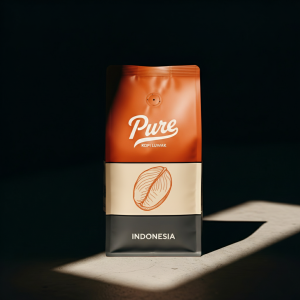
Pure Kopi Luwak
Wild civet coffee from Java. 88.5 SCA cupping score. From $125 for 100g.
That labor cost, combined with the expertise required for sourcing and quality control, the logistics of getting highland forest coffee to international buyers, and the overhead of maintaining a verified supply chain, produces a cost structure that honest sellers cannot price below $80 to $90 per 100 grams and remain viable. Anything significantly below that threshold is not wild-sourced.
Premium lots from specific recognized regions — highland Java arabica from Ijen or the Dieng Plateau, Sumatran arabica from the Gayo highlands — occasionally command prices above $150 per 100 grams, particularly when accompanied by documented provenance and third-party verification. Seasonal scarcity during off-peak collection months can also push prices toward the upper end of the range.
Farm-Raised Pricing: $20–$40 Per 100 Grams
Farm-raised kopi luwak, produced from civets kept in cages and fed controlled diets of coffee cherries, sells for $20 to $40 per 100 grams at retail. The lower price reflects genuinely lower production costs: captive civets produce predictable quantities year-round, collection is straightforward, and scaling is possible in ways that wild collection is not.
However, the quality differential is substantial. Captive civets consuming monotonous diets produce beans with simpler flavor profiles than their wild counterparts, who select cherries based on natural preference and digest them alongside a varied forest diet. Published research on civet-processed coffee has consistently shown that wild-sourced beans exhibit more complex metabolite profiles — including elevated citric and malic acid ratios, as documented in studies published in peer-reviewed journals — than farm-raised alternatives.
Beyond flavor, farm-raised kopi luwak raises serious animal welfare concerns. PETA’s investigations of Bali farms, including undercover footage from a farm in Catur disclosed in March 2024, documented civets in wire cages exhibiting repetitive stress behaviors. Some of these farms label their product wild-sourced. The ethical and quality cases against caged production are inseparable.
What Kopi Luwak Under $80 Per 100 Grams Actually Is
Products labeled as kopi luwak selling for under $80 per 100 grams — a category that includes many tourist market bags, online bargains, and some mainstream retail offerings — fall into several categories. Some contain no kopi luwak at all: conventional Indonesian Robusta or Arabica has been repackaged. Some contain small quantities of genuine product blended into large quantities of regular coffee. Some have been artificially fermented to mimic the metabolite signature of civet-processed beans, with varying degrees of success at approximating the flavor.
None of these are what the label claims. And importantly, none deliver the sensory experience that makes genuine wild kopi luwak worth discussing at all.
How to Use Price as a Filter
Price alone doesn’t guarantee authenticity — a seller can price fraudulent product at $120 per 100 grams — but it functions as a reliable filter in one direction: if the price is too low, authenticity is impossible. Use $80 per 100 grams as a rough floor for wild-sourced claims. Below that, the economics don’t support the production method regardless of what the label says.
Above $80, apply additional verification: ask for the specific collection region, the collection method (wild vs. caged), the roast date, and details about the supply chain. A seller who can answer these questions specifically and consistently is more likely to be selling genuine product than one who responds with marketing language. Our complete guide on how to verify authentic kopi luwak covers the documentation and inspection steps in detail.
For context on the quality differences that justify the price premium, see our comparison of wild versus farm-raised kopi luwak. And for those ready to purchase from a verified source, our wild kopi luwak comes with full traceability from Java highland forest to your door.
Pure Kopi Luwak
Wild civet coffee from Java. 88.5 SCA cupping score. From $125 for 100g.

Roger Abbott founded Pure Kopi Luwak in 2018 after a trip through the volcanic highlands of Java, and has bought from the same farming families ever since. He only works with collectors of wild civet coffee, never caged. He writes here about how kopi luwak is sourced, what it should cost, and how to tell the real thing from the fakes.