The Specialty Coffee Association’s cupping protocol assigns scores on a 100-point scale across ten attributes: fragrance/aroma, flavor, aftertaste, acidity, body, balance, uniformity, clean cup, sweetness, and overall impression. To qualify as specialty grade, coffee must score 80 or higher, contain zero primary defects per 300-gram green sample, and have fewer than five secondary defects. The system was designed by Coffee Quality Institute co-founder Ted Lingle and adopted by the SCA (then SCAA) in the 1990s as a standardized replacement for informal tasting conventions.
Kopi luwak occupies an unusual position within this framework — one that illuminates both the strengths and limits of conventional grading.
How the SCA System Works
The ten-attribute SCA cupping protocol scores each characteristic on a scale of 6 (good) to 10 (extraordinary), producing a possible range from 60 to 100. In practice, specialty-grade coffees score between 80 and 100, with sub-tiers emerging in the industry’s informal use: 80 to 84 as specialty grade, 85 to 89 as excellent, 90 and above as outstanding or world-class. High-end single-origin arabica from exemplary producers regularly scores in the 87 to 92 range. Auction lots from farms like Hacienda La Esmeralda in Panama — whose Gesha variety sold for $30,204 per kilogram in 2025 — score at the very top of the scale.
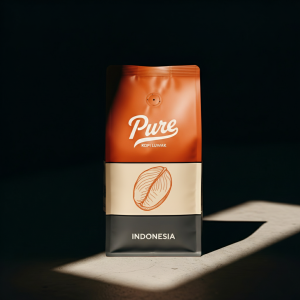
Pure Kopi Luwak
Wild-sourced. Organic. Arabica. From $125.
The system’s strength is standardization: a Kenyan Kiambu Natural and a Sumatran Gayo Washed can be compared on the same terms, and trained Q Graders (coffee tasters certified by CQI through a 22-exam professional certification) produce reasonably consistent scores across origins and processing methods. The system’s weakness is that it was designed around the flavor profiles of conventionally processed coffee — it’s exceptionally good at comparing washed, honey, and natural process coffees but less equipped to assess coffees whose defining characteristics fall outside those categories.
Where Kopi Luwak Fits the SCA Framework
Authentic wild kopi luwak scores in the specialty range — typically 85 to 90 — when evaluated by experienced Q Graders familiar with the product. The high body scores reflect the enhanced mouthfeel that results from enzymatic protein modification during civet digestion. The balance scores tend to be high as well, since kopi luwak’s reduced bitterness and integrated acidity create a particularly harmonious cup. Sweetness and clean cup scores are strong in well-processed product.
The attributes that create kopi luwak’s most distinctive qualities don’t map perfectly onto SCA categories. Elevated citric and malic acid concentrations — identified in peer-reviewed research as chemical markers distinguishing authentic civet coffee from conventional beans — create an unusual acid profile that experienced cuppers describe as smooth-bright rather than cutting-bright. The distinction is real but nuanced, and individual Q Graders vary in how they score it under the standard acidity attribute.
The SCA’s clean cup attribute can create tension for kopi luwak evaluations. Well-processed wild kopi luwak is genuinely clean — the thorough washing and careful drying that legitimate producers employ removes any off-notes from collection. But less experienced evaluators sometimes expect fermentation notes associated with the production method and score clean cup conservatively when the cup is, in fact, clean. This is a training artifact rather than a reflection of the coffee.
Green Bean Classification
Before cupping, specialty coffee is assessed for green bean defects: physical imperfections in the raw, unroasted beans that correlate with quality problems in the cup. Primary defects — full black beans, full sour beans, dried cherry, fungus damage, large stones, large sticks — disqualify a sample entirely. Secondary defects — partial blacks, partials, parchment, floaters, shells, broken beans, cuts, husks, slight insect damage — are permitted up to four per 300-gram sample for specialty classification.
Kopi luwak beans often show slightly different physical characteristics from conventionally processed beans. Size distribution may be less uniform, reflecting natural civet selection rather than mechanical sorting. Density varies due to structural changes during enzymatic digestion. A grader applying standard specialty metrics strictly might penalize these variations, even though they’re inherent to the production method rather than indicators of quality failure. Experienced buyers familiar with kopi luwak calibrate for these characteristics.
Beyond Conventional Grading
The most honest assessment of kopi luwak’s position in the specialty grading hierarchy is that it scores well within the system while also transcending it. The chemical complexity introduced by civet digestion — the secondary metabolites identified in published research, the altered protein derivatives, the modified acid fractions — creates qualities that the SCA’s ten attributes weren’t designed to capture comprehensively.
This isn’t a criticism of the SCA system: it does what it was designed to do with precision. It’s simply an acknowledgment that kopi luwak is genuinely a different category of coffee, and evaluating it solely through conventional specialty metrics misses some of what makes it remarkable.
The practical implication for buyers: don’t use SCA score as the primary selection criterion for kopi luwak. Use supply chain verification, roast date, and the seller’s ability to answer specific sourcing questions. A coffee scoring 88 from a seller who can trace their beans to named collectors in a specific Java highland region is a better purchase than a coffee scoring 91 from a seller who can’t tell you where or how it was collected. For the verification checklist, see our guide to authenticating kopi luwak. For context on how price signals authenticity, see our 100g price guide. And when you’re ready to taste what specialty grading can’t fully capture, our wild kopi luwak from Java is the starting point.
Pure Kopi Luwak
Wild-sourced. Organic. Arabica. From $125.
Roger Abbott is the founder of Pure Kopi Luwak. He has spent over a decade sourcing wild kopi luwak directly from farmers and collectors in the highlands of Java, Indonesia — working exclusively with wild civets, never caged. He writes about specialty coffee, Indonesian origins, and the science behind what makes kopi luwak taste the way it does.
