After the civet does its work and the beans are cleaned and dried, a skilled sorter sits down at a flat sorting table with a few hundred grams of green beans and begins examining them one by one. This step is not optional and it is not fast. At a reputable kopi luwak facility in Java, a thorough hand-sort of one kilogram of dried green beans takes between 2 and 4 hours. What the sorter is looking for — and the precision required to find it — explains why hand-sorting is one of the most important and least-discussed stages in kopi luwak production.
Why Machine Sorting Doesn’t Work Here
Conventional coffee production uses optical sorting machines that can process thousands of kilograms per hour, detecting color defects and foreign material with camera systems. These machines work well for high-volume commodity coffee. They don’t work well for kopi luwak.
The problem is volume and economics. A specialist facility producing 50 to 100 kilograms of finished kopi luwak per month cannot justify the capital cost of optical sorting equipment built for tons-per-hour throughput. More practically, the specific defects that disqualify kopi luwak beans — subtle cracks invisible to cameras at high speed, irregular fermentation patches detectable by texture rather than color, unusual density variations — require the kind of tactile inspection that trained human hands provide. Experienced sorters can detect a cracked bean by feel before they see it, and can identify irregular fermentation spots that optical sensors operating in visible light might miss.

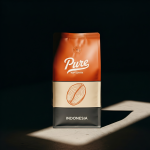
Pure Kopi Luwak
Wild civet coffee from Java. 88.5 SCA cupping score. From $125 for 100g.
The Defect Categories and Rejection Rates
Kopi luwak sorting rejects beans across several specific categories. Cracked beans — those with hairline fractures from compression during digestion or careless handling — are removed because cracked beans extract unevenly during brewing, contributing harsh, over-extracted flavors to the cup. Experienced sorters typically find 3 to 7 percent of dried beans have processing cracks.
Discolored beans — those showing unusual black, brown, or white patches beyond the expected parchment coloration — indicate abnormal fermentation or mold development during drying. These account for another 2 to 5 percent of sorted beans. Undersized or misshapen beans, which may have been damaged during the civet’s chewing or caught against neighboring beans during digestion, are removed because they roast unevenly relative to properly sized beans. Size variation causes some beans to be over-roasted while adjacent beans are under-roasted.
Shell beans — thin, empty half-beans that look normal until examined closely — are among the trickiest defects to catch. They feel lighter than whole beans when handled, but the difference requires experience to detect consistently. Shell beans in a roasted batch produce faint, hollow flavors. Altogether, the defect rejection rate during hand-sorting of properly processed kopi luwak runs between 8 and 15 percent of the dried bean weight — meaning that of every kilogram of dried beans entering the sorting step, 80 to 920 grams proceed to roasting as Grade 1 product.
What the Final Grade Means
The beans that pass sorting are classified by size using calibrated mesh screens, with larger whole beans (Size 18 to 20 screen) commanding the highest prices because they roast most uniformly. Smaller but defect-free beans grade as secondary lots sold at lower price points or blended. In a rigorous sorting operation, the Grade 1 fraction — large, uniform, defect-free beans — represents perhaps 60 to 75 percent of sorted input. The rest is downgraded or discarded.
This explains one of the less obvious factors in kopi luwak’s cost: even after collection, cleaning, and drying have already eliminated most unsuitable material, hand-sorting removes another 15 to 25 percent of what remains. The accumulation of losses at each production stage — from 5 to 10 kilograms of raw droppings to produce one kilogram of dried beans, then another 15 to 25 percent loss at sorting — means that the finished roasted kopi luwak you brew represents the very best fraction of a very low-volume process.
The Connection to Flavor
Sorting is not just quality control for its own sake. It is directly responsible for cup consistency. A kilogram of unsorted kopi luwak brewed at home would be noticeably less satisfying than a kilogram of properly sorted beans, because defective beans extract differently from clean ones — contributing bitter, hollow, or off-flavor notes that dilute the smooth, low-bitterness profile that makes authentic kopi luwak distinctive.
The careful selection that begins with the civet choosing only ripe cherries continues through human selection at every subsequent stage. By the time a bean reaches roasting, it has been evaluated multiple times by multiple people. For a full understanding of how each step in the process connects to quality, the cleaning and processing guide covers the stages before sorting arrives. The reasons behind the premium this process commands are explained in detail in the cost breakdown guide.
Pure Kopi Luwak
Wild civet coffee from Java. 88.5 SCA cupping score. From $125 for 100g.

Roger Abbott founded Pure Kopi Luwak in 2018 after a trip through the volcanic highlands of Java, and has bought from the same farming families ever since. He only works with collectors of wild civet coffee, never caged. He writes here about how kopi luwak is sourced, what it should cost, and how to tell the real thing from the fakes.