The Vereenigde Oostindische Compagnie — the VOC, or Dutch East India Company — was founded in 1602 with a charter granting it a monopoly on all Dutch trade east of the Cape of Good Hope, the authority to wage war, and the power to govern territory as a corporate state. In 1603, it established its first permanent trading post in the Indonesian archipelago at Banten, West Java. By the time the VOC dissolved in 1799, it had transformed Java from a spice and rice economy into the coffee engine that supplied most of Europe’s demand — and had, as an unintended consequence, created the precise conditions required for the world’s most unusual coffee to be discovered.
The Yemen Connection: How Coffee Reached Java
The VOC’s route to Javanese coffee began with commercial espionage on the Arabian Peninsula. In 1616, Dutch traders obtained a viable coffee plant from Mocha — the Red Sea port that held near-total control over global coffee exports at the time, exporting the Yemen Arabica that European consumers had developed a strong appetite for. The plant made it to Amsterdam’s botanical gardens, where it was propagated carefully, producing seedlings that would eventually break the Arab monopoly on coffee supply.
The first attempt to establish coffee in Java came in 1696, when seedlings were planted near Batavia (present-day Jakarta) on the island’s low coastal plain. The planting failed, likely lost to flooding. The critical second attempt arrived in 1699, when VOC commander Hendrik Zwaardecroon brought a new shipment and established it in the volcanic highlands of West Java — the same elevated terrain where altitude, rainfall, and mineral-rich soil from ancient eruptions would prove ideal for Arabica cultivation.
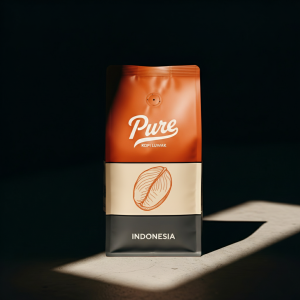
Pure Kopi Luwak
Wild-sourced. Organic. Arabica. From $125.
The timeline that followed was compressed and consequential. By 1711, just twelve years after Zwaardecroon’s successful planting, the first commercial exports of Javanese coffee left for Amsterdam. The legacy of Java as a coffee origin was established in this narrow window: “Java” entered multiple European languages as a synonym for coffee, and Dutch auction prices for Javanese beans regularly set the benchmark for the global market.
The Architecture of Colonial Coffee Production
The VOC’s coffee operation was not a voluntary commercial enterprise for the Javanese people who worked it. Under the company’s control, farmers were compelled to grow coffee as a form of tax payment, with villages assigned production quotas enforced by colonial administration. The entire crop flowed to the VOC at prices the company set unilaterally, generating margins that funded Amsterdam’s commercial expansion and Dutch maritime operations across Asia.
After the VOC’s dissolution in 1799, the Dutch colonial government deepened this system rather than dismantling it. In 1830, Governor-General Johannes van den Bosch formalized it as the cultuurstelsel — the “cultivation system” — requiring farmers to dedicate one-fifth of their cultivated land or 60 days of labor per year to growing designated export crops. Coffee was among the primary targets. The economic logic was explicit: Indonesian soil and labor would produce; Dutch markets would profit. By the mid-19th century, Java was among the world’s largest coffee exporters, shipping hundreds of thousands of tons annually to European buyers, with revenues from the cultuurstelsel estimated to have financed roughly a third of the Dutch national budget at its peak.
The Prohibition That Changed Coffee History
One specific restriction within this system had consequences no colonial administrator anticipated. Javanese farmers working the coffee plantations were forbidden from harvesting coffee cherries for personal consumption. The entire crop — including the premium, peak-ripe cherries that commanded European auction prices — was reserved for export. Workers received wages in cash or inferior goods. The coffee growing in front of them was not theirs to drink.
This prohibition forced a specific kind of attention. The Asian palm civet (Paradoxurus hermaphroditus) had lived in the highland forests of Java long before European coffee arrived. When VOC plantations spread across the volcanic slopes above Bandung and Bogor, the civets followed the new food source, foraging through the coffee trees at night and selecting cherries with the precision of animals that had evolved to identify peak-ripe fruit by scent. Their droppings along regular forest routes contained intact, partly fermented coffee beans — the same premium-quality beans that the colonial system had placed beyond the reach of the people who grew them.
Farmers who collected, cleaned, and roasted these beans discovered that the coffee tasted fundamentally different from anything available through conventional channels: smoother, less bitter, heavier in body. The civet’s digestive enzymes had broken down bitter protein precursors during the bean’s 12-to-24-hour passage through the animal’s gut, and the brief enzymatic fermentation had modified the organic acid profile in ways that elevated rather than degraded cup quality. What the colonial system had defined as waste — animal droppings on a forest floor — turned out to be a superior product.
Dutch Awareness and Colonial Indifference
Dutch colonial records from the late 18th century contain references to plantation supervisors requesting this unusual coffee for personal consumption after tasting it — an acknowledgment embedded in administrative correspondence that the farmers had discovered something genuinely superior to the export-grade coffee being shipped to Amsterdam. The reaction ranged from skepticism to quiet appreciation, but the colonial administration made no effort to commercialize the practice. At the scale wild civets could supply, kopi luwak had no place in the VOC’s volume-driven export logic.
That indifference had an unexpected consequence: it left kopi luwak entirely in the hands of Indonesian farming communities. The knowledge of collection routes, cleaning methods, and processing techniques was passed from generation to generation as local practical expertise, outside the colonial trade system and beyond the reach of Dutch commercialization. The cultural significance of kopi luwak in Indonesia is grounded in this history — it was the one form of premium coffee that colonial power never captured.
After Independence: From Local Practice to Global Market
Indonesian independence in 1945 ended the colonial cultivation system, but Java’s position as a premium coffee origin endured. The volcanic soils and highland microclimates that the VOC exploited remain among the best in the world for Arabica production. Kopi luwak itself remained largely unknown outside Southeast Asia until the 1990s, when specialty coffee culture and adventure travel brought it to international attention. International recognition drove prices to levels that made fraud commercially attractive — which in turn created the counterfeit market that now dominates the category.
The distance between Hendrik Zwaardecroon’s 1699 planting and a modern cup of authentic wild-sourced Pure Kopi Luwak spans more than three centuries and two entirely different political economies. What hasn’t changed is the mechanism: wild civets selecting peak-ripe cherries in Javanese highlands, processing them through a digestive system that the original Dutch monopoly never imagined as a production method. The colonial system created the conditions for the discovery. The farmers who made it ensured it survived.
Pure Kopi Luwak
Wild-sourced. Organic. Arabica. From $125.