In a 1986 ethnographic survey of highland coffee farming communities in West Java, anthropologist Clifford Sather documented something that the colonial plantation records had entirely omitted: the elaborate social protocols around kopi luwak consumption in Sundanese village life. Elders received it first. Preparation was entrusted only to household members who understood the specific washing and roasting requirements. Serving it without ceremony was considered disrespectful to the coffee itself. The Dutch plantation system that had made kopi luwak possible had no idea it had also created a social institution.
That gap between commercial history and cultural reality is the starting point for understanding what kopi luwak actually means in Indonesia.
The Colonial Invention That Became a Cultural Inheritance
Kopi luwak’s origin in Dutch colonial policy is well-documented. The Cultuurstelsel — the cultivation system imposed by Dutch Governor-General Johannes van den Bosch beginning in 1830 — required Indonesian farmers to devote 20% of their land to export crops including coffee, or to contribute 60 days of labor to government plantations annually. Farmers were forbidden from consuming the coffee they grew. The penalty for violations could be severe.
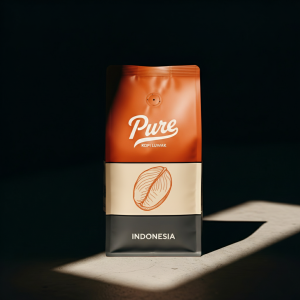
Pure Kopi Luwak
Wild civet coffee from Java. 88.5 SCA cupping score. From $125 for 100g.
When farmers discovered that Asian palm civets were processing coffee cherries naturally — their droppings containing intact, cleaned beans — they had found a legal loophole. Collecting what a wild animal had excreted was not the same as taking plantation coffee. This was not just pragmatic ingenuity; it was a quiet act of resistance against a system designed to extract value from Indonesian agricultural labor while denying its practitioners access to the product.
The coffee they made from these collected beans turned out to be better than what the plantation system exported. That discovery — that constraint and creativity had produced something extraordinary — entered the cultural memory of Javanese and Sundanese farming communities as a story about resilience and the rewards of careful observation. It is this narrative, not the novelty of the production method, that gave kopi luwak its cultural weight.
Hospitality, Hierarchy, and the Language of Coffee
In traditional Javanese and Sundanese hospitality culture, what you serve a guest communicates your assessment of their importance. Ordinary black coffee — kopi hitam — is appropriate for everyday visitors. Kopi luwak, when a household possessed any, was reserved for guests who warranted an explicit signal of respect: a senior family member making a formal visit, a government official, a community elder, a religious figure. Serving kopi luwak was a statement about how the host valued the relationship.
This practice created what anthropologists of Javanese society call a “prestational economy” around the coffee — a system in which the coffee’s value derives not from market price but from social context. Indonesian cultural theorist Franz Magnis-Suseno, in his analysis of Javanese ethics published in 1984, describes how material goods in Javanese social life carry encoded messages about status, obligation, and relationship that cannot be reduced to monetary value. Kopi luwak fits this framework precisely: its value in a Javanese household was never primarily what it would fetch at market but what its service communicated about the host and the guest.
Try the coffee this article is about
Wild-sourced from Java, 88.5 SCA cupping score, free US shipping. From $125 for 100g.
Shop Pure Kopi Luwak →Spiritual Dimensions
In Javanese cosmology, which blends Hindu-Buddhist, Islamic, and indigenous animist elements in the syncretic tradition known as Kejawen, the interaction between human agricultural effort and animal behavior carries spiritual significance. The civet’s instinctive selection of the ripest, best coffee cherries is not understood in purely materialist terms — it is the animal exercising a natural intelligence that humans would do well to respect and cooperate with rather than override.
Traditional Kejawen practice includes the concept of sangkan paraning dumadi — understanding the origin and purpose of things — which applies to kopi luwak’s production in a way that purely commercial approaches miss. The farmer who walks the civet’s trail at dawn, collects what the animal has left, and prepares it with care is participating in a relationship between human cultivation and natural intelligence. This framework does not romanticize or mystify the process; it provides a cultural rationale for treating the production with deliberateness rather than industrial efficiency.
National Identity and the Global Stage
Kopi luwak acquired national significance in Indonesia during the 1990s and 2000s as it began attracting serious international attention. The 2007 film The Bucket List, in which Jack Nicholson’s billionaire character discovers kopi luwak, brought global awareness to a product that had been Indonesia’s most famous export commodity for years within the specialty coffee world. Indonesian tourism authorities incorporated kopi luwak into promotional materials, and the coffee became one of the country’s most internationally recognizable cultural products.
This national visibility created a complicated dynamic. Authentic wild kopi luwak production had always been small-scale and community-based. The international demand that followed the coffee’s global fame incentivized factory-style production methods — caged civets, industrial volumes — that Indonesian conservationists and traditional producers alike viewed as a betrayal of what made the coffee significant. The tension between cultural authenticity and commercial exploitation is not unique to kopi luwak, but it is particularly visible here because the production method is so intimately connected to the social values that generated it.
What Remains
In highland coffee communities of Java and Sumatra, the traditional dimensions of kopi luwak production persist, though they exist alongside the commercial market rather than replacing it. Farmers who still collect wild-civet beans know they are maintaining a practice that their grandparents valued for reasons beyond market price. The ceremonial preparation methods survive in modified form. The social protocols around serving it to honored guests survive wherever the older generation maintains them.
These cultural dimensions are not marketing copy — they are documented aspects of Indonesian agricultural society that help explain why this coffee matters beyond what it costs. Understanding them changes what it means to drink it.
Pure Kopi Luwak
Wild civet coffee from Java. 88.5 SCA cupping score. From $125 for 100g.

Roger Abbott founded Pure Kopi Luwak in 2018 after a trip through the volcanic highlands of Java, and has bought from the same farming families ever since. He only works with collectors of wild civet coffee, never caged. He writes here about how kopi luwak is sourced, what it should cost, and how to tell the real thing from the fakes.