Before a Javanese elder serves kopi luwak to a distinguished guest, the preparation may begin the night before — with water drawn from a mountain spring source and left to rest in a clay vessel, the beans selected from a sealed container kept specifically for ceremonial use, and the serving tools cleaned with a deliberateness that signals this is not ordinary hospitality. The ceremony that surrounds kopi luwak in traditional Indonesian communities is not marketing invention. It emerged organically over generations as communities developed formal structures around a coffee they recognized as extraordinary.
Understanding that ceremony requires understanding where it came from and what values it was designed to express.
Colonial Origins, Ceremonial Response
Kopi luwak’s origin story is inseparable from Dutch colonial rule in Java and Sumatra, which began in earnest in the 17th century. Dutch colonists established large coffee plantations under the Cultuurstelsel (cultivation system), requiring Indonesian farmers to grow and surrender coffee as a form of taxation. The farmers were forbidden from consuming the coffee they grew. When they discovered that Asian palm civets (luwak in Javanese) were eating and excreting coffee cherries in the forest — and that those beans, once collected and cleaned, produced an exceptional brew — they had found a way to access coffee that technically bypassed colonial prohibition.
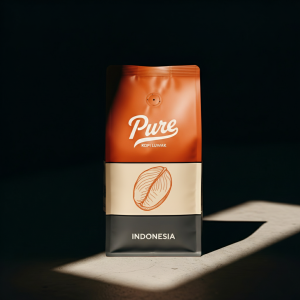
Pure Kopi Luwak
Wild civet coffee from Java. 88.5 SCA cupping score. From $125 for 100g.
What followed was not just pragmatic consumption but ritualization. Something obtained through ingenuity and circumstance, prepared with care, and shared discreetly among trusted community members naturally acquired ceremonial weight. By the 19th century, kopi luwak had become a marker of special occasions in Javanese, Sundanese, and Batak communities — served to honor guests of high standing, to mark family milestones, or to consecrate agreements.
The Preparation as Ceremony
Traditional Javanese kopi luwak preparation follows a sequence that varies by region and family tradition but maintains a consistent structure. The beans are typically roasted using a clay pan (wajan) over a wood fire, stirred continuously with a wooden paddle. The smell of the roasting — earthy, rich, less acrid than commercial roasts — functions as an invitation, signaling to the household that something significant is being prepared. The grinding follows, using a stone mortar (cobek and ulekan), with the rhythm of grinding understood to influence the coffee’s character. Masters of this technique produce a grind consistency that modern burr grinders approximate but rarely match in terms of tactile engagement with the material.
The brew method in traditional settings is what Indonesian coffee culture calls kopi tubruk — ground coffee steeped directly in hot water without filtration, allowed to settle, then poured carefully to minimize sediment in the cup. The water temperature is judged by observation rather than thermometer: bubbles rising from the base of the vessel before a rolling boil, approximately 85°C to 90°C by modern measurement. This deliberate restraint from full boiling preserves the delicate volatile compounds in kopi luwak that aggressive heat would destroy.
Try the coffee this article is about
Wild-sourced from Java, 88.5 SCA cupping score, free US shipping. From $125 for 100g.
Shop Pure Kopi Luwak →The Serving and Social Protocols
Serving order in formal Javanese ceremony reflects social hierarchy: the eldest or most honored guest receives the first cup, which is poured from a specific height to create a small crema — a technique that aerates the surface and demonstrates the server’s skill. The cup is presented with both hands, or with the right hand supported by the left forearm, a gesture of respect found throughout Javanese and Sundanese courtesy traditions. The guest does not drink immediately. A pause follows, sometimes accompanied by a brief acknowledgment of what has been prepared and why. The consumption itself is unhurried.
These details are not arbitrary. Each element communicates something: the quality of the ingredients, the effort invested, the respect for the recipient, the community’s shared understanding that this particular coffee occupies a different category from everyday consumption. Anthropologists studying Indonesian material culture have noted that food offerings in Javanese society function as social text — their preparation and presentation encode messages that words alone don’t carry.
Contemporary Practice
The traditional ceremony survives in rural Javanese communities and in deliberate cultural preservation efforts, though its form has adapted. Some Bali-based producers incorporate ceremonial elements into tourism experiences, though these tend to be abbreviated and theatrical rather than authentic. In communities where kopi luwak production remains family-based — certain villages in West Java, Central Java, and the highlands of East Java — the ceremonial dimension persists in attenuated form: a particular reverence in how the coffee is offered, an understanding that authentic kopi luwak is not an everyday drink.
Contemporary Indonesian writers and researchers, including those working in the field of culinary anthropology, have argued that kopi luwak’s cultural significance is often misrepresented internationally — reduced to its price and novelty while its role as a carrier of social meaning is ignored. The coffee that reaches global markets has usually been stripped of context entirely: processed, packaged, and shipped without any trace of the communities and traditions that first recognized its value.
What the Ceremony Preserves
At its core, the kopi luwak ceremony preserves something that the modern specialty coffee movement has rediscovered from a different direction: attention. The requirement to select carefully, prepare deliberately, serve respectfully, and drink mindfully is not inefficiency — it is a technology for producing an experience that rushed consumption cannot replicate. The first cup of well-prepared kopi luwak tasting done carefully tends to reveal flavors that the same coffee drunk hurriedly misses entirely.
Understanding how kopi luwak functions within Indonesian culture beyond its commercial identity changes how you think about preparing and drinking it — whether you’re in a Javanese kitchen or your own home.
Pure Kopi Luwak
Wild civet coffee from Java. 88.5 SCA cupping score. From $125 for 100g.

Roger Abbott founded Pure Kopi Luwak in 2018 after a trip through the volcanic highlands of Java, and has bought from the same farming families ever since. He only works with collectors of wild civet coffee, never caged. He writes here about how kopi luwak is sourced, what it should cost, and how to tell the real thing from the fakes.