A food scientist studying the Maillard reaction at Wageningen University in the Netherlands would tell you that coffee and chocolate share more chemistry than almost any other food pairing in existence. Both are fermented, dried, and then roasted. Both undergo the same sequence of browning reactions that produce pyrazines, furans, and aldehyde compounds responsible for the most recognizable aspects of their flavor. When you drink kopi luwak alongside 72% dark chocolate, you aren’t just indulging a tradition — you’re observing flavor convergence in real time.
But the pairing goes deeper than shared roasting chemistry, and the specific qualities of wild-sourced kopi luwak make it a more natural match for fine chocolate than almost any other coffee. Understanding why requires a quick look at what makes each product unusual at its best.
The Chemistry That Links Them
Research published in Frontiers in Sustainable Food Systems in 2022 characterized kopi luwak’s flavor as “earthy, musty, syrupy, smooth, and rich with both jungle and chocolate undertones.” This is not marketing language — it reflects documented chemical differences between civet-processed and conventionally processed beans. A comparative analysis cited in the same literature found elevated levels of caprylic methyl ester and capric acid methyl ester in civet-processed Robusta beans compared to unprocessed equivalents. These compounds are classified as flavoring agents associated with creamy, dairy-like notes — the same register you encounter in high-quality milk chocolate.

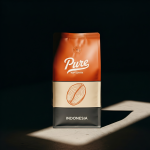
Pure Kopi Luwak
Wild civet coffee from Java. 88.5 SCA cupping score. From $125 for 100g.
Dark chocolate above 70% cacao also undergoes fermentation before roasting, and the fermentation period — typically five to seven days for fine cacao — produces a range of organic acids, esters, and aldehydes that directly parallel those found in washed-process specialty coffee. The roasting then transforms these precursors through Maillard reactions, producing the bitter-sweet complex of flavors that distinguish fine dark chocolate from sugar-and-fat confectionery.
When you bring both together in a tasting, the shared precursors create a harmonic effect: each amplifies the other’s depth while the differences (the coffee’s earthy-syrupy character, the chocolate’s bitter-roasted profile) provide contrast. It’s the same principle behind the classic mocha, distilled into its simplest form.
Origin Matters: Which Chocolates Work Best
Not all dark chocolate pairs equally well with kopi luwak. The origin of the cacao shapes the flavor profile of the chocolate in ways that either complement or compete with the coffee’s character.
Ecuadorian cacao (particularly from the Arriba Nacional variety) tends toward floral, light-fruit notes with mild bitterness — it pairs beautifully with kopi luwak’s caramel sweetness without competing with the earthier bottom notes. Madagascan cacao, which is famous for its bright red-fruit acidity and sharp finish, creates a more dynamic contrast pairing — the coffee’s smoothness cushions the chocolate’s sharpness in a way that opens up both. Indonesian cacao, when available in fine form, produces a notably earthy, woody chocolate that creates an almost soil-to-cup terroir conversation with Javanese kopi luwak from the same archipelago.
What doesn’t work: very high-percentage cacao above 85%, which introduces excessive tannin bitterness that competes with rather than complements the coffee; anything below 65%, where added sugar pushes the sweetness above the coffee’s natural register and flattens complexity; and cacao with added spices, flavorings, or fruit inclusions that compete with the coffee’s aromatics.
Try the coffee this article is about
Wild-sourced from Java, 88.5 SCA cupping score, free US shipping. From $125 for 100g.
Shop Pure Kopi Luwak →The Affogato Variant: Cold Meeting
Beyond drinking them side by side, the most elegant meeting point between kopi luwak and chocolate is the coffee-chocolate affogato: a small scoop of high-quality chocolate gelato (made with 62–70% cacao, not sweetened chocolate sauce) over which a single shot of hot kopi luwak espresso or a measured pour of concentrated pour-over is delivered. The thermal contrast between the hot coffee and cold gelato creates a brief emulsification window where the fat from the gelato coats the tongue and makes the coffee’s softer flavor compounds more perceptible than they would be in a plain cup.
Timing matters in this application: the gelato should be just beginning to melt at the edges when you take the first spoonful, capturing the contrast between the hot coffee and cold chocolate simultaneously. Waiting too long produces a muddy, over-emulsified result where neither element retains its character.
Making Chocolate With Kopi Luwak
For serious applications in the kitchen, kopi luwak can be used to infuse chocolate at the ganache stage. The technique is simple: steep coarsely ground kopi luwak beans in warm cream (70°C for 15 minutes, then strain) before adding the cream to chopped dark chocolate for ganache. The result is a truffle or chocolate coating with the coffee’s specific profile — smoother and more chocolatey than ganache made with standard espresso, because the enzymatic processing that distinguishes kopi luwak translates into less bitterness even when extracted into fat rather than water.
Chocolatiers who have worked with kopi luwak in this application have noted that the reduced bitterness means you can use a higher coffee-to-cream ratio without overwhelming the chocolate’s own character. Where standard espresso ganache requires careful calibration to avoid excessive roasted-bitter notes, kopi luwak ganache has more headroom for concentration.
Pairing Beyond Dessert
The kopi luwak and chocolate combination extends beyond tasting plates and confectionery. At the savory end, a mole sauce or cacao-rubbed meat benefits from the same syrupy-smooth register that kopi luwak brings to dessert pairings. A Oaxacan-style chocolate mole — made with dark cacao, dried chiles, and spices — paired with kopi luwak as the table coffee creates an extraordinary umami-rich contrast where the coffee’s caramel-earthiness bridges the chocolate and chile elements in the mole.
This is not a typical pairing suggestion, and it requires high-quality execution on the mole side to work — but for anyone who takes food and coffee as seriously as they take wine and food, it’s worth exploring.
The Benchmark Combination
If you want a clean, no-preparation introduction to how well these two fermented, roasted products pair, the simplest version is also the most revealing: a 50–75g square of 70–75% single-origin dark chocolate, snapped cleanly at the table, alongside a freshly brewed cup of wild-sourced Java kopi luwak. Eat half the chocolate. Drink a sip of coffee. Note what changed. Eat the rest of the chocolate. Drink another sip. Note it again.
The progression — from individual elements to combined pairing to aftertaste — tells the story of why these two products have been paired since European traders first brought both cacao and Indonesian coffee back to the same ports in the 17th century. The chemistry was there long before anyone had the vocabulary to describe it.
For a broader framework for pairing kopi luwak with other foods, the full food pairing guide covers the flavor architecture in more detail. And if you’re curious how coffee and chocolate compare at the molecular level beyond this specific pairing, the connoisseur’s pairing guide goes deeper into the chemistry they share.
Pure Kopi Luwak
Wild civet coffee from Java. 88.5 SCA cupping score. From $125 for 100g.

Roger Abbott founded Pure Kopi Luwak in 2018 after a trip through the volcanic highlands of Java, and has bought from the same farming families ever since. He only works with collectors of wild civet coffee, never caged. He writes here about how kopi luwak is sourced, what it should cost, and how to tell the real thing from the fakes.