First crack in a home coffee roaster sounds like popcorn — a rapid series of snaps as steam expands inside the bean and the structure fractures. For most Arabica coffees, this happens somewhere around 196°C (385°F). For kopi luwak green beans, experienced roasters who’ve worked with civet-processed material consistently report that first crack arrives slightly earlier and sounds slightly different: more spread out, less uniform. That difference is meaningful. It reflects the fact that the civet’s digestive process has already altered the bean’s internal structure — its proteins are partially hydrolyzed, its cell walls have been permeated by gut acids and fermentation metabolites — and the bean responds to roasting heat differently as a result.
Green kopi luwak beans are available from specialty suppliers and are increasingly sought by serious home roasters who want to finish the coffee exactly to their own preference rather than accepting someone else’s roast. Roasting them successfully requires understanding what makes these beans different at the cellular level — and why the advice that applies to washed Ethiopian or natural Brazilian greens doesn’t transfer directly.
What Green Kopi Luwak Looks and Smells Like
Properly sourced wild kopi luwak green beans arrive cleaned, dried, and hulled — the outer parchment removed, the green bean exposed. They should look similar to green Arabica from the same origin: slightly bluish-green to pale green, dense, with a faint silverskin remnant in the central crease. What distinguishes them from conventional green Arabica is primarily the smell: unroasted kopi luwak green beans carry a faint earthiness and a subtle mustiness that isn’t present in washed beans. This is not a defect. It’s the chemical signature of the civet’s biological processing — the same compounds that, after roasting, contribute to the characteristic dairy-earthy aromatic profile of the finished cup.
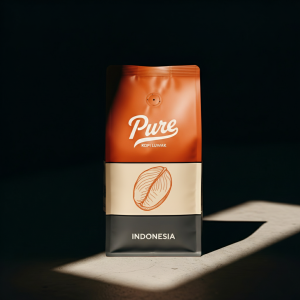
Pure Kopi Luwak
Wild civet coffee from Java. 88.5 SCA cupping score. From $125 for 100g.
Density is another distinguishing feature. Kopi luwak beans from Java’s highland Arabica farms (grown at 900-1500m elevation) tend to be moderately dense — harder than lowland Robusta but not as rock-hard as high-grown Kenyan or Ethiopian beans at 1800m+. The civet’s digestive processing has removed some of the external structural layers and altered surface chemistry, which means these beans conduct heat differently during roasting than their density alone would suggest.
Equipment for Home Roasting
Given the price of green kopi luwak — typically $30-50 per 100g for genuine wild-sourced beans — a dedicated home drum roaster is strongly recommended over an improvised popcorn popper or stovetop pan. The reason is control. Kopi luwak beans benefit from precise temperature management and even heat distribution, both of which drum roasters provide better than alternatives. Fluid-bed (air) roasters are a reasonable second choice — they’re faster and allow you to see bean color development in real time, which is valuable for a high-stakes roasting session.
Whatever equipment you use, calibrate it before your kopi luwak batch. Run a test batch of similarly-density conventional Arabica to verify your roaster’s temperature curves and timing. Kopi luwak green beans are not a platform for experimenting with a new roasting setup.
Try the coffee this article is about
Wild-sourced from Java, 88.5 SCA cupping score, free US shipping. From $125 for 100g.
Shop Pure Kopi Luwak →The Roast Profile: Why Medium is Optimal
The standard roasting arc for home coffee runs from light roast (first crack only, ending around 205°C) through medium (extending past first crack, 210-220°C) to dark (approaching or entering second crack at around 225°C/435°F). For kopi luwak, the optimal target is medium roast — and the reason is chemical, not aesthetic preference.
The civet’s enzymatic processing produces the distinguishing characteristics of kopi luwak through modifications to the bean’s protein structures and volatile precursor compounds. These modifications express themselves most clearly at medium roast: the enzymatically-modified proteins develop into the smooth, low-bitterness body that defines a high-quality kopi luwak cup, and the fatty acid methyl esters that contribute dairy and caramel aromatic notes are preserved rather than burned off. Dark roasting destroys this complexity. Above second crack, you’re essentially caramelizing the differences away — a dark-roasted kopi luwak tastes like any dark-roasted Arabica from the region, with none of the processing characteristics that justify its price.
The optimal roasting temperature guide for kopi luwak covers the specific temperature curves in more detail, but the practical summary: target an end temperature of 215-222°C, listen for a spread-out first crack and stop development before any second crack sounds. Total roast time in a drum roaster should run 10-14 minutes for most batches at this size.
Resting and Degassing
Freshly roasted coffee beans — any beans — off-gas carbon dioxide for days after roasting. Brewing too soon after roast results in unstable extraction and a flat cup. The standard guidance for Arabica is to rest 3-7 days before brewing. For kopi luwak, the modified protein and volatile compound profile means that the aromatic expression continues developing through this resting period, and some roasters report that kopi luwak actually benefits from slightly longer resting — 5-10 days — before the full aromatic character stabilizes in the cup.
Store your freshly roasted beans in an airtight container at room temperature, away from light. Avoid refrigerating freshly roasted beans — the condensation from temperature cycling damages flavor development. A one-way CO₂ valve bag is ideal. You’ve just invested significant time and cost in the full arc from green bean to roasted coffee; the resting phase costs nothing except patience.
The Case for Buying Pre-Roasted
Home roasting kopi luwak green beans is a rewarding project if you have the equipment, the patience, and an existing home roasting practice. But it introduces meaningful risk to an expensive material. A missed roast on $40 of green beans is a $40 mistake. For most buyers, purchasing properly roasted wild kopi luwak from a producer who can control roast quality with commercial-grade equipment and intimate knowledge of the bean batch is the more reliable path to the cup this coffee is capable of producing.
The green bean home roasting route makes most sense for advanced home roasters who want to explore how their own roasting decisions affect the final cup — and who can accept that some batches won’t hit the mark. If that describes you, the journey is genuinely interesting. The modified structure of kopi luwak beans produces roasting behavior that’s different from any other coffee you’ll work with, and developing an intuition for those differences is part of the education in what makes this coffee exceptional. The tasting notes guide can help you evaluate whether your roast has expressed the full potential of the beans.
Pure Kopi Luwak
Wild civet coffee from Java. 88.5 SCA cupping score. From $125 for 100g.

Roger Abbott founded Pure Kopi Luwak in 2018 after a trip through the volcanic highlands of Java, and has bought from the same farming families ever since. He only works with collectors of wild civet coffee, never caged. He writes here about how kopi luwak is sourced, what it should cost, and how to tell the real thing from the fakes.