In 2013, following a BBC documentary that exposed cage-farming practices in the Indonesian kopi luwak industry, UTZ Certified — at the time one of the world’s largest sustainable coffee certification bodies — announced publicly that it would not certify any kopi luwak product. Not cage-farmed, not wild-claimed. The position was unambiguous: the verification challenges were too great, and the welfare risks too significant, to extend UTZ’s certifications to this product category. UTZ subsequently merged with the Rainforest Alliance in 2018, and the combined organization has maintained this stance.
That context is worth understanding before we talk about what “organic kopi luwak” can and cannot mean. The short version: USDA organic certification and EU organic certification both apply to the farm growing the coffee cherries, not to what happens after a civet eats them. And because the two largest sustainable coffee certification bodies won’t touch kopi luwak as a category, the landscape of meaningful certification for this product is narrower than the marketing language sometimes implies.
What Organic Certification Actually Covers
USDA National Organic Program (NOP) certification applies to agricultural operations — in coffee’s case, the farm where the coffee plants are grown. To receive USDA organic certification, a coffee farm must use no synthetic fertilizers, pesticides, herbicides, or fungicides for a period of at least three years prior to certification, and must maintain an ongoing organic management plan approved by an accredited certifying agent.

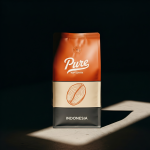
Pure Kopi Luwak
Wild civet coffee from Java. 88.5 SCA cupping score. From $125 for 100g.
EU organic certification (under the EU Organic Regulation 848/2018) operates similarly, focused on the cultivation practices of the farm. Both systems require annual audits by accredited third-party bodies.
When these certifications appear on kopi luwak packaging, they mean the coffee cherries were grown organically on a certified farm. They say nothing about the civet processing itself, the conditions of the civets, or whether the product is genuinely wild-sourced. An organic label on a cage-farmed kopi luwak product is technically honest about the farm’s growing practices while being silent about the welfare conditions of the animals involved.
Try the coffee this article is about
Wild-sourced from Java, 88.5 SCA cupping score, free US shipping. From $125 for 100g.
Shop Pure Kopi Luwak →What Makes Wild Sourcing the More Important Standard
For kopi luwak specifically, the more meaningful quality and ethics indicator is not organic certification but wild sourcing. Wild civets — free-living animals foraging naturally on or near coffee farms — select peak-ripe cherries as part of their natural diet. The coffee they process is, in a functional sense, already “wild-grown” in that the civet is operating in its natural environment. Many traditional kopi luwak production areas in Java’s highland farms are naturally low-input, with old-growth shade trees and minimal chemical intervention, regardless of whether the farm carries formal organic certification.
The distinction between wild and caged kopi luwak matters far more to both quality and ethics than the presence or absence of a USDA organic logo. A wild-sourced kopi luwak from a non-certified Javanese farm is categorically different from a cage-farmed kopi luwak from an organically certified farm — the certification on the latter covers a small slice of the supply chain while the most important part (the animal’s welfare and the quality of its cherry selection) goes unverified.
What Certification Actually Signals
For specialty coffee buyers who care about supply chain integrity, the certification that adds the most real value to a kopi luwak purchase is traceability documentation from the producer — specific farm location, collection date, batch number — combined with evidence of genuine wild sourcing. This is harder to fake than an organic logo and more directly relevant to the quality of the product.
Third-party verification matters. After the BBC documentary and the subsequent industry scrutiny, some kopi luwak producers in Sumatra invited representatives from World Animal Protection, UTZ, and international importers to observe their operations directly and verify wild-collection claims. That kind of transparent, documented verification is more meaningful than any single certification logo.
The Rainforest Alliance’s Sustainable Agriculture Network guidelines for Indonesian coffee specifically prohibit caged wildlife on certified farms — meaning an RA-certified farm cannot also be a cage-farming kopi luwak operation. If a kopi luwak product claims to come from an RA-certified farm, that’s a meaningful negative claim: the farm doesn’t cage civets. It doesn’t verify that the farm is the actual source of the kopi luwak, or that collection was genuinely wild, but it eliminates one known bad practice.
Benefits of Genuinely Clean Kopi Luwak
If you’re looking at kopi luwak from an organically farmed, wild-sourced operation — which does exist, particularly among smaller Javanese and Sumatran producers — there are real differences from conventional production. Organically managed coffee farms tend to have higher biodiversity, more varied shade-tree canopy, and lower pest pressure than high-input conventional farms. All of these factors influence coffee cherry quality and, by extension, the quality of beans that wild civets select and process.
The absence of synthetic pesticide residues in the cherry means the civet isn’t ingesting those compounds, and they don’t appear in the processed bean. Given the premium price of kopi luwak and the attention that buyers pay to what’s in the cup, organic farming practices are a reasonable indicator of producer commitment to quality — not because the organic certification changes the kopi luwak processing, but because it reflects the broader care taken at the farm level.
For buyers looking to make a well-informed purchase, the guide to verifying authentic kopi luwak outlines what documentation and transparency indicators actually matter. And when you’re ready to buy, Pure Kopi Luwak is sourced exclusively from wild civets on Javanese farms, with traceability that goes further than any certification label alone.
Pure Kopi Luwak
Wild civet coffee from Java. 88.5 SCA cupping score. From $125 for 100g.

Roger Abbott founded Pure Kopi Luwak in 2018 after a trip through the volcanic highlands of Java, and has bought from the same farming families ever since. He only works with collectors of wild civet coffee, never caged. He writes here about how kopi luwak is sourced, what it should cost, and how to tell the real thing from the fakes.