A 2019 study published in Scientific Reports examined cold brew extraction using two Colombian specialty coffees from Huila and Nariño, running extraction times between 14 and 22 hours with medium-coarse grind settings. What the researchers found confirmed what experienced cold brew producers had observed empirically: the relationship between time, grind size, and the final cup isn’t linear. Push past the optimal window and the flavor doesn’t simply become more concentrated — it shifts toward astringency and a flat, one-dimensional bitterness. Stay within it, and you get something that no hot brewing method produces: a naturally sweet, low-acid concentrate that reveals flavor compounds ordinarily masked by heat.
For kopi luwak, these dynamics matter more than for any other coffee. A bean that costs $125 for 100 grams deserves brewing conditions that extract its character, not distort it. Cold brew, done correctly, is one of the best methods available — but “done correctly” requires precision that generic cold brew guides don’t provide for premium beans.
Why Cold Brew Works Exceptionally Well for Kopi Luwak
Kopi luwak’s defining characteristic is low bitterness. The proteolytic enzymes in the civet’s digestive tract partially hydrolyze the proteins that, during roasting, would typically produce bitter chlorogenic acid degradation products. The result is a bean with a structurally different flavor potential — one where the chocolate and caramel compounds are more prominent precisely because the bitter compounds that normally compete with them have been reduced.
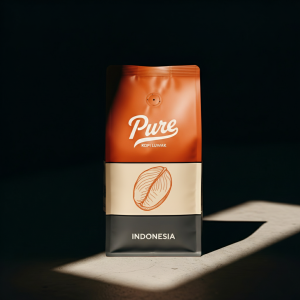
Pure Kopi Luwak
Wild civet coffee from Java. 88.5 SCA cupping score. From $125 for 100g.
Hot brewing methods extract aggressively. Water at 92–96°C — the recommended range for most specialty coffee — dissolves soluble solids quickly and indiscriminately. Volatile aromatic compounds that give kopi luwak its characteristic jungle-and-caramel top notes can be driven off by heat. Extraction happens too fast to be selective.
Cold water is different. At refrigerator temperature (around 4°C) or cool room temperature (18–22°C), extraction slows dramatically. The compounds that dissolve readily at cold temperatures — sugars, certain organic acids, specific aromatic esters — are extracted preferentially over the more heat-dependent bitter compounds. PMC research on hot versus cold brew chemistry has documented measurably lower titratable acidity in cold brew versus hot brew from the same beans, along with a different distribution of caffeoylquinic acid isomers that directly influences bitterness perception.
For kopi luwak, which is already low in bitterness, cold brew amplifies this character further, producing a cup that can taste almost like liquid chocolate — dense, smooth, with essentially no sharp edges.
Try the coffee this article is about
Wild-sourced from Java, 88.5 SCA cupping score, free US shipping. From $125 for 100g.
Shop Pure Kopi Luwak →The Right Grind Size
Grind size is the single most consequential variable in cold brew quality. Too fine, and the increased surface area accelerates extraction past the optimal point, producing bitterness even at cold temperatures. Too coarse, and you’re leaving flavor compounds in the spent grounds, wasting expensive beans.
For kopi luwak cold brew, a medium-coarse grind — roughly the consistency of coarse sea salt, approximately what you’d use for a French press on the coarser end — provides the correct surface area for a 14–18 hour steep at refrigerator temperature. The grind should be consistent, which means a burr grinder is not optional for beans at this price point. A blade grinder produces irregular particle sizes that result in simultaneous under-extraction of large particles and over-extraction of fine ones, creating a muddy, bitter result that misrepresents the bean entirely.
The grind-to-water ratio most appropriate for kopi luwak cold brew concentrate sits around 1:5 to 1:6 by weight (coffee to water). This produces a concentrate suitable for drinking diluted with an equal part cold water or milk. For those who prefer a ready-to-drink cold brew rather than a concentrate, a 1:8 ratio steeped for 16–18 hours at refrigerator temperature works well. For a complete guide to matching grind settings to each brewing method, the kopi luwak grind size guide covers the full range.
Temperature: Refrigerator vs. Room Temperature
Two temperatures are commonly used for cold brew: refrigerator temperature (2–4°C) and room temperature (18–25°C). They produce different results, and the choice matters for kopi luwak specifically.
Room temperature cold brew extracts faster — typically 12–14 hours compared to 16–24 hours at refrigerator temperature. It also extracts a slightly broader range of compounds, including some of the lighter aromatic fractions that refrigerator extraction misses. The result is slightly more complex but also slightly more perishable — room temperature cold brew should be consumed within 24 hours of completion.
Refrigerator cold brew extracts more slowly and selectively, emphasizing the sweetest and most chocolatey elements of kopi luwak’s profile. It keeps for up to two weeks refrigerated in a sealed container. For most home applications, this is the recommended approach: set it up before bed, strain it the following evening, and you have a stable concentrate for the rest of the week.
The Brewing Process
The equipment needed is minimal: a mason jar or French press, a fine-mesh strainer or coffee filter for straining, and a kitchen scale. The process is straightforward.
Weigh your kopi luwak beans — 50 grams is a good starting quantity for a 1:6 ratio producing approximately 300ml of concentrate. Grind to medium-coarse. Combine with 300ml of cold, filtered water in your jar. Stir gently to ensure all grounds are wetted. Cover and place in the refrigerator. After 16–18 hours, strain through a fine-mesh strainer lined with a paper filter (the double filtration removes the fine sediment that gives cold brew its characteristic haze and occasional bitterness from over-extracted fines). The resulting liquid should be dark amber, almost opaque, with visible viscosity.
Taste immediately. Kopi luwak cold brew concentrate correctly made should have the consistency and sweetness of a very good cold chocolate milk, with coffee’s aromatics layered in — no sourness, no sharpness, essentially no bitterness. If it tastes flat or muddy, grind coarser next time. If it tastes sour, grind finer or extend the steep.
Serving and Applications
The simplest serve is over ice, diluted 1:1 with cold filtered water. The second simplest is over ice with full-fat milk or oat milk, which amplifies the creamy, dairy-like caprylic ester notes that make kopi luwak unusual even at cold temperature.
Cold brew kopi luwak concentrate is also the basis for an exceptional affogato: pour 30–40ml over a scoop of vanilla or chocolate ice cream. The fat in the ice cream emulsifies with the cold brew, creating a textural richness that hot espresso affogato doesn’t produce in the same way — the temperature is closer, so the ice cream melts more slowly and the integration of flavors is more gradual.
For those who want to explore cold brew as a path to understanding premium bean flavor, cold brew with premium coffee beans provides the broader context for why cold extraction reveals characteristics that hot methods can obscure. The investment in quality beans pays off most clearly in cold applications — and with wild-sourced Java kopi luwak, the cold brew result is a demonstration of what careful sourcing and correct brewing can achieve together.
Pure Kopi Luwak
Wild civet coffee from Java. 88.5 SCA cupping score. From $125 for 100g.

Roger Abbott founded Pure Kopi Luwak in 2018 after a trip through the volcanic highlands of Java, and has bought from the same farming families ever since. He only works with collectors of wild civet coffee, never caged. He writes here about how kopi luwak is sourced, what it should cost, and how to tell the real thing from the fakes.