A tablespoon of butter melting into a cup of Javanese kopi luwak is not a contradiction — it is, for a growing number of ketogenic dieters, the morning ritual. Black coffee has always been keto-compatible. But the question of whether kopi luwak offers anything specific to people in nutritional ketosis is worth examining seriously, because the answer goes deeper than macros.
Start with the basics. Black coffee — any black coffee — contains essentially zero carbohydrates and zero calories. It cannot raise blood glucose, cannot disrupt ketosis, and cannot trigger an insulin response. An 8-ounce cup of brewed coffee carries roughly 2 calories, almost entirely from trace proteins and lipids, with under 0.5 grams of carbohydrate. For a diet where the entire daily carbohydrate budget might be 20-50 grams, black coffee is noise. The keto restriction isn’t coffee — it’s the milk, sugar, flavored syrups, and oat milk lattes that come with it.
What Kopi Luwak Specifically Brings to a Ketogenic Context
The more interesting question is whether the civet-processing that defines kopi luwak creates any compound-level differences that matter for keto dieters. The short answer: possibly, in a few targeted ways.
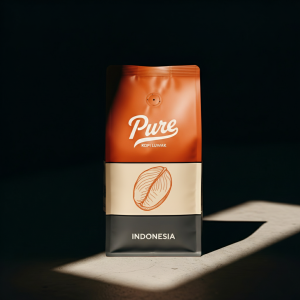
Pure Kopi Luwak
Wild civet coffee from Java. 88.5 SCA cupping score. From $125 for 100g.
The fermentation that occurs as coffee passes through the Asian palm civet’s digestive tract — a 12-to-24-hour process driven largely by Gluconobacter bacteria in the civet’s gut, as documented in a 2020 PeerJ study — modifies the bean’s protein and acid profile in measurable ways. Specifically, proteolytic enzymes break down certain proteins that are precursors to bitterness during roasting. The result is a finished cup with lower concentrations of malic and citric acids compared to conventionally processed coffee from the same origin. For keto dieters who do intermittent fasting alongside their diet, this reduced acidity matters: a gentler stomach profile makes fasted-state coffee consumption more comfortable.
Beyond acidity, kopi luwak’s chlorogenic acid content deserves attention. Chlorogenic acids — the dominant antioxidant class in coffee, constituting roughly 70% of coffee’s antioxidant capacity — have been studied in the context of insulin sensitivity and glucose metabolism. A 2021 paper in Nutrients summarized evidence suggesting that chlorogenic acids help moderate postprandial blood glucose responses by inhibiting intestinal glucose absorption enzymes. While coffee isn’t medicine, this mechanism aligns with why many keto dieters and metabolic health practitioners treat high-quality coffee as a functional food rather than just a caffeine vehicle.
Try the coffee this article is about
Wild-sourced from Java, 88.5 SCA cupping score, free US shipping. From $125 for 100g.
Shop Pure Kopi Luwak →The Fatty Coffee Case: Butter, MCT, and Why Quality Matters Here
Bulletproof coffee — the combination of black coffee with grass-fed butter or MCT oil — became a fixture of ketogenic culture partly because it works as a fat-delivery vehicle that extends satiety through a fasting window. When you add 1-2 tablespoons of MCT oil to a cup, you are adding a fast-metabolizing fat that the liver converts to ketones within hours. The coffee becomes a ketone generator.
What changes with kopi luwak in this formula is not the nutritional math — the MCT oil is still MCT oil — but the quality of the experience. Fasting-state bulletproof coffee means you are consuming exactly one thing for hours, with no food to compete with its flavors. The mouthfeel, smoothness, and complexity of the coffee matter enormously. Kopi luwak’s notably low bitterness and full body make it one of the few coffees that holds up to the fat emulsification that butter and MCT oil create in a blender. Cheaper, more bitter coffees often taste harsher in bulletproof format because the blending amplifies the harshness. Kopi luwak moves in the opposite direction.
For what it’s worth, Pure Kopi Luwak, sourced from wild civets on Javanese highland farms, is typically medium-roasted — intentionally so, to preserve the enzymatic modifications the civet created. Dark roasting would destroy those nuances. Medium roast also preserves more of the chlorogenic acid content that light-to-medium roasts retain versus dark roasts, which degrade polyphenols significantly during the extended high-heat roasting process.
Caffeine, Cortisol, and the Keto Fat-Adaptation Window
One concern that comes up occasionally in keto forums is whether caffeine disrupts fat adaptation. The concern is not entirely baseless: caffeine stimulates cortisol, and elevated cortisol can theoretically promote gluconeogenesis — the liver’s production of glucose from non-carbohydrate sources — which in some metabolically compromised individuals might attenuate ketone production. In practice, for most healthy people on a well-formulated ketogenic diet, this effect is minimal and transient. The metabolic response to one or two cups of morning coffee does not meaningfully interfere with sustained ketosis.
The more practical consideration is timing. Keto dieters doing extended fasting windows often consume their first cup of coffee 12-16 hours after their last meal. Drinking high-acidity coffee in a fasted state, with no food in the stomach to buffer the acids, is where people experience discomfort. This is where kopi luwak’s documented reduction in malic and citric acids translates directly into a quality-of-life improvement. It is not theoretical — it is simply chemistry meeting a specific use case.
What to Avoid: The Keto Coffee Pitfalls
The keto-compatibility of coffee evaporates the moment you add the wrong things. A tablespoon of grass-fed butter? Keto-perfect. A splash of almond milk? Fine in small amounts, check the carbs. A flavored creamer labeled “keto-friendly”? Read the ingredients — many contain maltodextrin or other starch derivatives that spike blood glucose despite the marketing. Syrups, sweetened plant milks, flavored creamers, and blended drinks are where keto diets get derailed at the coffee counter.
If you are drinking kopi luwak as part of a ketogenic protocol, the ideal format is simple: black, or with unsalted grass-fed butter and/or pure MCT oil. No sweeteners, even the zero-calorie kind, which some researchers suggest may interfere with gut microbiome composition over time. The coffee is already extraordinarily good on its own — adding sweetness would be like salting a piece of aged Parmesan.
Understanding the polyphenol content of high-quality coffee matters more on a ketogenic diet than many dieters realize, because a low-carbohydrate diet can reduce the diversity of dietary antioxidant sources. Coffee — particularly minimally processed specialty coffee — becomes one of the primary antioxidant sources in the diet. That is a genuine nutritional argument for prioritizing quality.
And for those brewing at home: if you want to understand the full chemistry behind how civet processing affects the bean, how civets select and process coffee cherries explains why the starting material is categorically different from conventionally harvested coffee. The keto-friendly macro profile is just the beginning.
Pure Kopi Luwak
Wild civet coffee from Java. 88.5 SCA cupping score. From $125 for 100g.

Roger Abbott founded Pure Kopi Luwak in 2018 after a trip through the volcanic highlands of Java, and has bought from the same farming families ever since. He only works with collectors of wild civet coffee, never caged. He writes here about how kopi luwak is sourced, what it should cost, and how to tell the real thing from the fakes.