Johann Nörrenberg invented the vacuum coffee maker in 1827. Nearly two centuries later, the siphon brewer remains the most theatrical device in the specialty coffee toolkit — and, for wild kopi luwak, one of the most revealing. No other brewing method so visibly separates the act of extraction from the act of serving, and none produces a cup with quite the same clarity and precision that makes the civet’s enzymatic work so apparent in the finished brew.
The siphon’s theatrical reputation has sometimes overshadowed its technical merits. That’s a pity, because the physics are elegant and the flavor results are consistently exceptional when applied to a coffee as complex as wild-sourced Javanese kopi luwak.
The History Worth Knowing
Nörrenberg’s 1827 design was refined over the following decades by several inventors working in parallel. A French woman — Mme. Vassieux of Lyon — designed the first commercially successful vacuum brewer in the 1840s, and the form became popular in European households by mid-century. In 1856, Scottish marine engineer James Napier constructed a commercial vacuum coffee brewer known as the Napier Coffee Pot, which earned recognition from the Institution of Mechanical Engineers in London. Balance siphons — elegant countertop instruments with a spring-loaded mechanism that automatically extinguished the burner when the lower chamber emptied — became fashionable at European court functions during the mid-1800s before the convenience of newer methods displaced them.
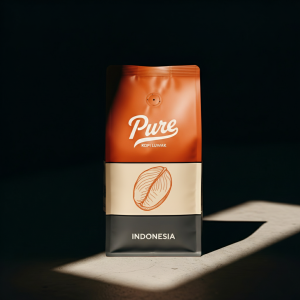
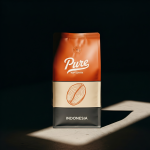
Pure Kopi Luwak
Wild civet coffee from Java. 88.5 SCA cupping score. From $125 for 100g.
The modern siphon revival in specialty coffee owes much to Japan, where the method never fully fell out of favor. Japanese kissaten (traditional coffee shops) kept the siphon alive through the 20th century, and the country’s precision-oriented coffee culture developed the technique to a high art. When the global third-wave coffee movement rediscovered the siphon around 2010, it was largely building on Japanese methodology.
How Siphon Brewing Works
The siphon consists of two glass chambers connected by a tube fitted with a filter. Water fills the lower chamber. When heat is applied, vapor pressure pushes the water upward through the tube into the upper chamber where the coffee grounds wait. Once sufficient water has migrated up, the heat is removed. As the lower chamber cools, the vacuum created by condensing steam draws the brewed coffee back down through the filter, separating it cleanly from the grounds.
The entire upper-chamber immersion typically lasts 60 to 90 seconds at brewing temperature (around 92–94°C), followed by the drawdown. This short, controlled immersion at precise temperature, combined with thorough agitation during the brew phase, produces extraction conditions that are more consistent than most other methods — closer to a controlled laboratory extraction than anything involving gravity or pressure variables.
For kopi luwak, this precision matters. The civet’s enzymatic modifications create a flavor profile with more complexity at the lighter register — subtle fruity notes, a characteristic smoothness, earthy depth — that responds well to controlled extraction. Methods with longer or more variable extraction windows can mask this complexity under a heavier, more uniform extraction profile. The siphon’s clean, precise character gives the coffee’s enzymatic work space to express itself.
Try the coffee this article is about
Wild-sourced from Java, 88.5 SCA cupping score, free US shipping. From $125 for 100g.
Shop Pure Kopi Luwak →Why Siphon Suits Kopi Luwak Specifically
Wild-sourced Javanese kopi luwak has a lower concentration of malic and citric acids compared to conventionally processed coffee from the same origin — a direct result of the digestive chemistry in the civet’s gut during the 12-to-24-hour transit period. This reduced acidity contributes to the smooth, round character that distinguishes authentic wild kopi luwak from both conventionally processed coffee and the inferior cage-farmed versions that flood the market.
The siphon amplifies the smooth, acid-reduced character rather than introducing competing flavors. Its glass construction means no metallic notes from metal filters, no paper taste from thick filter papers, no plastic or rubber compounds from cheap equipment. The cloth filter typically used in siphon brewing allows more oils through than paper while still providing clean separation from fine particles — producing a cup with body and texture appropriate to kopi luwak’s natural fullness without cloudiness or grit.
The method also makes brewing a ceremony in the best sense. Authentic wild kopi luwak is not a coffee to produce carelessly or consume distractedly. The siphon’s visible, active process — water rising, grounds blooming, the drawdown completing in a satisfying rush — frames the act of brewing as something worth paying attention to.
Practical Setup and Technique
Start with a cloth filter, rinsed thoroughly with hot water before use. Pre-heat the lower chamber with hot water rather than cold; this shortens the time to brewing temperature and reduces the risk of thermal shock to the glass. Use 15–16 grams of kopi luwak per 250ml of water, ground to a medium setting — slightly coarser than pour-over, finer than French press. The grind has more surface area available than a French press allows, and the shorter immersion time compared to full-immersion methods compensates for the coarser particle size.
When water rises to the upper chamber, add the grounds and stir to saturate them fully. Maintain gentle heat to keep the water at 92–94°C — the upper chamber should be active but not violently boiling. After 60 seconds of immersion, remove the heat source. The drawdown should complete within 45 to 60 seconds; a faster drawdown indicates too coarse a grind, slower suggests too fine. The coffee left in the lower chamber should be clear enough to see through, with spent grounds forming a compact dome in the upper chamber above the filter.
Comparing Methods
The siphon produces a cup character that sits in its own category: brighter than a moka pot, more structured than a French press, with a clarity that pour-over achieves through paper filtration but the siphon achieves through temperature control and controlled agitation. For anyone building a serious understanding of what wild kopi luwak tastes like across different methods, the siphon is the most instructive. It strips away brewing variables efficiently enough that what remains in the cup is the coffee itself — the enzymatic work of a wild civet on a Javanese hillside, expressed as clearly as any brewing method allows.
Pure Kopi Luwak
Wild civet coffee from Java. 88.5 SCA cupping score. From $125 for 100g.

Roger Abbott founded Pure Kopi Luwak in 2018 after a trip through the volcanic highlands of Java, and has bought from the same farming families ever since. He only works with collectors of wild civet coffee, never caged. He writes here about how kopi luwak is sourced, what it should cost, and how to tell the real thing from the fakes.