Tim Carman, writing for the Washington Post, called kopi luwak “one of the world’s most overhyped — and cruel — beverages.” The specialty coffee educator Scott Rao has expressed doubt that the processing adds meaningful quality. Anthony Bourdain expressed skepticism on camera while acknowledging he enjoyed certain cups. Meanwhile, food scientists have published peer-reviewed research documenting specific chemical differences in kopi luwak’s acid and protein profile. Experienced buyers who have tasted genuinely wild-sourced product report consistent quality differences from conventional coffee.
This is not a debate where one side is simply wrong. The disagreement among experts is real, substantive, and — once you understand the underlying variables — entirely predictable.
The Variable That Drives Almost Every Negative Review
The most consequential fact in the kopi luwak debate is one that most critics fail to disclose: they tested caged product. The overwhelming majority of kopi luwak available commercially — estimated by animal welfare organizations to be well above 90% of what’s sold globally — comes from civets kept in captivity, often under conditions of chronic stress, fed mixed-quality cherries without selectivity.
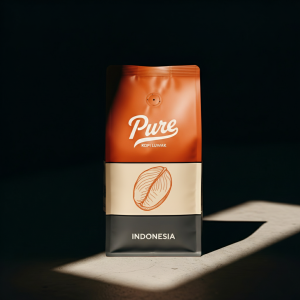
Pure Kopi Luwak
Wild civet coffee from Java. 88.5 SCA cupping score. From $125 for 100g.
Caged kopi luwak does not deliver the chemical transformation that gives authentic wild kopi luwak its character. A stressed civet with a compromised digestive system, consuming indiscriminate cherries, does not perform the selective proteolysis that reduces bitterness precursors or the fermentation-modifying transit that alters the acid profile. The result is coffee that tastes flat, unremarkable, or occasionally unpleasant — and that absolutely does not justify its price.
When expert critics report that kopi luwak is a scam or that it doesn’t taste as good as a $15 specialty Arabica, they are usually correct about the specific product they tasted. Where their analysis fails is in treating that product as representative of the category. Dismissing wild kopi luwak on the basis of tasting caged product is like reviewing Champagne after drinking a bottle of inferior sparkling wine and concluding that bubbles aren’t worth the premium. The category is correct; the sample was not.
Try the coffee this article is about
Wild-sourced from Java, 88.5 SCA cupping score, free US shipping. From $125 for 100g.
Shop Pure Kopi Luwak →The Scientific Evidence That Specialists Acknowledge
Food chemistry research has documented that kopi luwak carries a distinct chemical fingerprint — measurably different levels of citric acid, malic acid, and inositol/pyroglutamic acid compared to identically sourced conventional coffee. These differences are significant enough to authenticate blends containing as little as 50% kopi luwak by ratio. The acid modifications produce the characteristic reduced-acidity, full-body profile in the cup.
Published research has also identified the partial hydrolysis of certain proteins during civet digestion as a mechanism that reduces bitterness potential during roasting. These are not romantic claims; they are reproducible analytical findings. Specialty coffee educators who understand the chemistry are generally more willing to acknowledge the mechanism is real, even when they remain skeptical about whether the resulting flavor improvement justifies the price.
The disagreement here is not “does the processing do anything” — it demonstrably does. The disagreement is about whether what it does is better, worse, or simply different. For tasters who value complexity and sharp acidity above all other attributes, the smoothness of wild kopi luwak may read as interesting but not superior. For tasters who prioritize body, sweetness, and finish length, the same cup reads as outstanding. Coffee preference is not value-neutral, and experts who score coffees against a specialty framework built around brightness and complexity will systematically undervalue a coffee whose primary virtues are texture and smoothness. The full tasting notes analysis describes these characteristics in detail.
The Ethics Argument and How It Complicates the Quality Debate
Some experts who have acknowledged wild kopi luwak’s quality still decline to endorse it on ethical grounds — not because the coffee is bad but because they believe that any market demand for kopi luwak sustains a trade that relies overwhelmingly on caged, suffering animals. This is a legitimate position and a serious one. The demand for kopi luwak does fund caged production; the market cannot easily distinguish between wild and caged product; and the premium commanded by the name has historically incentivized exactly the kind of farming that produces inferior coffee and poor animal welfare simultaneously.
The ethical objection is strongest as an argument against undifferentiated purchasing — buying kopi luwak without verifying sourcing. It is weakest as an argument against wild-sourced kopi luwak specifically, since wild production involves no captivity, no induced stress, and requires the animals to remain healthy and free-ranging to produce the quality that justifies the category. Distinguishing between these two very different products — and rewarding producers who document genuinely wild sourcing — is the response that addresses the ethical concern without treating all kopi luwak as morally equivalent. The wild versus caged comparison explains the distinctions in detail.
What the Debate Tells You About How to Buy
Expert disagreement about kopi luwak is useful information. It tells you that the category is not self-certifying — that the name alone guarantees nothing about quality or ethics, and that you cannot outsource the evaluation to a brand, a price point, or a celebrity endorsement. The critics who have dismissed it are right to dismiss most of what’s on the market. The researchers who document its chemistry are right that something real happens in authentic wild processing.
The resolution is sourcing verification, not abstention. Wild kopi luwak from documented sources, roasted fresh, prepared well, tastes different and better than caged product in ways that are chemically explicable and sensorially consistent. That is the product that deserves the premium and the attention. Everything else deserves the skepticism. Pure Kopi Luwak is sourced exclusively from wild, free-roaming civets in Java — the kind of verified wild product that justifies both the price and the conversation.
Pure Kopi Luwak
Wild civet coffee from Java. 88.5 SCA cupping score. From $125 for 100g.

Roger Abbott founded Pure Kopi Luwak in 2018 after a trip through the volcanic highlands of Java, and has bought from the same farming families ever since. He only works with collectors of wild civet coffee, never caged. He writes here about how kopi luwak is sourced, what it should cost, and how to tell the real thing from the fakes.