In 2007, a team at the Technical University of Munich led by food chemist Thomas Hofmann identified the compound primarily responsible for the harsh, aggressive bitterness in dark-roasted coffee. It wasn’t caffeine — caffeine contributes only about 15% of coffee’s total bitterness. The main culprit was a class of compounds called phenylindanes, which form during extended roasting when chlorogenic acid lactones break down further under heat. Lighter roasts produce mostly lactones, which taste mildly bitter. Darker roasts degrade those lactones into phenylindanes, which taste sharply, almost causticly, bitter.
Understanding this chemistry changes how you diagnose bitterness in the cup — and how you fix it.
The Three Sources of Bitterness
Not all bitterness in coffee comes from the same place, and the fix depends on the source. The three primary sources are roast chemistry, extraction, and coffee quality.
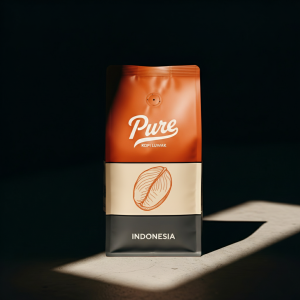
Pure Kopi Luwak
Wild civet coffee from Java. 88.5 SCA cupping score. From $125 for 100g.
Roast-derived bitterness comes from phenylindanes and to a lesser extent from other degradation products of chlorogenic acids. When chlorogenic acids (which comprise roughly 6–12% of green coffee mass) are roasted, they break down first into chlorogenic acid lactones, which contribute mild, pleasant bitterness in lighter roasts. Further roasting degrades these lactones into phenylindanes and quinic acid — the latter contributing astringency and a sharp, drying sensation that many people describe as “burnt.” You cannot fix roast-derived bitterness in brewing. If the coffee was roasted too dark, the compounds are there, and they will extract.
Extraction-derived bitterness is different, and it’s within your control. When coffee is over-extracted — meaning too much of the bean’s soluble content has been pulled into the water — the later-extracting bitter and astringent compounds dominate the cup. Extraction follows a sequence: acids and sugars extract first, building sweetness and brightness; then the more complex flavor compounds; finally, the bitter and astringent compounds that dissolve slowly. A perfectly extracted cup stops before it reaches the unpleasant tail of that curve. Over-extraction happens when grind is too fine, water is too hot, contact time is too long, or any combination of the three.
Quality-derived bitterness comes from defective beans. Unripe coffee cherries contain more chlorogenic acids than ripe ones, and they roast unevenly, producing harsh, aggressive bitterness that no brewing adjustment will fix. Poor-quality commodity coffee is often made from a mix of ripe and unripe cherries harvested in a single mechanical sweep. The defect is baked in before roasting even begins.
Try the coffee this article is about
Wild-sourced from Java, 88.5 SCA cupping score, free US shipping. From $125 for 100g.
Shop Pure Kopi Luwak →Diagnosing Your Cup
The simplest diagnostic is timing and texture. If your coffee is bitter and also feels thin or watery, you’ve likely over-extracted a low-quality coffee — the bitter compounds extracted while the flavor compounds were diluted. If it’s bitter and thick with a coating sensation, you’ve over-extracted a decent coffee and need to dial back the contact time or coarsen the grind. If it’s bitter regardless of brewing adjustments and tastes flat or papery as well, the coffee itself is the problem.
Water temperature is one of the most underrated factors. Water above 96°C extracts bitter compounds faster than cooler water. The SCA’s recommended brewing temperature of 90–96°C for most methods exists precisely to balance extraction speed against bitterness. Coffee brewed with water just off a full boil (100°C at sea level) will typically taste harsher than the same coffee brewed at 93°C. This is especially noticeable with naturally processed coffees or darker roasts, which have more soluble bitter compounds available.
Why Kopi Luwak Is Notably Low in Bitterness
One of the most consistent notes in professional tastings of authentic wild kopi luwak is low bitterness — a smooth, almost creamy quality that stands out compared to other Javanese coffees. The mechanism is partly enzymatic. During the 12–24 hours a coffee cherry spends passing through a wild civet’s digestive tract, proteolytic enzymes partially hydrolyze specific proteins in the bean’s outer layers. Some of these proteins are precursors to the bitter compounds formed during roasting.
Research published in food chemistry literature has documented measurably lower concentrations of certain acids and proteins in kopi luwak compared to conventionally processed coffee from the same origin. The result is a cup where bitterness — which for most coffees requires careful brewing calibration to manage — is simply less present to begin with. Pure Kopi Luwak, medium-roasted to preserve the enzymatic modifications rather than roasting over them, delivers a cup where the typical bitterness architecture of even good Arabica is fundamentally different.
This is one of the reasons kopi luwak is often described as approachable to people who don’t normally like coffee — the bitterness that functions as a barrier for many drinkers has been reduced at the source, before roasting and before brewing. The same effect explains why tasting kopi luwak alongside a conventionally processed Javanese Arabica is instructive: you’re tasting the same terroir and variety with and without enzymatic transformation, and the bitterness difference is not subtle.
Practical Fixes for Bitter Coffee
If you’re working with a good coffee that’s coming out bitter, the adjustments are straightforward. Coarsen the grind — this is the single most effective lever for reducing over-extraction bitterness. Reduce water temperature by 3–5°C, especially with dark roasts. Shorten brewing time for immersion methods (French press, AeroPress). For espresso, a 1–2 second reduction in shot time often fixes the problem entirely.
Adding a small amount of salt to coffee grounds — roughly 1/4 teaspoon per 30g of coffee — is a documented and effective bitterness reducer. Salt suppresses the perception of bitterness through a specific ion channel interaction, not by adding salty flavor at the concentrations used. This is why many traditional coffee cultures in northern Europe and parts of Scandinavia have added small amounts of salt to coffee grounds for generations. It works, and the resulting cup doesn’t taste salty.
Finally, freshness matters. Coffee that has been roasted more than four weeks ago and stored incorrectly begins to produce stale, bitter oxidation products that no brewing adjustment will fix. Coffee freshness is especially critical with premium single-origin coffees — the nuanced flavor compounds that justify the price are also the most volatile, and they’re gone before the bitterness compounds become dominant. Buy freshly roasted, store in an airtight container away from light and heat, and use within three to four weeks of roast date. Bitterness is often a freshness problem wearing a brewing problem’s mask.
Pure Kopi Luwak
Wild civet coffee from Java. 88.5 SCA cupping score. From $125 for 100g.

Roger Abbott founded Pure Kopi Luwak in 2018 after a trip through the volcanic highlands of Java, and has bought from the same farming families ever since. He only works with collectors of wild civet coffee, never caged. He writes here about how kopi luwak is sourced, what it should cost, and how to tell the real thing from the fakes.