In 2022, Colombian farmer Nestor Lasso’s anaerobic natural Sidra variety won the World Barista Championship — and with that victory, a once-obscure processing technique moved from the experimental fringes of specialty coffee straight into the mainstream. Anaerobic fermentation, which refers to fermenting coffee in sealed, oxygen-deprived environments, had been quietly reshaping what premium coffee could taste like for nearly a decade before Lasso’s beans announced it to the world.
The method sounds almost pharmaceutical: coffee cherries sealed in pressurized tanks, microbes multiplying in the dark, gases escaping through one-way valves. But the science behind it is surprisingly intuitive once you understand what fermentation actually does to a coffee cherry — and why oxygen deprivation changes the outcome so dramatically.
What Happens in a Sealed Tank
Traditional coffee fermentation happens in open air or water tanks, where oxygen feeds a diverse and somewhat unpredictable microbial community. Aerobic bacteria, wild yeasts, and various fungi all compete, and the result is a fermentation that’s more difficult to control. Anaerobic processing changes the equation by sealing cherries in tanks fitted with one-way carbon dioxide valves. As fermentation begins and CO₂ builds up, oxygen is purged from the environment entirely.
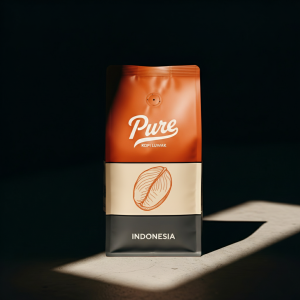
Pure Kopi Luwak
Wild civet coffee from Java. 88.5 SCA cupping score. From $125 for 100g.
What thrives in that airless space is fundamentally different from what dominates an open tank. Lactic acid bacteria — particularly strains like Leuconostoc mesenteroides and Lactiplantibacillus plantarum — proliferate aggressively in low-oxygen conditions. A 2022 study published in Food Chemistry that tracked microbial populations during anaerobic Robusta fermentation found that L. mesenteroides reached concentrations of 8.54 log₁₀ cells per milliliter and remained dominant through the entire fermentation cycle. These bacteria produce lactic acid as their primary metabolic byproduct — the same acid responsible for the clean, bright, almost yogurt-like qualities found in some natural wines — and this is precisely what gives anaerobically processed coffees their distinctive flavor signature.
Most producers run anaerobic fermentation at controlled temperatures between 15 and 25°C, with fermentation windows ranging from 48 hours to several weeks depending on the desired cup profile. Temperature discipline is essential: higher temperatures accelerate microbial activity and risk over-fermentation, while lower temperatures slow the process and allow the lactic bacteria more time to shape the flavor chemistry. The result is a far more deliberate process than the ambient fermentation that governs most natural or washed coffees.
Try the coffee this article is about
Wild-sourced from Java, 88.5 SCA cupping score, free US shipping. From $125 for 100g.
Shop Pure Kopi Luwak →The Flavor Argument
Anaerobic coffees taste unusual to anyone used to conventional processing. The increased lactic acid production creates a particular sweetness that doesn’t read as simple fruitiness — it’s more structured than that, closer to red wine or fermented stone fruit, with a thickness in the mouthfeel that washed coffees rarely achieve. Tropical esters — the volatile compounds responsible for mango, papaya, and passionfruit notes — accumulate in oxygen-free environments at higher concentrations than they do during aerobic fermentation. Floral aromatics, particularly at lighter roast levels, can be striking.
This is not everyone’s idea of what coffee should taste like. Critics argue that heavy anaerobic processing masks the terroir of the underlying bean, replacing genuine origin character with a learned fermentation signature that any sufficiently controlled tank can produce. It’s a fair concern. When anaerobic processing is executed without care for raw cherry quality, the result can tip from complex into simply weird — boozy, sour, or dominated by a single note.
The best anaerobic coffees avoid this by starting with exceptional raw material. Nestor Lasso’s Championship beans weren’t just fermentation triumphs — they were exceptional Sidra variety cherries, grown at high altitude in Colombia’s Huila region, fermented with precision. The processing amplified what was already there.
An Ancient Process in Modern Clothing
There’s a pleasing irony in the fact that anaerobic fermentation is being celebrated as a processing innovation when something functionally similar has been happening naturally for centuries. When a palm civet in Java’s highlands consumes a coffee cherry, the bean spends 12 to 24 hours in an essentially oxygen-free digestive environment. Proteolytic enzymes break down proteins that would otherwise contribute to bitterness in the cup; lactic and other organic acids reshape the bean’s chemical surface; microbial activity transforms the flavor precursors in ways that no open-air fermentation can replicate.
Genuine wild kopi luwak, collected from free-ranging civets on Javanese farms rather than from cage operations, represents the oldest anaerobic fermentation process in coffee history — one that nature spent millennia refining. The selectivity of wild civets, which instinctively choose peak-ripe cherries over under- or over-ripe ones, means the raw material entering that anaerobic chamber is already at its highest possible quality. No sealed tank can replicate that pre-selection step.
This is why the comparison between authentic wild kopi luwak and anaerobically processed specialty coffee is instructive rather than competitive. Both rely on controlled fermentation in low-oxygen environments. Both produce lower bitterness, higher perceived sweetness, and unusual aromatic complexity. The difference is that one is engineered by farmers with refractometers and pressure gauges, and the other is engineered by an animal that has been selecting and fermenting coffee cherries longer than anyone has been growing them for export.
What to Look for When Buying Anaerobic Coffee
The anaerobic label has proliferated rapidly, and quality varies enormously. A few questions worth asking before spending premium prices on any anaerobically processed coffee:
- What variety and origin? Fermentation technique amplifies what’s already in the bean — exceptional variety and terroir are the foundation. Vague labeling on origin is a warning sign.
- What was the fermentation duration and temperature? Producers who share these numbers are generally more serious about quality control than those who just label their coffee “anaerobic natural.”
- Is it fresh? Anaerobic coffees lose their distinctive aromatics faster than conventionally processed beans. Check the roast date, not just the harvest year.
Anaerobic fermentation has earned its place in specialty coffee’s toolkit — not because sealed tanks are magic, but because controlled oxygen deprivation gives skilled producers a precise lever for shaping cup character that open-air fermentation simply cannot provide. Used well, it’s genuinely one of the most exciting developments in how premium coffee is made. Used carelessly, it’s an expensive science experiment that tastes like kombucha. The difference is almost always in the quality of what goes into the tank before the lid goes on.
For those interested in how fermentation shapes coffee flavor more broadly, the centuries-old tradition of civet-processed coffee offers a compelling reference point — a naturally occurring anaerobic process that still sets the standard for fermentation-derived complexity.
Pure Kopi Luwak
Wild civet coffee from Java. 88.5 SCA cupping score. From $125 for 100g.

Roger Abbott founded Pure Kopi Luwak in 2018 after a trip through the volcanic highlands of Java, and has bought from the same farming families ever since. He only works with collectors of wild civet coffee, never caged. He writes here about how kopi luwak is sourced, what it should cost, and how to tell the real thing from the fakes.