The bag on the shelf at your supermarket says “best by October 2026.” The coffee inside was roasted in February. By the time you brew it in August, you’ll be drinking something technically unexpired but fundamentally compromised — a flat, muted shadow of what those beans were three months earlier. Expiration dates on coffee are a logistics convenience, not a quality standard, and understanding why requires a quick look at what actually happens inside a coffee bean after it leaves the roaster.
Coffee roasting triggers around 800 distinct chemical reactions — a controlled application of heat that transforms hard, grassy green beans into the aromatic, soluble product we recognize. One byproduct of those reactions is a massive release of carbon dioxide, which gets trapped within the cellular structure of the bean. Fresh-roasted coffee contains roughly 10 to 12 milliliters of CO₂ per gram. That gas continues escaping for days or weeks after roasting, and the rate at which it escapes has a direct, measurable impact on what ends up in your cup.
The Degassing Curve
In the first 24 to 72 hours after roasting, degassing is violent — so aggressive that brewing immediately is counterproductive. When hot water hits a coffee that’s releasing CO₂ at full force, the gas escapes so rapidly that it physically prevents water from contacting the ground particles evenly. Extraction is chaotic and incomplete. The result is sour, sharp, and thin.
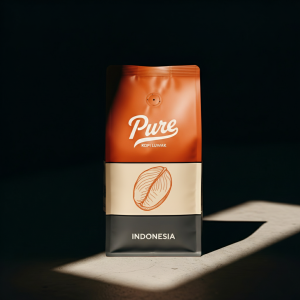
Pure Kopi Luwak
Wild civet coffee from Java. 88.5 SCA cupping score. From $125 for 100g.
Over the following days, the curve flattens. The specialty coffee Association’s review of coffee staling literature describes a window — typically 7 to 21 days after roasting — when degassing has slowed enough to stop disrupting extraction but aromatic compounds remain relatively intact. This is the peak flavor period. Most specialty roasters advise aiming for somewhere in this range, depending on roast level: light roasts degas more slowly and may benefit from a longer rest, while darker roasts lose CO₂ faster and can be ready in three to five days.
After 30 days, something more permanent begins. Volatile thiols — a class of sulfur-containing compounds identified as major contributors to roasted coffee’s characteristic aroma — start degrading significantly, a process documented in research by Hofmann and Schieberle as early as 2001. These compounds are not replaceable by any brewing trick. Once they’re gone, they’re gone. No nitrogen flush, no vacuum seal, no clever packaging restores them. You’re working with diminished raw material.
Why “Best By” Dates Are Essentially Meaningless
Commercial coffee’s expiration dating system reflects warehousing realities, not flavor science. A major roaster producing hundreds of thousands of bags per week cannot operate on a “consume within 30 days” model — the logistics don’t work at that volume. So the industry settled on shelf stability as the benchmark: when does the coffee become unsafe or obviously bad? That answer is many months. Hence the 12-to-24-month best-by windows that appear on most grocery store coffee.
Specialty roasters operate differently, precisely because their business model depends on buyers actually noticing the quality difference. Many roast small batches two or three times weekly and print roast dates prominently on every bag. Some roast to order. The roast date is the only number that gives you actionable information about what you’re about to taste.
The chemical reason is straightforward. A 2025 study on roasted coffee shelf stability published in ScienceDirect tracked volatile compound changes during storage across multiple temperature conditions, finding that oxidation, Maillard reaction byproducts, Strecker degradation, and thermal degradation all contributed to progressive flavor loss. These processes don’t pause when coffee sits sealed in a bag. They slow — oxygen exposure, humidity, and heat all accelerate them — but they don’t stop.
Try the coffee this article is about
Wild-sourced from Java, 88.5 SCA cupping score, free US shipping. From $125 for 100g.
Shop Pure Kopi Luwak →The Case of Kopi Luwak and the Freshness Imperative
If freshness matters for a $15 bag of grocery store beans, it matters profoundly for premium specialty coffee. Wild-sourced kopi luwak undergoes a unique enzymatic transformation during its passage through a civet’s digestive tract — a process that breaks down specific proteins responsible for bitterness and alters the bean’s surface chemistry in ways that produce its characteristic smoothness and complexity. Those flavor modifications are fixed at the green bean stage, but the aromatic expression of those characteristics still depends on the coffee being roasted properly and consumed fresh.
A bag of kopi luwak sitting in a warehouse for six months won’t taste like kopi luwak anymore. The enzymatic character will be buried under oxidation. This is one reason why serious buyers of premium coffee pay close attention to roast dates, and why producers who genuinely care about their product make roast-date information available without having to ask for it.
It’s also worth noting that kopi luwak’s distinctive profile — lower malic and citric acid concentrations than conventionally processed beans, as documented in food chemistry research — makes staleness particularly destructive. When a coffee’s primary selling point is smoothness and low bitterness rather than bright acidity, the loss of volatile aromatics that provide complexity turns an exceptional cup into something indistinct. You lose the very qualities that justify the price.
Storing Coffee Properly During Its Freshness Window
The fundamentals of coffee storage are about controlling the four enemies: oxygen, moisture, heat, and light. An airtight container in a cool, dark location does most of the work. The one-way valve bags used by most specialty roasters are engineered specifically for this — they allow CO₂ to exit (preventing burst seams) while blocking oxygen from entering.
The single most impactful thing most people can do is grind at the point of brewing rather than buying pre-ground. Grinding increases surface area by roughly 1,000 times, which means the rate of CO₂ loss and oxidation increases by the same factor. Pre-ground coffee moves through its flavor window in hours, not days. Whole beans give you weeks of workable quality.
Refrigeration is generally counterproductive for coffee in regular use. The temperature cycling as bags are removed and returned introduces condensation, and moisture is actively damaging. Freezing is viable for long-term storage of unopened bags, but once thawed, the coffee should be used up rather than refrozen. For everyday use, a sealed container at room temperature away from the stove and direct sunlight does the job.
How to Buy Coffee That’s Actually Fresh
Local roasters are the most reliable source of genuinely fresh coffee — most roast multiple times a week, and many will tell you exactly when a given batch was roasted. Online specialty roasters who roast to order can also deliver coffee within its peak window, though shipping adds two to five days. For any purchase, whether in-store or online, look for the roast date printed on the bag — not a “roasted on” vague claim, but an actual date. If a roaster doesn’t print roast dates, that tells you something about their priorities.
The other useful indicator is what happens during your pour-over bloom. When hot water hits truly fresh ground coffee, CO₂ escapes vigorously and the grounds puff up into a dome — the “bloom” that specialty coffee guides describe. That physical response is diagnostic: it means the coffee still has its volatiles intact and was roasted recently enough to matter. Old coffee doesn’t bloom. It just gets wet. Once you’ve made this comparison, the difference in the resulting cup will confirm everything the chemistry says. Fresh coffee is not slightly better. It’s categorically different.
Pure Kopi Luwak
Wild civet coffee from Java. 88.5 SCA cupping score. From $125 for 100g.

Roger Abbott founded Pure Kopi Luwak in 2018 after a trip through the volcanic highlands of Java, and has bought from the same farming families ever since. He only works with collectors of wild civet coffee, never caged. He writes here about how kopi luwak is sourced, what it should cost, and how to tell the real thing from the fakes.