For every pound of authentic Jamaican Blue Mountain coffee produced, the Coffee Industry Board of Jamaica estimates that 50 pounds of fake “Blue Mountain” coffee is sold worldwide. That 50-to-1 ratio of counterfeit to genuine explains a great deal about both the coffee’s mystique and its price: annual production rarely exceeds 200,000 pounds, Japan imports approximately 80% of that output, and what reaches the rest of the world carries a certified scarcity that drives retail prices to $40–80 per pound.
After decades of hype, it’s time for an honest evaluation of whether Jamaican Blue Mountain coffee deserves its crown or if coffee lovers are paying for prestige rather than exceptional quality.
What Makes Blue Mountain Coffee “Special”
Jamaican Blue Mountain coffee grows exclusively in a small, legally protected region spanning just 6,000 hectares across four parishes: Portland, St. Andrew, St. Mary, and St. Thomas. This represents less than 1% of Jamaica’s total land area, making authentic Blue Mountain coffee genuinely scarce.
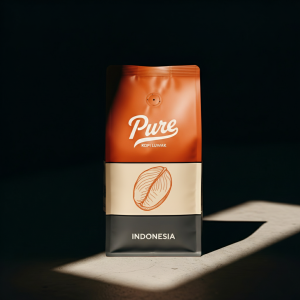
Pure Kopi Luwak
Wild civet coffee from Java. 88.5 SCA cupping score. From $125 for 100g.
The Blue Mountain region sits at elevations between 910–1,700 meters (3,000–5,500 feet), placing it firmly in the high-altitude category that typically produces superior coffee. The mountains create their own microclimate: consistent temperatures between 60–70°F year-round, high humidity often above 80%, frequent cloud cover that filters sunlight, rich well-draining volcanic soil, and approximately 120 inches of annual rainfall. These conditions should theoretically produce exceptional coffee. But geography alone doesn’t justify the premium — many other regions share similar advantages without commanding similar prices.
Authentication and the Counterfeit Problem
Authentic Jamaican Blue Mountain coffee must meet strict criteria enforced by the Coffee Industry Board. It must be grown within the legally defined geographic boundaries, processed according to CIB regulations, cupped and graded by certified tasters, packaged in official wooden barrels rather than bags, and accompanied by CIB certification documents. This certification system, while adding cost, provides genuine value by ensuring authenticity in a market flooded with imposters — the 50:1 counterfeit ratio the CIB estimates makes verification more important here than with almost any other origin.
The Blue Mountain Flavor Profile
Genuine Blue Mountain presents a sensory profile defined more by what it lacks than by bold intensity. Acidity is mild to moderate — never aggressive or bright. Body runs medium to full, with exceptional smoothness that has become the coffee’s signature. Flavor notes are clean and balanced, with hints of chocolate and nuts rather than assertive fruit or floral character. The aroma is subtle but persistent, often described simply as “refined,” and the finish runs long and clean without harsh aftertastes.
The coffee’s defining characteristic is its remarkable balance and lack of defects. Unlike many specialty coffees that showcase bold, distinctive flavors, Blue Mountain excels through harmony and refinement — a quality that appeals deeply to Japanese coffee culture, which values subtlety over intensity, and explains why Japan absorbs roughly 80% of authentic production at premium prices.
Try the coffee this article is about
Wild-sourced from Java, 88.5 SCA cupping score, free US shipping. From $125 for 100g.
Shop Pure Kopi Luwak →Comparing Value: Blue Mountain vs. Other Premium Origins
To evaluate Blue Mountain’s worth honestly requires comparing it to other premium coffees at similar price points. Against Panama Gesha (also $40–80/lb), Blue Mountain offers consistent, balanced, mild complexity — while Panama Gesha delivers explosive aromatics, wine-like acidity, and unprecedented complexity. Objective cupping scores consistently favor Panama Gesha, which regularly reaches 88–94 points compared to Blue Mountain’s typical 84–88 range. By this measure, if pure flavor intensity is your goal, Panama Gesha wins at the same price.
Against Hawaiian Kona ($30–50/lb), Blue Mountain generally demonstrates superior balance and flavor complexity. The two coffees share a smoothness and approachability — both appeal to palates that prefer mildness — but Blue Mountain’s flavor development tends to be more refined, justifying a modest premium over Kona.
Against Ethiopian Yirgacheffe ($15–25/lb), the comparison is stark. Yirgacheffe offers explosive fruit flavors, electric acidity, and complex aromatics at roughly one-third the price. Many specialty coffee professionals prefer Ethiopian coffees for their intensity and complexity, and the value differential is hard to rationalize on purely sensory grounds — Blue Mountain’s mildness, for all its elegance, doesn’t deliver three to four times the flavor impact.
The Production Reality: Why Blue Mountain Costs More
Beyond quality considerations, several factors legitimately drive Blue Mountain’s high prices. Total annual production rarely exceeds 200,000 pounds — roughly equivalent to what one large specialty roastery might sell annually. This genuine scarcity creates natural upward price pressure. Blue Mountain requires hand-picking, traditional wet processing, and extended drying periods; labor costs in Jamaica exceed those in most coffee-producing countries, adding legitimate cost pressure. And the CIB certification system, while valuable for authenticity, adds bureaucratic overhead that producers must recover through higher prices.
Climate Challenges and Future Prospects
Climate change poses significant threats to Blue Mountain coffee production. Rising temperatures are pushing optimal growing zones to higher elevations within an already small geographic area. Increased rainfall variability affects processing consistency. More frequent hurricanes threaten both infrastructure and crops. These challenges may further limit production — driving prices even higher — or force changes to traditional methods that alter the coffee’s character in ways the market has long assumed would remain constant.
The Honest Verdict
Blue Mountain rarely disappoints — consistency is genuinely one of its strengths, offering reliable quality across lots and harvests. The exceptional harmony of its flavor profile makes it broadly appealing. Genuine scarcity and strict CIB certification provide real exclusivity. Historical significance carries legitimate market value.
The case against the premium is also real. Many cheaper origins offer more interesting, complex flavor profiles than Blue Mountain’s understated elegance. Objectively, it rarely achieves the highest professional cupping scores. The Japanese market’s overwhelming dominance of the supply creates price inflation that benefits marketing narratives. And at $40–80/lb, you’re partly paying for the name.
Blue Mountain makes sense for collectors seeking authentic, rare origins; gift-givers who want a prestigious, recognizable name; coffee drinkers who genuinely prefer mild and balanced profiles over bold complexity; and enthusiasts systematically exploring the world’s famous coffees. Flavor adventurers, value-conscious buyers, and those who prefer bright or fruity profiles will find better options elsewhere at lower prices.
Brewing Blue Mountain: Maximizing Your Investment
Pour-over (V60, Chemex) is the natural choice — it highlights Blue Mountain’s balance and clarity without interference. French press emphasizes body and smoothness, leaning into the coffee’s best qualities. Cold brew showcases its sweetness and further reduces any harsh notes.
Brew at 195–200°F — slightly cooler than standard to preserve delicate flavor compounds. Use medium-fine grind for pour-over and coarse for French press. A 1:15 to 1:17 coffee-to-water ratio produces optimal extraction. Filtered water matters here; Blue Mountain’s subtlety is easily masked by chlorine or mineral interference. The full flavor spectrum only emerges when everything around the bean is doing its job.
Jamaican Blue Mountain occupies a specific and legitimate position in the specialty coffee hierarchy: a consistent, elegant, genuinely scarce product that delivers on its promises of refinement, just not on the implied promise of being categorically superior to everything else. It’s worth experiencing, less worth mythologizing. For the full range of what premium coffee can be — including flavor profiles far more assertive than Blue Mountain’s gentle elegance — explore other exceptional origins alongside it rather than instead of them.
Pure Kopi Luwak
Wild civet coffee from Java. 88.5 SCA cupping score. From $125 for 100g.

Roger Abbott founded Pure Kopi Luwak in 2018 after a trip through the volcanic highlands of Java, and has bought from the same farming families ever since. He only works with collectors of wild civet coffee, never caged. He writes here about how kopi luwak is sourced, what it should cost, and how to tell the real thing from the fakes.