In the labs where coffee researchers study extraction, they measure something called particle size distribution — a curve showing how many particles of each size a grinder produces. When astrophysicist Jonathan Gagné analyzed 300 particle size distributions from 24 different espresso grinders for his Coffee ad Astra research project in 2023, the data revealed something that home coffee enthusiasts rarely hear discussed: the shape of that curve is arguably more important than the grinder’s price tag, and it explains why two cups of coffee brewed from identical beans with identical water can taste completely different.
The humble coffee grinder sits at the foundation of every brew method, and most people treat it as an afterthought. They obsess over brewing technique, origin selection, water quality — and then run everything through a $20 blade grinder that produces particles ranging from powder-fine dust to small pebbles in the same batch. The physics of extraction makes this a serious problem.
What Particle Size Actually Does
Coffee extraction is a dissolution process. Hot water contacts the surface of a coffee particle, soluble compounds migrate from the interior to the surface, and then into solution. The rate at which this happens depends heavily on surface area relative to volume — a relationship that changes dramatically with particle size. Grind finer and you get more surface area, faster extraction, and higher solubility of all compounds including bitter ones. Grind coarser and you get less surface area, slower extraction, and a brew that tends toward sweetness with lower perceived bitterness.
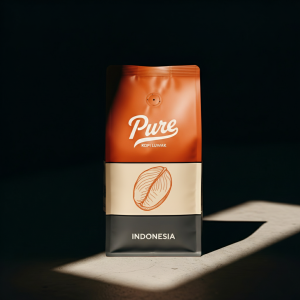
Pure Kopi Luwak
Wild civet coffee from Java. 88.5 SCA cupping score. From $125 for 100g.
The complication is that different flavor compounds extract at different rates. Organic acids and fruit-forward flavors come out first. Sugars and aromatic compounds follow. Bitter alkaloids and harsh tannins come last. A well-calibrated grind hits the sweet spot where the first two groups are extracted fully but the third group hasn’t yet. Inconsistent particle sizes destroy this calibration: the fine particles in the batch are already over-extracted and bitter by the time the coarse particles are just beginning to give up their best flavors. The result is a muddy cup that’s simultaneously astringent and under-developed.
A 2023 study in European Food Research and Technology, examining ground coffee particle size and its effect on beverage properties, described typical coffee grind as having a bimodal distribution — two groups of particles, a coarser fraction that provides structural permeability through the coffee bed, and a finer fraction that drives rapid flavor compound diffusion. The balance between these two populations determines not just flavor but the physical behavior of water through the puck or filter.
Flat Burrs vs. Conical Burrs: What the Data Shows
Burr grinders come in two primary geometries, and the distinction matters more than most buyers realize. Flat burr grinders use two parallel discs facing each other, with cutting channels machined into both surfaces. Beans enter at the center, travel outward through the grinding zone under centrifugal force, and exit at the periphery in a relatively uniform size. High-end flat burr grinders — the Mahlkönig EK43 is the canonical example — produce what’s called a unimodal distribution, meaning nearly all particles cluster around a single target size. The result, in the cup, is exceptional clarity and flavor separation.
Conical burr grinders use a cone-shaped inner burr rotating inside a ring-shaped outer burr. The geometry is slightly different and produces a bimodal distribution: a population of larger particles and a separate population of fine particles, with relatively few particles in between. Research on 24 grinders by Gagné found that conical burrs are on average less unimodal and less uniform than flat burrs — but this isn’t necessarily a flaw. Many specialty roasters and baristas deliberately choose conical burrs for espresso because the fines contribute body and texture in ways that certain flat burr results lack. The bimodal output creates a different sensory profile, not an objectively worse one.
The critical variable is control. A quality burr grinder, whether flat or conical, gives you repeatable, adjustable particle size with meaningful step-to-step differences. A blade grinder gives you none of this. It spins cutting blades at high RPM through the bean mass, chopping randomly, generating friction heat that damages aromatics, and producing whatever distribution the physics of the moment happens to create. Two identical 10-second blade grinds will produce different outputs. There is no calibration, no repeatability, no meaningful connection between your input and the brew result.
Try the coffee this article is about
Wild-sourced from Java, 88.5 SCA cupping score, free US shipping. From $125 for 100g.
Shop Pure Kopi Luwak →Grind Size and Specific Brew Methods
Matching particle size to brew method isn’t intuitive — it follows from the physics of each system. Espresso uses 8-9 bars of pressure to push water through a densely packed puck of finely ground coffee in 25-30 seconds. A fine grind is necessary to create enough resistance that the pressure does the work; too coarse and water rushes through without extracting meaningfully, producing a thin and watery result. Turkish coffee goes even finer — essentially a powder — because the grounds remain suspended in the final cup and the preparation involves no filtration at all.
Pour-over and Chemex methods use medium to medium-fine grinds, relying on gravity and a paper filter that catches fine particles while allowing brewed coffee to pass. The grind controls flow rate: finer grounds slow the water down and increase extraction, coarser grounds speed it up. French press, with its metal mesh plunger filter, requires a coarser grind specifically because the filter cannot catch fines — grind too fine for a French press and you’ll have sediment and over-extraction. Cold brew operates on a different principle entirely; the extended contact time of 12-24 hours means coarse grounds are necessary to prevent over-extraction despite the low water temperature.
For kopi luwak and premium single-origin coffees, matching the grind precisely to your method matters more than for commodity coffee, because the flavor compounds you’re trying to extract are more complex and more sensitive to over-extraction. Kopi luwak’s characteristic smoothness — a function of enzymatic protein breakdown during civet digestion that reduces bitterness precursors — can be undermined by inconsistent grinding that introduces harsh over-extracted notes. The grinder, in this case, is genuinely guarding or destroying the quality of what you paid for.
What Makes Burrs Wear Out
Burrs are consumable. The sharp edges that create clean particle cuts dull over time, and as they dull, the grinder produces more fines and less consistent output. For home users grinding a modest amount of coffee daily, this process is slow — quality flat burrs typically last through 500 to 1,000 pounds of coffee before needing replacement. But coffee that’s been sitting in a hopper for extended periods also deposits oils on the burrs, which can affect flavor and grinding behavior. Regular cleaning with grinder-specific tablets or rice cleaning removes oil buildup and extends the effective life of the burrs significantly.
The RPM of the motor also affects heat generation during grinding. High-speed motors grind faster but generate more friction heat. Slow-speed (direct-drive) grinders take slightly longer but preserve more volatile aromatics in the ground coffee — a meaningful consideration for delicate light roasts where those aromatics are the primary attraction. This is one reason why carefully roasted specialty coffees are best served by lower-RPM grinding.
A Framework for Buying a Burr Grinder
The first question to answer is whether you’re primarily making espresso or everything else. Espresso demands very fine, very consistent grinding with precise adjustment capability — budget entry-level burr grinders often can’t hit espresso-grade consistency reliably, which is why espresso-focused buyers typically need to spend more. For pour-over, French press, AeroPress, and similar methods, a well-regarded entry-level conical burr grinder in the $100-150 range produces results that are genuinely transformative compared to blade grinding, and most users find the improvement levels off well before the $300 mark.
The things to look for beyond price: step versus stepless adjustment (stepless gives finer control but steeper learning curve), burr diameter (larger burrs grind faster and run cooler), and build quality of the hopper and grounds bin (static electricity in the grounds bin is a real annoyance and some designs manage it better than others). If you have the opportunity to test two grinders against each other on the same beans and brew method, the particle size consistency difference will often be audible in the first sip. Pour-over brewing is particularly revealing — consistent grinding produces even, controlled flow with clear, complex flavor; inconsistent grinding produces channeling, uneven extraction, and a cup that leaves you puzzling over why the expensive beans disappointed. The grinder is usually the answer.
Pure Kopi Luwak
Wild civet coffee from Java. 88.5 SCA cupping score. From $125 for 100g.

Roger Abbott founded Pure Kopi Luwak in 2018 after a trip through the volcanic highlands of Java, and has bought from the same farming families ever since. He only works with collectors of wild civet coffee, never caged. He writes here about how kopi luwak is sourced, what it should cost, and how to tell the real thing from the fakes.