Arabica futures hit $4.41 per pound in February 2025 — the highest price on record, and more than triple the levels from early 2020. The ICO Composite Indicator Price reached $3.54 per pound that same month, the highest monthly average ever recorded by the International Coffee Organization. Both figures were driven by two compounding forces: a severe drought during Brazil’s 2024 flowering season that damaged yields in the world’s largest coffee-producing country, and a frost event that set back tree development across highland growing regions. Brazil accounts for approximately 35% of global coffee supply. When Brazil has a bad year, the rest of the world pays for it — and 2024 was a very bad year for Brazil.
The Numbers That Tell the Story
The coffee market’s transformation becomes stark in historical context. Between 2019 and 2021, the C price averaged $1.10–1.40 per pound. Gradual increases pushed it to $1.60–1.90 through 2022–2023. Then late 2024 brought a sharp spike, and by early 2026 the price had climbed above $3.20 per pound — the highest sustained level since the 1977 frost crisis, when coffee hit $3.39 per pound during a catastrophic Brazilian supply disruption.
For consumers, the effects are unavoidable: retail prices are up 40–60% across all categories, and café drinks have climbed $0.50–1.50 per serving. Specialty coffee has seen steeper increases. Restaurant coffee programs are operating under severe margin pressure, with many forced to reduce quality or raise prices to remain viable.

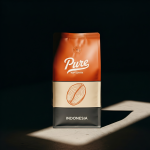
Pure Kopi Luwak
Wild civet coffee from Java. 88.5 SCA cupping score. From $125 for 100g.
Climate Change: The Primary Disruptor
The single largest factor is climate change’s accelerating impact on major producing regions. Brazil endured a severe 2024 drought during the critical flowering period, cutting potential yields before the season even began. Unusual late-season frost events in 2025 damaged mature plants that were already stressed. Record-breaking heat during cherry development then reduced both quality and quantity. These weather events haven’t just reduced Brazil’s current harvest — they’ve damaged trees that will produce reduced yields for two to three additional years, building in a structural supply deficit that won’t resolve quickly regardless of what happens with the weather.
Colombia’s high-altitude growing regions face different but compounding pressures: shifting rainfall patterns disrupting traditional wet/dry seasons, increased coffee leaf rust prevalence tied to humidity changes, and temperature increases forcing farmers to seek ever-higher elevations where arable land grows scarce. Guatemala, Honduras, and Costa Rica — sources of much of the specialty market’s supply — report 30–40% yield reductions in some regions, with some farmers abandoning coffee entirely for more climate-resilient crops.
Supply Chain Complications Beyond Weather
Container shipping rates remain 2–3x their pre-2020 levels. Port congestion continues adding weeks to delivery timelines. Driver shortages have driven up inland trucking costs. Warehousing expenses have climbed as space constraints persist across major import markets. Currency volatility adds further complexity: Brazilian Real movements directly affect export prices, Colombian Peso fluctuations create forward pricing uncertainty, and hedging costs have become a significant line item for importers managing exposure across multiple origins.
Labor market pressures are accelerating. Rural populations are migrating to cities across every major producing country, reducing the agricultural workforce available for hand-picking and processing work. Young people are increasingly abandoning farming for urban economic opportunities. Peak harvest periods now regularly face worker shortages that weren’t an issue a decade ago. Wages for agricultural workers are rising — a positive development for farming communities, but one that adds cost at every step of the supply chain.
Specialty Coffee: Premium Pricing on Higher Baselines
While commercial coffee prices have doubled, specialty coffee faces even steeper increases because quality premiums compound on top of higher base costs. Recent Panama Gesha auctions have set new price records even measured against the already-elevated commodity baseline. Cup of Excellence winners are commanding premiums 5–10x their historical norms. Even “standard” specialty lots — the workhorse coffees for quality-focused roasters — are selling at historically high prices.
For specialty roasters, the options are uniformly difficult: pass increases to customers and risk losing price-sensitive buyers; absorb costs and watch already-thin margins evaporate; switch to lower-grade beans and quietly degrade quality to hold prices; or cut costs elsewhere and hope consumers don’t notice. Many specialty roasters report operating at break-even or at a loss, waiting for market stabilization that structural factors suggest won’t come quickly.
Try the coffee this article is about
Wild-sourced from Java, 88.5 SCA cupping score, free US shipping. From $125 for 100g.
Shop Pure Kopi Luwak →How Consumer Behavior Is Shifting
High-quality grinder sales are up 40–60% as more consumers invest in home brewing equipment to reduce café spend. Pour-over equipment has seen unprecedented demand growth. Coffee subscription services are growing as consumers seek more predictable pricing. The pattern reflects a rational response: when café drinks cost $7–9, investing in a $200 grinder and brewing at home pays back within weeks.
Another segment is choosing fewer, better coffees — purchasing smaller quantities of premium beans and focusing on freshness and technique rather than volume. When every bag costs significantly more, learning to extract maximum enjoyment per gram spent becomes worth the effort. Some consumers are reframing coffee entirely, treating quality coffee as a luxury experience to be savored rather than a daily commodity to be consumed habitually.
Industry Response and Innovation
Coffee companies are adapting through several structural responses. Roasters are investing directly in farms to secure supply at known cost. Long-term direct trade contracts are providing pricing stability that spot market purchasing can no longer offer. Experimental fermentation and precision processing technology are adding value through unique flavor profiles that justify premiums over commodity lots. The underlying logic across all these approaches is the same: when supply is constrained, adding verifiable quality and story value is the most sustainable way to justify the higher prices the market now demands.
Farmers are planting climate-resistant varieties — particularly disease-tolerant hybrids developed by World Coffee Research — and investing in shade canopy systems that moderate temperature extremes. Some are intercropping with other high-value agricultural products to diversify income. Where coffee is no longer viable at lower elevations, some are simply moving operations uphill or transitioning land to other uses entirely.
Regional Price Variations
Price increases aren’t uniform across origins. Brazilian Santos lots are up 120–150% from pre-surge baselines, directly reflecting the production damage from drought and frost. Colombian Supremo is up 90–110% due to reduced yields and currency movements. Central American estate coffees have increased 80–120% depending on specific region and contract terms. Indonesian specialty lots — including wild-sourced products like kopi luwak — have been somewhat less affected by the commodity price surge, since they trade on quality premiums rather than C-price relationships. Ethiopian highlands have seen meaningful but less severe increases than the Americas.
The Long-Term Outlook
The case for sustained high prices is structural. Climate change impacts on major producing regions are likely to persist and probably intensify. Coffee consumption in China, India, and Southeast Asia continues growing, adding demand pressure that wasn’t present a generation ago. The specialty segment keeps expanding, creating additional competition for limited quality supply. Labor and input costs across producing countries are structurally higher than they were five years ago and are unlikely to meaningfully reverse.
The moderating scenario requires a return to typical climate patterns in Brazil and Colombia — genuinely possible but not predictable. Logistics costs will eventually normalize further as supply chains continue recovering. High prices do tend to cause some demand destruction over time. And if prices stay elevated long enough, some consumers will trade down to lower-grade products, providing a natural ceiling on how far prices can climb without destroying demand.
What This Means for Coffee Lovers
Several strategies help maintain quality while managing cost in the current environment. Buying in larger quantities when quality beans become available locks in better per-unit pricing. Investing in proper burr grinding equipment ensures you extract full value from every gram — poor grinding wastes expensive coffee. Measuring doses precisely and storing beans properly (whole bean, in an opaque, sealed container away from heat) prevents waste that becomes more expensive with every price increase. Timing purchases around new harvest arrivals, when prices often dip slightly, can yield meaningful savings over a full year.
Most importantly: understanding what you’re actually paying for helps contextualize the increases. The coffee that reaches your cup in 2026 represents successful production under genuinely difficult conditions. The $3.50-per-pound green coffee baseline reflects real costs — drought mitigation, frost damage recovery, higher labor wages, expensive logistics — not speculation alone. Coffee has been underpriced relative to its production complexity for much of the past two decades. The current reckoning, however painful, is aligning price more honestly with cost.
Pure Kopi Luwak
Wild civet coffee from Java. 88.5 SCA cupping score. From $125 for 100g.

Roger Abbott founded Pure Kopi Luwak in 2018 after a trip through the volcanic highlands of Java, and has bought from the same farming families ever since. He only works with collectors of wild civet coffee, never caged. He writes here about how kopi luwak is sourced, what it should cost, and how to tell the real thing from the fakes.