You’ve acquired genuine wild-sourced kopi luwak — perhaps the rarest cup of coffee you’ll ever brew. Now what? This is not the moment to treat it like your weekday bag of grocery-store beans. Kopi luwak’s unique enzyme-modified chemistry, its low bitterness, and its layered complexity all respond to brewing decisions in ways that ordinary coffee does not. Get those decisions right, and you’ll taste what makes it worth the price. Get them wrong, and you’ll have wasted something irreplaceable.
This is the complete guide to brewing kopi luwak at home — grind size, water temperature, brewing method, and the specific adjustments that bring out the best in this exceptional coffee.
The Core Principle: Preserve What Makes It Special
Before diving into specifics, understand the goal. The enzymatic process that occurs as wild civet digestive enzymes interact with the coffee bean produces two key qualities that define great kopi luwak:
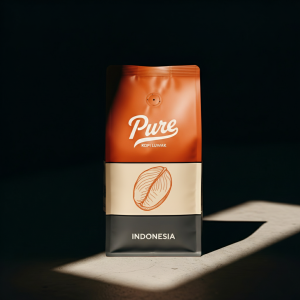
Pure Kopi Luwak
Wild civet coffee from Java. 88.5 SCA cupping score. From $125 for 100g.
- Civet digestion partially breaks down the proteins that become bitterness during roasting — the resulting cup is notably smooth, less bitter than any other coffee at equivalent extraction. The process also produces subtle secondary flavor compounds that contribute to kopi luwak’s characteristic richness, earthiness, and layered depth.
Both qualities are fragile. Over-extraction amplifies bitterness even in low-bitterness beans. Too-dark a roast destroys the enzymatic modifications before you even brew. Too-high a water temperature scorches the coffee and produces harsh compounds. Every brewing decision should protect these qualities, not override them.
Before You Brew: Roast and Freshness
If you’re buying whole-bean kopi luwak — which you should — roast level matters more than with almost any other coffee.
Medium roast is ideal. A medium roast preserves the enzymatic flavor modifications while developing the Maillard reaction compounds (caramel, chocolate, nuts) that make coffee delicious. The bean’s natural acids are developed but not burned off. You get complexity, sweetness, and the signature smoothness.
Dark roast is a mistake with kopi luwak. At roast levels above roughly 220°C development, the subtle compounds produced by the civet’s digestive process are destroyed. You’d be drinking a dark-roasted Javanese coffee — which might be fine, but entirely defeats the purpose. If your kopi luwak is very dark and oily, it’s been over-roasted.
Light roast is tricky. Some specialty coffee buyers prefer it for maximum terroir expression, but with kopi luwak it can produce an underdeveloped, grassy cup. If your beans are light-roasted, reduce water temperature slightly (89-91°C) and extend contact time.
Brew within 4 weeks of roast date. After 4 weeks, oxidation degrades the volatile aromatics that make premium coffee worth drinking. Store whole beans in an airtight container, away from light and heat — never in the freezer unless you have a proper sealed, vacuum container.
Grind: The Most Important Variable
Use a burr grinder. No exceptions with premium coffee — blade grinders produce an inconsistent particle distribution that causes simultaneous over- and under-extraction, hiding the nuance you’re paying for.
Grind size depends on your brewing method, but for kopi luwak specifically, err slightly coarser than your default for each method. The reduced bitterness potential means you can extract thoroughly without harsh over-extraction — but a slightly coarser grind protects the smoothness.
Grind only what you’re about to brew. Ground coffee goes stale within hours as the increased surface area accelerates oxidation. For kopi luwak especially, grind-to-order is not optional.
Water: The Invisible Ingredient
Filtered water, not tap water. Chlorine in tap water attacks coffee aromatics and produces off-flavors that mask the qualities you’re trying to taste. If you’re investing in rare coffee, filtered or lightly mineralized bottled water is a minimal additional expense.
Ideal mineral content: 75-175 ppm total dissolved solids (TDS), with a slight calcium-to-magnesium lean. Most quality filtered water falls in this range. Very soft water (low TDS) produces a thin, hollow cup. Very hard water (high TDS) produces a flat, muddy extraction.
For more on water chemistry and its impact on premium coffee, see our guide to water and coffee.
Try the coffee this article is about
Wild-sourced from Java, 88.5 SCA cupping score, free US shipping. From $125 for 100g.
Shop Pure Kopi Luwak →Brewing Method by Method
Pour-Over (V60, Chemex, Kalita Wave) — Recommended
Pour-over is the ideal method for kopi luwak. The controlled flow rate and paper filtration produce a clean, clear cup that lets the coffee’s complexity come through without interference from fines or oils.
Target a medium grind — coarser than espresso, finer than French press, roughly the texture of coarse sea salt. Water temperature: 91-93°C (196-200°F). Ratio: 1:15 to 1:16 (e.g., 20g coffee to 300ml water). Begin with a bloom pour of 40-60ml, allowing 30-45 seconds for degassing — good bloom response indicates fresher beans. Follow with slow, circular additions in 3-4 pours over approximately 3 minutes total brew time.
What to expect: a clean, complex cup with clear flavor clarity. You’ll taste the chocolate and earth notes of Javanese origin alongside the smooth, low-bitterness character that distinguishes genuine wild kopi luwak.
French Press — Excellent for Body
French press brings out kopi luwak’s natural body and texture. The immersion method and lack of paper filtration mean more oils and heavier mouthfeel — which suits kopi luwak’s naturally full body.
Use a coarse grind — the texture of rough breadcrumbs. Water temperature: 92-93°C (197-200°F). Ratio: 1:15 (e.g., 30g coffee to 450ml water). Steep exactly 4 minutes — over-steeping increases bitterness even in naturally low-bitterness beans. Press slowly and steadily without aggressive stirring. Pour immediately after pressing; leaving coffee in contact with the grounds continues extraction and builds bitterness.
French press kopi luwak has a distinctly luxurious mouthfeel — thick, coating, and persistent. It’s an excellent showcase for the coffee’s body.
Aeropress — Versatile and Forgiving
The Aeropress is well-suited to kopi luwak, especially if you want espresso-style concentration without an espresso machine. It’s also the most forgiving method for variable grind quality.
Use medium-fine grind. Water temperature: 90-92°C (194-198°F), slightly lower than pour-over to account for the longer contact time. Ratio: 1:10 to 1:12 for concentrated output, or 1:16 for filter-style strength with the inverted method. Total brew time: 1:30 to 2:00 minutes using the inverted method for maximum extraction evenness.
The Aeropress produces a clean, concentrated cup with good body. For kopi luwak, the inverted method (coffee blooms face-down) is recommended for maximum extraction evenness.
Espresso — Advanced, But Rewarding
Kopi luwak espresso is extraordinary for those with the equipment — the pressure extraction concentrates the complexity and the lack of bitterness becomes even more apparent. A ristretto (short pull) from medium-roast kopi luwak is genuinely unlike any other espresso you’ll taste.
Use a fine espresso grind, dialed in carefully — kopi luwak’s lower bitterness changes the usual calibration cues. Temperature: 92-93°C at the group head. Dose: 18-20g in, 36-40g out (1:2 ratio). Extraction time: 25-30 seconds. Because bitterness is naturally suppressed, you may find you can extract slightly longer than usual without the penalty that guides most espresso calibration.
Note: because kopi luwak has naturally lower bitterness, you may need to extract slightly longer than you’d expect without the usual bitterness penalty. Taste and adjust.
Tasting Your Kopi Luwak
When your cup is ready, resist the urge to add anything to it. No milk, no sugar — at least not the first time. Genuine wild-sourced kopi luwak is smooth enough to drink black, and adding dairy masks the exact qualities that make it worth tasting.
Let it cool slightly from brew temperature. Coffee flavor opens up as it cools from 70°C toward 50-55°C — the temperature range where your palate is most sensitive. Take small sips. Notice the absence of bitterness, the coating body, the layers of flavor that reveal themselves over time.
For a full guide to tasting premium coffee like a professional, our coffee cupping guide covers the systematic tasting methodology used by professionals and enthusiasts alike.
One Final Note on Quantity
Authentic wild kopi luwak is produced in very small quantities — global annual supply is measured in hundreds of kilograms, not tonnes. Use it deliberately. A standard 15-20g dose per cup means a 100g bag yields five to six exceptional cups. Treat each one accordingly. Brew with intention, taste with attention, and you’ll understand why wild kopi luwak has been considered the world’s most remarkable coffee for centuries.
Pure Kopi Luwak
Wild civet coffee from Java. 88.5 SCA cupping score. From $125 for 100g.

Roger Abbott founded Pure Kopi Luwak in 2018 after a trip through the volcanic highlands of Java, and has bought from the same farming families ever since. He only works with collectors of wild civet coffee, never caged. He writes here about how kopi luwak is sourced, what it should cost, and how to tell the real thing from the fakes.