Most people who say they don’t like coffee mean they don’t like bitter coffee. That’s not a personal failing or an unsophisticated palate—bitterness is a legitimate dealbreaker, and conventional coffee produces it in abundance. What they haven’t encountered, in most cases, is coffee where the bitterness has been enzymatically removed before roasting even begins. That’s what the Asian palm civet does, and it’s why kopi luwak consistently surprises people who have spent years adding milk and sugar to make coffee drinkable.
The smoothness isn’t a marketing claim. It’s chemistry.
Where Coffee Bitterness Comes From
Coffee’s bitterness has several sources, but the dominant ones are well-documented. Chlorogenic acid lactones—compounds formed when chlorogenic acids break down during roasting—are among the primary bitterness drivers. Research published in the Journal of Agricultural and Food Chemistry identified these lactones, along with phenylindanes formed during longer or darker roasts, as the main contributors to persistent bitterness. Caffeine itself contributes only about 10 to 15 percent of coffee’s perceived bitterness; the remainder comes from these heat-generated transformation products.

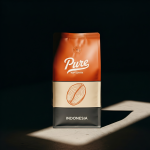
Pure Kopi Luwak
Wild civet coffee from Java. 88.5 SCA cupping score. From $125 for 100g.
There’s also a protein dimension. Green coffee beans contain specific proteins that, during roasting at temperatures between 200°C and 240°C, undergo reactions that produce additional bitter compounds. The starting composition of the bean—particularly its protein profile—directly influences how bitter the finished roast will be. This is where the civet enters.
What the Civet’s Digestive Tract Does
When a wild Asian palm civet swallows a ripe coffee cherry, the pulp is digested but the hard inner seed—the coffee bean—passes through intact. During the 12 to 24 hours of transit, the bean’s outer surface is exposed to gastric acid and, crucially, to proteolytic enzymes. These enzymes—primarily endopeptidases and exopeptidases found in the civet’s digestive system—begin breaking down specific proteins in the outer layers of the bean.
The proteins that are partially hydrolyzed include precursors to the bitter compounds produced during roasting. By degrading them before the bean ever sees heat, the civet’s digestive process removes the upstream material that would otherwise generate bitterness. The roasted bean still contains caffeine, still has complex flavor precursors, still develops all the aromatic compounds that make coffee interesting—but the molecular foundation for extreme bitterness has been modified at the source.
Studies analyzing kopi luwak beans alongside conventionally processed beans from the same origin have consistently found lower concentrations of malic and citric acids in the kopi luwak samples, along with modified protein profiles. The flavor result is a cup that’s smooth in a way that’s genuinely unusual—not “less bitter because of the roast level” but fundamentally different at the chemical level.
Try the coffee this article is about
Wild-sourced from Java, 88.5 SCA cupping score, free US shipping. From $125 for 100g.
Shop Pure Kopi Luwak →What It Tastes Like in Practice
Professional tasters describing wild kopi luwak typically reach for the same vocabulary: smooth, full-bodied, low in bitterness, with notes of dark chocolate and earthiness. The aftertaste—where bitterness usually lingers in conventional coffee—dissipates cleanly. The body is heavier than a washed light roast but not aggressive. It’s coffee that rewards drinking slowly rather than downing quickly for the caffeine, and it’s fundamentally approachable in a way that even excellent single-origin Arabicas often aren’t.
For someone who has never enjoyed black coffee, the first cup of genuine wild kopi luwak is often recalibrating. Not because it’s without depth—it has considerable complexity—but because the thing they were bracing against doesn’t show up. That’s the proteolytic effect, expressing itself in real time. The full flavor profile guide covers the tasting notes in detail, but the short version is: if you’ve avoided black coffee because of bitterness, you haven’t tried the right coffee yet.
Why Milk and Sugar Mask the Wrong Problem
Adding milk to coffee is a reasonable workaround for bitterness—the proteins in milk bind to some bitter polyphenols, and the fat rounds the texture. The problem is that the same compounds that produce bitterness in conventional coffee also suppress the subtler flavor elements: the brightness of well-processed cherries, the terroir expression of a specific origin, the way a good medium roast opens up as it cools. Milk covers the bad and the good simultaneously.
Drinking genuine wild kopi luwak black, brewed as a pour-over with water just below boiling, is a different experience precisely because nothing needs to be masked. The bitterness issue has been addressed upstream, at the enzymatic level, not at the consumption level. What remains is the actual flavor of the coffee—complex, smooth, and worth tasting without interference.
A Note on What “Wild” Means Here
The enzymatic transformation described above only works properly when the civet doing the processing is healthy, well-nourished, and naturally selective. Wild civets forage on varied diets, choose only peak-ripe cherries based on olfactory cues, and have gut microbiomes developed for normal civet life. Their digestive chemistry is operating as it evolved.
Caged civets, fed whatever cherries are available under confinement stress, have disrupted gut microbiomes and compromised digestive function. The proteolytic effect is diminished or inconsistent—which is a significant part of why cage-farmed kopi luwak is often flat and disappointing. It’s not just an ethical problem. It’s a quality one. The animal’s biology is the processing mechanism, and a stressed animal doesn’t process well.
If you’ve tried kopi luwak before and found it ordinary, it almost certainly came from a caged operation. The experience of genuinely wild-sourced product—from healthy animals processing peak-ripe Javanese Arabica—is a different cup entirely. And for people who have spent years believing coffee just isn’t for them, it’s often the one that changes their mind.
Pure Kopi Luwak
Wild civet coffee from Java. 88.5 SCA cupping score. From $125 for 100g.

Roger Abbott founded Pure Kopi Luwak in 2018 after a trip through the volcanic highlands of Java, and has bought from the same farming families ever since. He only works with collectors of wild civet coffee, never caged. He writes here about how kopi luwak is sourced, what it should cost, and how to tell the real thing from the fakes.