A palm civet doesn’t know it’s a coffee producer. What it knows, during the harvest months on Java’s highland farms, is that certain trees are suddenly producing sweet, fragrant, ripe fruit — and that fruit is worth seeking out. The selective foraging that makes wild kopi luwak exceptional isn’t a managed process. It’s what happens when an opportunistic nocturnal omnivore finds exactly the food source it’s evolved to prefer, at exactly the right moment in the year.
That moment is seasonal. And the seasonality is the single most honest explanation for why authentic wild kopi luwak is genuinely scarce — not scarce in a marketing sense, but scarce in the way that anything produced during a specific biological window, by a wild animal operating on its own schedule, is scarce.
When Java’s Coffee Cherries Ripen
Java’s Arabica coffee grows primarily in the highland areas of East Java — above 1,000 meters elevation on the volcanic plateau systems that include the Ijen region. At these elevations, Arabica cherries typically reach peak ripeness during a main harvest season that runs from approximately May through September, with exact timing varying by altitude and the specific microclimate of each farm. A single farm might spread its harvest over several weeks as cherries at different elevations ripen at slightly different rates, with lower plots maturing earlier and higher plots following weeks later.
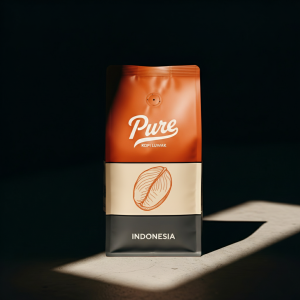
Pure Kopi Luwak
Wild civet coffee from Java. 88.5 SCA cupping score. From $125 for 100g.
This is the window when wild civets are most actively foraging coffee cherries. The Asian palm civet (Paradoxurus hermaphroditus) is an opportunistic fruit-eater that adjusts its diet seasonally to whatever is ripe and available. During the coffee harvest window, peak-ripe cherries — high in fruit sugars, dense with the aromatic compounds that signal ripeness to a fruit-seeking animal — become a major dietary component. Outside that window, when cherries are still green and hard or have already fallen and begun to decompose, civet foraging shifts to other food sources.
The implication for kopi luwak production is direct: wild civet collection is concentrated within this same roughly five-month window. Collectors — typically farm workers who know the civet routes on their land — walk the civet pathways in the mornings during harvest season to gather passed beans before they’re damaged by heat, moisture, or other animals. Outside of harvest season, there is essentially nothing to collect.
Try the coffee this article is about
Wild-sourced from Java, 88.5 SCA cupping score, free US shipping. From $125 for 100g.
Shop Pure Kopi Luwak →Why Cage Farming Exists — And What It Sacrifices
Wild kopi luwak retails at up to $1,300 per kilogram for properly sourced and authenticated wild-collected beans, compared to as little as $100 per kilogram for cage-farmed product. That price spread isn’t only about ethics, though the ethics are real. It reflects supply constraints that cage farming was specifically invented to work around.
Cage farming removes the seasonal constraint entirely: caged civets are fed year-round, regardless of cherry ripeness or harvest timing, and can be positioned near supply chains that don’t depend on wild animal foraging patterns. The volume gain over wild collection is significant.
But cage farming eliminates precisely the factors that create the quality that makes kopi luwak worth buying: the wild civet’s selective foraging of peak-ripe cherries, the enzymatic activity of a healthy, well-nourished digestive system, and the natural limitation that prevents production from scaling beyond what the coffee harvest and wild civet population can support. A stressed animal in a cage, fed indiscriminate cherries throughout the year, produces a different digestive environment than a healthy wild animal eating exactly what it chooses, exactly when it chooses, during a season when the food quality is at its peak. The smoothness and complexity that authentic kopi luwak is known for depends on all of those conditions being present simultaneously.
What Seasonal Production Means for Quality
The agricultural logic here parallels what happens in any premium seasonal food category. The best Alpine cheese is made from summer milk, when cows graze on flowering highland pastures whose botanical diversity appears in the finished product. The best stone fruit comes from a narrow summer window when sugars and acids reach a balance that storage fruit can’t replicate. Seasonal constraint and peak quality are connected — the quality ceiling is defined by what’s only possible under specific conditions that exist for a few months each year.
Wild kopi luwak from Java’s harvest season benefits from peak-ripe Arabica cherries, at the Brix level that civet foraging targets, processed by wild animals with full digestive function developed through a natural diet. The same beans collected in an off-season from caged animals eating suboptimal fruit in a chronically stressed digestive environment are categorically different. The season isn’t incidental to the quality — it’s part of the quality mechanism.
What This Means When You Buy
Understanding the harvest cycle matters practically in two ways. First, it explains availability: genuine wild-sourced kopi luwak from a specific year’s harvest is a finite quantity. When a producer sells through a year’s collection, restocking means waiting for the next harvest cycle — not placing a factory reorder. Buying when verified supply is available, rather than assuming it will always be in stock, is the practical implication.
Second, seasonality provides an authenticity signal. A retailer claiming year-round unlimited availability of “fresh wild kopi luwak” is describing something that doesn’t fit the production reality of seasonal wild collection from a four-to-five-month harvest window. Genuine wild-sourced producers are transparent about harvest year, harvest region, and available quantities. Opacity on any of those details is worth treating as a flag.
Pure Kopi Luwak sources from wild civets on farms in the volcanic highlands of West Java during the main harvest season, the same window described above. For a fuller picture of what separates wild-collected from cage-farmed product beyond seasonality, the comparison post on wild vs caged civet coffee covers the full quality and ethics gap. And for the specific foraging behavior that happens during that harvest window — how civets select among available cherries, and why that selection matters — the civet cherry selection guide goes into the biology in detail.
Pure Kopi Luwak
Wild civet coffee from Java. 88.5 SCA cupping score. From $125 for 100g.

Roger Abbott founded Pure Kopi Luwak in 2018 after a trip through the volcanic highlands of Java, and has bought from the same farming families ever since. He only works with collectors of wild civet coffee, never caged. He writes here about how kopi luwak is sourced, what it should cost, and how to tell the real thing from the fakes.