In a 2024 study examining the food habits of Paradoxurus hermaphroditus — the Asian palm civet — in Pangandaran Nature Reserve on West Java’s southern coast, researchers analyzing civet scat found evidence of consumption across at least eight distinct fruit species, alongside arthropods, small vertebrates, and various plant material. The proportions shifted significantly with seasonal availability. During the months when tropical figs were fruiting, they dominated. When berries were at peak ripeness, the dietary composition shifted accordingly. The civet’s diet is not monotonous. It is dynamically responsive to whatever the forest and plantation edge are offering.
This matters for kopi luwak in a way that rarely gets discussed. The conversation about civet coffee almost always focuses on the coffee-processing mechanism — the enzymatic modification that occurs during digestion — without examining the ecological context in which that digestion happens. A wild civet with a diverse, seasonally varied diet has a different gut environment than one fed a controlled, narrow diet in a cage. That difference reaches the coffee bean.
The Civet as a Frugivore in a Complex Ecosystem
The Asian palm civet (Paradoxurus hermaphroditus) ranges across South and Southeast Asia, occupying forest edge habitats, plantation margins, and occasionally the periphery of human settlements. According to the Animal Diversity Web’s documentation of the species, the civet is “mostly frugivorous, preferring berries and pulpy fruits over anything else” — a characterization consistent across multiple independent field studies from Java, Sumatra, and the Philippine highlands.
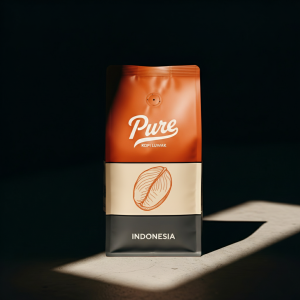
Pure Kopi Luwak
Wild civet coffee from Java. 88.5 SCA cupping score. From $125 for 100g.
The civet’s preferred fruits include chiku (a soft tropical fruit with a flavor profile resembling caramel and pear), mango, rambutan, figs, and the fruit of various forest-edge trees whose names don’t appear in coffee literature because they have nothing to do with coffee. Wikipedia’s entry on the species notes a diet that also includes “small mammals and insects” as protein supplementation. This is the animal that processes wild kopi luwak: an omnivore with a sophisticated palate, a highly developed sense of smell, and a gut microbiome shaped by months of dietary variety before harvest season begins.
Try the coffee this article is about
Wild-sourced from Java, 88.5 SCA cupping score, free US shipping. From $125 for 100g.
Shop Pure Kopi Luwak →What Dietary Diversity Does to the Digestive Environment
The digestive system of an animal that processes dozens of different food types — high-sugar tropical fruits, fibrous plant matter, insect chitin, occasional vertebrate protein — is not the same as the digestive system of an animal fed a narrow, controlled diet. The gut microbiome composition differs substantially. The enzyme secretion patterns differ. The pH profile of the digestive environment at any given moment reflects the cumulative influence of whatever the animal has been eating for the preceding weeks.
When a wild civet eats coffee cherries during Java’s harvest season, which runs roughly June through October for most highland Arabica farms, the enzymatic environment processing those cherries has been shaped by months of dietary diversity. The proteolytic enzymes acting on bitterness-precursor proteins in the bean are the enzymes of a nutritionally varied, free-ranging omnivore — not a stressed animal eating a single food source in a confined space. The microbial population supporting that digestion has the complexity of a wild gut microbiome, not the degraded profile documented in captive animals under chronic stress.
The definitive controlled study on wild-versus-caged civet gut microbiome composition as it specifically affects coffee bean chemistry has not been published. What has been published, consistently, is that wild kopi luwak differs from cage-farmed product not just in the ethics of its production but in the quality of the cup — a difference reported by producers, importers, and specialty coffee professionals who have tasted both. The dietary diversity hypothesis is consistent with that observation and with what is understood about gut health in wild versus captive animals more broadly.
The Seasonal Rhythm This Creates
Wild kopi luwak production is inherently seasonal in a way that cage-farmed production is not. A civet in a cage can be fed coffee cherries year-round, whenever the producer decides. A wild civet eats coffee cherries for roughly five months per year, during the harvest window, and spends the remaining seven months eating everything else the Javanese landscape offers.
The coffee that emerges from this arrangement carries a seasonal signature. It is produced by animals at the height of their natural fitness, foraging through a plantation ecosystem that includes not just coffee but the rambutan trees, forest fig species, and undergrowth fruiting plants that make up their complete diet. The gut that processes the cherry in October was eating chiku in June. That history is not incidental background. It is the ecological context that makes wild kopi luwak what it is.
What This Means for Authenticity
The question “is this real wild kopi luwak?” has multiple layers. The obvious layer is production method: was it collected from free-ranging civets, or was it produced by caged animals? Our piece on wild versus caged civet coffee covers that distinction in detail.
The less-examined layer is ecological. Even among wild-sourced products, the quality of the collection environment matters. A wild civet foraging on a monoculture plantation with limited biodiversity is ecologically poorer than one foraging on a plantation with diverse shade trees, native undergrowth, and access to forest edge habitat. The Javanese highland farms where Pure Kopi Luwak is sourced are characterized by the kind of agroforestry landscapes that support diverse wildlife populations — which is part of why wild civets persist there at all, and part of why the kopi luwak they produce has the character it does.
The civet that selects peak-ripe coffee cherries in the dark on a Javanese hillside is not a coffee-processing machine. It is a wild animal living a complete life in a complex ecosystem. The coffee it produces is a byproduct of that life. Understanding the full diet — the rambutan and chiku and forest figs, the insects and the seasonal variation — is understanding why wild kopi luwak tastes the way it does. The processing mechanism matters. The animal doing the processing matters more.
Pure Kopi Luwak
Wild civet coffee from Java. 88.5 SCA cupping score. From $125 for 100g.

Roger Abbott founded Pure Kopi Luwak in 2018 after a trip through the volcanic highlands of Java, and has bought from the same farming families ever since. He only works with collectors of wild civet coffee, never caged. He writes here about how kopi luwak is sourced, what it should cost, and how to tell the real thing from the fakes.