There’s a moment — it happens somewhere around the third sip — when kopi luwak stops tasting like coffee and starts tasting like something else entirely. The bitterness that should be there, isn’t. There’s a sweetness that doesn’t come from sugar, a body that feels closer to dark chocolate than to a beverage, and a sustained finish that most $15 bags of specialty coffee never achieve. You almost have to check the cup to confirm nothing was added.
That moment doesn’t happen if you add milk first.
What Milk Actually Does to Coffee Chemistry
When you pour milk into coffee, you’re not simply diluting it. You’re initiating a series of molecular interactions between milk proteins and the compounds that give coffee its flavor and aroma. Research published in Food Research International in 2024 identified the specific mechanism: casein proteins, the dominant protein fraction in dairy milk, bind to coffee polyphenols — primarily chlorogenic acids and their derivatives — forming stable complexes that alter how flavor compounds are perceived and released in the mouth.
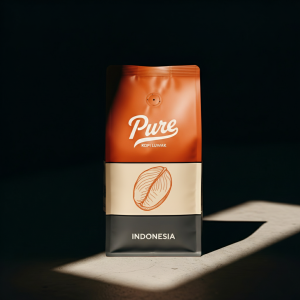
Pure Kopi Luwak
Wild civet coffee from Java. 88.5 SCA cupping score. From $125 for 100g.
For most coffee, this interaction is tolerable or even useful. Bitter compounds are partially bound and masked. The harshness of under-extracted or low-quality coffee is softened by dairy fat. Milk is doing exactly what you need it to do: covering up problems with the underlying coffee. If your baseline cup is bitter, astringent, or thin-bodied, milk is the correct intervention.
Kopi luwak’s baseline cup has none of those problems. And because it doesn’t, milk interacts with it differently — not correcting flaws, but obscuring strengths.
The Specific Chemistry That Makes Kopi Luwak Different
The enzymatic modification that happens during a wild civet’s digestive transit produces two effects relevant to the milk question. First, proteolytic enzymes partially hydrolyze proteins in the outer layers of the coffee bean — specifically protein fractions that are precursors to bitter quinolactone compounds during roasting. The beans that emerge have reduced bitterness potential, which is why the finished cup lacks the harsh edge most coffee has even after optimal extraction.
Second, comparative chemical analyses of civet-processed versus conventionally processed beans from identical Java origins have documented measurably reduced concentrations of malic and citric acids. These acids, in conventional coffee, contribute to the tartness that many drinkers find uncomfortable and attempt to moderate with milk. In kopi luwak, their reduction leaves the mid-palate cleaner — and creates the impression of natural sweetness even in an unsweetened cup. That sweetness is not a phantom. It’s what happens to the flavor architecture of the cup when the compounds that compete with and mask natural bean sugars are substantially reduced.
The chocolate notes, the earthy complexity, and the fruit-forward esters that characterize well-made wild kopi luwak are volatile aromatic compounds. Dairy fat is highly effective at binding volatile aromatics and suppressing their release during drinking. A 2025 study in the Journal of Dairy Science confirmed that milk addition to coffee reduces the volatility and perceived intensity of key aromatic fractions. You’re not imagining it — the coffee genuinely smells and tastes less like itself when milk is added.
Why Regular Coffee Drinkers Need Milk (And What That Reveals)
Most people who add milk or sugar to coffee started doing so because the coffee they first encountered required it to be drinkable. Commercial blends roasted dark to hide defects, convenience store drip held on warming plates for hours, instant granules — these products are genuinely improved by additives that mask their problems. The habit of adding milk becomes reflexive, and eventually the memory of what coffee tastes like without it fades.
Kopi luwak is, among other things, the coffee that forces you to remember what the baseline was always supposed to be. The enzymatic processing produces a cup that tastes like coffee that had everything corrected at the source — the bitterness managed, the harshness eliminated, the natural sweetness of the cherry brought forward. Adding milk to that cup is solving a problem that doesn’t exist while creating new ones.
How to Approach Your First Cup
Brew wild kopi luwak at 93–94°C, which is slightly cooler than the 95–96°C ideal for bitter-heavy coffees. The lower temperature brings forward the aromatic complexity without the bitterness spike you’d normally need to manage. Grind medium-coarse for French press or medium for pour over. Don’t grind fine — the flavor compounds in kopi luwak don’t need the aggressive extraction that bold, dark-roasted beans require to taste like anything.
Pour your first cup. Don’t add anything. Smell it before you drink. The aroma — earthy, slightly sweet, with a faint chocolate undertone — is already different from what you’re used to. Drink it at about 65–68°C, warm enough to taste complex but cool enough to not scald the palate.
If you’ve been adding milk to coffee for twenty years, the first sip will be disorienting. Not because it’s bad — because it doesn’t taste like what you’ve been drinking. The flavor profile is quiet, complex, and sustained rather than immediate and blunt. It asks you to pay attention in a way that milk-with-coffee never requires.
After that first cup, add whatever you want. But try it black first. You paid for the chemistry — at least find out what it tastes like.
Pure Kopi Luwak
Wild civet coffee from Java. 88.5 SCA cupping score. From $125 for 100g.

Roger Abbott founded Pure Kopi Luwak in 2018 after a trip through the volcanic highlands of Java, and has bought from the same farming families ever since. He only works with collectors of wild civet coffee, never caged. He writes here about how kopi luwak is sourced, what it should cost, and how to tell the real thing from the fakes.