Search “kopi luwak coffee” on Amazon and the first results include a $12 box of sachets labeled “Kopi Luwak Original White Koffie” — a 3-in-1 instant blend with non-dairy creamer and sugar, selling for about $1.20 per sachet and reviewed by thousands of buyers who describe it as “delicious” and “authentic Indonesian.” This product outsells most genuine kopi luwak listings on the platform by orders of magnitude. It also has almost no relationship to the coffee it claims to represent, beyond sharing a name and a country of origin.
Understanding what these sachets actually contain — and why the price point makes the authenticity claim arithmetically impossible — is the most efficient way to navigate the instant coffee section of the kopi luwak market without wasting money on something that does not deliver what the label implies.
What “Kopi Luwak White Koffie” Actually Is
The product dominating the instant kopi luwak category on Amazon is made by PT Santos Jaya Abadi, the Indonesian manufacturer behind the Kapal Api coffee brand. “Kopi Luwak” in this context is a brand name, not a product description. In Indonesian, “kopi luwak” simply means “civet coffee” — the same way “Black Forest” on a German cake describes a flavor profile and geographic tradition rather than requiring forest-sourced ingredients. PT Santos Jaya Abadi registered the brand name decades ago to position itself in the premium segment of the Indonesian domestic instant coffee market.
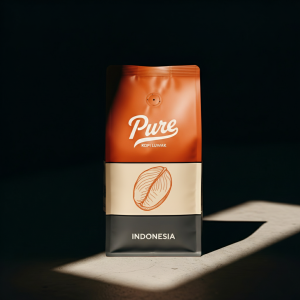
Pure Kopi Luwak
Wild-sourced. Organic. Arabica. From $125.
The actual contents of a Kopi Luwak White Koffie sachet are: instant coffee (almost certainly Robusta, given Indonesia’s production mix), non-dairy creamer, and sugar. The 20-gram sachet delivers a single-serve drink that dissolves in hot water. Whether any actual civet-processed coffee is present is not disclosed, because the brand does not make that claim. The brand name does the work of suggesting it, while the product description carefully avoids confirming anything.
Why the Price Makes Genuine Content Impossible
The arithmetic is not subtle. Authenticated wild kopi luwak whole beans retail for $100 to $150 per 100 grams from verified producers. That translates to $1.00 to $1.50 per gram of unground coffee. A standard brewing dose is 8 grams per cup — meaning the ingredient cost of a single authentic cup of wild kopi luwak is $8 to $12 before roasting, packaging, shipping, and retail margin.
A “Kopi Luwak” instant sachet costs $1.20. There is no price level at which a $1.20 sachet can contain genuine wild-civet-processed coffee. The economics do not work at any margin — even if the manufacturer paid nothing for production, distribution, or Amazon fees, $1.20 cannot cover the raw material cost of 8 grams of authentic kopi luwak, because that cost alone is $8 to $12. A sachet containing genuine wild kopi luwak at appropriate dose would need to retail for at least $15 to $25 to cover ingredient cost alone, which is why verified kopi luwak pods and capsules (which do exist from producers like The Kopi Luwak Company) cost $5 to $10 per capsule — and those capsules contain only 5 to 6 grams, not a full filter-coffee dose.
What Happens to Coffee Quality During Instant Processing
Even if the ingredient question were resolved, the production method for instant coffee is fundamentally incompatible with preserving what distinguishes kopi luwak from conventional specialty coffee. Instant coffee is made through one of two methods: spray drying, which involves pumping liquid coffee concentrate through nozzles into a chamber of hot dry air at 200-300°C and collecting the resulting dried powder; or freeze drying, which involves freezing concentrated brewed coffee and then sublimating the ice under vacuum to leave behind a dried crystal structure.
Freeze drying preserves more aromatic complexity than spray drying — it is how premium instant coffees like Nescafé Gold or Waka are made. But even freeze drying, at its best, degrades the volatile aromatic compounds that give specialty coffee its character. The light floral, fruity, and complex notes that distinguish a quality Arabica are most affected. For kopi luwak specifically, the enzymatic modifications that reduce bitterness survive the process (they are structural changes to the bean’s protein matrix, not volatile), but the subtle aromatics that make wild kopi luwak worth tasting — the low-bitterness complexity, the specific chocolate and earthy notes — are largely lost.
The result is an instant product that is, at best, less bitter than a comparable conventional instant coffee. The quality ceiling for instant kopi luwak, assuming genuine beans were used, is still far below what the whole-bean product delivers. And the mainstream instant sachets selling on Amazon contain no genuine kopi luwak by any verifiable measure.
How to Spot the Pattern Elsewhere
The Kopi Luwak White Koffie pattern — a brand name that sounds like a product description — repeats across online marketplaces. Other products to approach with skepticism include very small bags (10g, 20g) of “kopi luwak” selling for $5 to $15, blended products described as “kopi luwak blend” or “luwak mix,” and any instant or 3-in-1 product described as kopi luwak without explicit documentation of civet processing. The authentication indicators for genuine product — specific origin, roast date, wild-sourced certification, whole-bean format — are entirely absent in the instant category, not because the sellers forgot to include them, but because the claims cannot be supported.
Genuine wild kopi luwak is sold in whole-bean format by producers who can name the island, the farm, and the collection method. It costs $100 to $150 per 100 grams and comes with documentation that can withstand scrutiny. Pure Kopi Luwak operates exactly in this space — no instants, no blends, no sachets, whole bean only, sourced exclusively from wild civets on Java.
The instant kopi luwak market exists because the brand name carries enough cachet to move product at a premium over generic instant coffee, while the actual quality claims remain vague enough to survive consumer scrutiny. It is a well-executed marketing play on a product that has almost nothing to do with the coffee it references. Knowing the difference before you search is the most efficient way to avoid spending two minutes reading Amazon reviews and then ordering the wrong thing.
Pure Kopi Luwak
Wild-sourced. Organic. Arabica. From $125.

Roger Abbott is the founder of Pure Kopi Luwak. He has spent over a decade sourcing wild kopi luwak directly from farmers and collectors in the highlands of Java, Indonesia — working exclusively with wild civets, never caged. He writes about specialty coffee, Indonesian origins, and the science behind what makes kopi luwak taste the way it does.
