A 2022 study published in Frontiers in Sustainable Food Systems spent months in the Gayo Highlands of Sumatra analyzing the flavor compounds in kopi luwak produced by free-ranging civets. The researchers identified the dominant character as nutty, chocolatey, herby, and earthy — a description that lands very differently than the usual marketing copy for the world’s most expensive coffee, which tends to reach for more dramatic language. Knowing what it actually tastes like changes how you think about giving it.
If you’re shopping for kopi luwak as a Father’s Day gift and you’ve never tasted it yourself, that’s both understandable and slightly awkward. You’re choosing something at $125 for 100 grams, it comes with a story you’ll need to tell, and you have no personal reference point for whether the recipient will enjoy what he’s about to taste. This guide exists for that exact situation.
The Short Answer
Wild kopi luwak from Java tastes smooth. That’s the word almost every person who tries it reaches for first, and it’s accurate. The bitterness that characterizes most conventionally processed coffees — the edge that requires milk, sugar, or a specific roast level to manage — is largely absent. What you’re left with is a cup that’s notably quieter in structure, with chocolate and caramel notes in the middle register, a subtle nuttiness that emerges as it cools, and a finish that lingers without any of the astringency that cheaper coffee leaves on the palate.
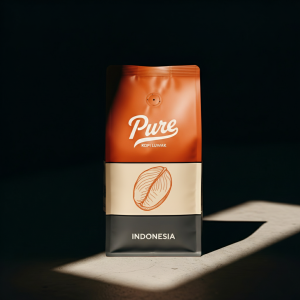
Pure Kopi Luwak
Wild civet coffee from Java. 88.5 SCA cupping score. From $125 for 100g.
The scientific explanation involves proteolytic enzymes in the Asian palm civet’s digestive tract, which partially hydrolyze the protein-based bitter precursors in the green coffee bean during the roughly 24 hours the bean spends in transit. The result is a measurably lower concentration of bitterness compounds than you’d find in the same varietal processed conventionally. This has been documented in food science research since the late 2000s and is why the taste profile is consistent across quality sources: the biology produces a predictable chemical outcome.
What This Means for Someone Who Already Drinks Good Coffee
Wild kopi luwak is not trying to compete with high-elevation Ethiopian naturals on floral complexity, or with Kenyan AAs on citric brightness. It occupies a different register: lower acidity, a narrower flavor range, exceptional smoothness, and a particular sweetness that most coffees only achieve by being under-extracted or heavily roasted — both of which compromise flavor in other ways.
A coffee drinker who prefers his cup with milk or who finds most specialty coffees “too sharp” will often find kopi luwak to be exactly what he was looking for and couldn’t name. A coffee drinker who specifically seeks out bright, fruity, high-acid naturals may appreciate kopi luwak intellectually while finding the subdued profile less exciting than his regular rotation. Both responses are legitimate. The question is which description fits your dad better.
Most people who drink coffee fall into the former category. The population of people who have a standing order for African high-altitude naturals is smaller than the population of people who just want good coffee without the bite. If your dad takes his coffee with anything, or has ever mentioned that he finds certain coffees too acidic or sharp, wild kopi luwak is almost certainly going to land.
Try the coffee this article is about
Wild-sourced from Java, 88.5 SCA cupping score, free US shipping. From $125 for 100g.
Shop Pure Kopi Luwak →The Acidity Factor
If your dad has ever mentioned acid reflux, heartburn, or that he can only drink certain coffees — wild kopi luwak is worth knowing about. The low acidity profile isn’t just a flavor characteristic; it means the coffee is gentler on a sensitive stomach than higher-acid alternatives. Among specialty coffees, kopi luwak sits at the low-acid end of the spectrum, which explains why the taste profile appeals to people who’ve moved away from conventional dark roasts as they’ve gotten older. Darker roasts are often chosen to reduce acidity; kopi luwak achieves lower acidity through its processing, not through roast level, which means you get the smoothness without the flavor loss that dark roasting produces.
The Temperature Arc
One thing that distinguishes a well-sourced wild kopi luwak from most other coffees is how it changes as the cup cools. Most coffee deteriorates noticeably from first sip to last — the flavors that were pleasant at 70 degrees Celsius become flatter or more bitter as the liquid reaches room temperature. Wild kopi luwak from Java actually develops as it cools. The nuttiness becomes more pronounced, the caramel character deepens slightly, and the cup you finish is often more interesting than the one you started. This is partly a function of the lower bitterness — without that dominant bitter note masking other flavors, you taste more of the coffee’s underlying character as it opens up.
Tell him to let it sit for five minutes after brewing before the first sip. Not because it’s a performance, but because it genuinely tastes better.
How to Explain It When You Give It
The story is almost always what makes the gift land, and the taste description is the part of the story most people get wrong. Don’t describe it as “the most expensive coffee in the world” and leave it there — that sets an expectation that can only disappoint, because what you’re buying isn’t intensity or complexity, it’s elegance and smoothness.
What you’re actually giving is a cup that’s been produced by a wild animal making autonomous choices about ripe coffee cherries in the forests of Java, processed through a biological fermentation that no industrial method can replicate, and sourced from a harvest that generates only a few hundred kilograms annually from the entire wild civet population. The global supply of authentic wild kopi luwak is genuinely small — a fact that makes the price make more sense once you understand the math. That specificity — the animal, the forest, the season, the particular chemistry — is the experience. The flavor is the confirmation that it was worth it.
Pure Kopi Luwak is wild-sourced from free-ranging civets in Java’s highlands, not from caged civet farms. That distinction matters both ethically and for flavor — the foraging diet of a wild civet produces a different chemical composition in the bean than the controlled diet of a farmed one does. For a deeper breakdown of the full flavor profile, What Does Kopi Luwak Taste Like? goes further into the tasting notes and how they compare across brewing methods. For the practical side of making it at home, How to Brew Kopi Luwak at Home covers the methods that work best with this specific bean.
If you need one sentence for when he asks what it tastes like: smooth, dark chocolate, very low bitterness, with a finish that keeps changing as the cup cools. That’s accurate, and it’s the best thing to say before you let the coffee do the rest of the talking on Father’s Day.
Pure Kopi Luwak
Wild civet coffee from Java. 88.5 SCA cupping score. From $125 for 100g.

Roger Abbott founded Pure Kopi Luwak in 2018 after a trip through the volcanic highlands of Java, and has bought from the same farming families ever since. He only works with collectors of wild civet coffee, never caged. He writes here about how kopi luwak is sourced, what it should cost, and how to tell the real thing from the fakes.