In 2009, a former Silicon Valley executive named Dave Asprey blended a pat of grass-fed butter and a tablespoon of MCT oil into his morning coffee and called it Bulletproof Coffee. By 2014, the concept had a devoted following among ketogenic dieters who believed that adding high-quality fats to black coffee created a cleaner, more sustained energy state. By 2024, the category had generated hundreds of millions in product sales — flavored MCT oils, grass-fed butter pouches, keto coffee creamers designed to solve a problem that most people accepted as inherent to coffee itself.
The irony is that most of what Bulletproof Coffee set out to solve — rough stomach, jittery edge, bitterness you cannot drink black — was already solved by a coffee that nobody in the biohacker community was discussing. Wild kopi luwak, processed through the digestive biology of a free-roaming palm civet on a Javanese farm, produces a cup that is measurably lower in organic acids, smoother, and considerably more satisfying to drink plain. No butter required.
Black Coffee and Ketosis: What the Science Actually Shows
A standard ketogenic diet requires keeping net carbohydrate intake below 20 to 50 grams per day to maintain the metabolic state of ketosis. Plain black coffee contains approximately 2 calories per 8-ounce cup, zero grams of carbohydrates, zero grams of fat, and zero grams of protein. It is, by the requirements of the ketogenic framework, entirely benign.
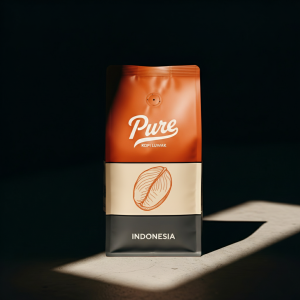
Pure Kopi Luwak
Wild-sourced. Organic. Arabica. From $125.
Research published in the Canadian Journal of Physiology and Pharmacology in 2017 demonstrated that caffeine supplementation at doses comparable to 2-3 cups of coffee elevated blood ketone levels by approximately 88% in participants already in a fasted state. The mechanism involves caffeine promoting lipolysis — the breakdown of stored fat into free fatty acids — which the liver then converts to ketone bodies. Black coffee on a ketogenic diet does not merely avoid breaking ketosis. It may actively deepen it.
The practical problem is that black coffee is genuinely difficult to drink if you are accustomed to adding milk, cream, or sugar. Bitterness and acidity — the two sensory qualities that drive people toward additives — are not intrinsic to coffee as a beverage. They are artifacts of how most commercial coffee is grown, processed, and roasted.
Why Kopi Luwak Solves the Keto Coffee Problem Naturally
When an Asian palm civet’s digestive enzymes spend 12 to 24 hours working on a ripe Arabica cherry, they partially hydrolyze specific proteins in the bean’s outer layers — proteins that would otherwise become bitter Maillard compounds during roasting. A 2023 metabolomics study in Food Chemistry (PMC9960232) found measurably different amino acid profiles in kopi luwak compared to conventionally processed Arabica from the same origin. The same research documented lower concentrations of malic and citric acids, the organic acids that contribute most to coffee’s sharp bite.
For a ketogenic dieter, this translates directly. The coffee that is hardest to drink black is the one highest in bitterness and acidity. Wild kopi luwak addresses both at the source — no additives, no masking. Bulletproof Coffee’s fat additions smooth the edges of a harsh cup by coating the palate. Wild kopi luwak removes the edges from inside the bean. The result is the same cup quality, with none of the 230 calories and 25 grams of fat that butter and MCT oil add to the morning.
The Bulletproof Coffee Comparison Worth Making
A standard Bulletproof Coffee preparation adds approximately 230 calories and 25 grams of fat to a beverage that would otherwise have 2 calories. For ketogenic dieters tracking macros, those fat calories fit the protocol but significantly impact the day’s caloric budget. Many keto practitioners report that it reduces appetite so effectively that eating enough actual food becomes a secondary problem.
Wild kopi luwak in black addresses the palatability issue differently — it does not add anything to the cup. The satisfaction of drinking it black comes from the smoothness and complexity of the coffee itself, not from fat coating your mouth. For a ketogenic dieter focused on clean, minimal inputs, that distinction is meaningful. Fewer ingredients in the morning routine. Less to track. The same smooth result.
There is also a practical storage consideration. Butter and MCT oil go rancid. A sealed, nitrogen-flushed bag of kopi luwak stored in a cool, dry place retains its character for months. Your morning ritual stays consistent without the perishable logistics.
The Practical Keto Coffee Morning
Wild kopi luwak brewed as a pour-over at 93C/199F takes about three minutes. Medium-coarse grind, one tablespoon per cup, 2:30 to 3:00 extraction time. Drink it black. The bitterness that would normally require cream to manage is not there — the civet’s enzymatic processing removed the protein precursors that create it during roasting. What you taste instead is full body, low acidity, chocolate and earth, and a finish that does not require managing.
For a fuller picture of what wild civet processing does to the cup, the tasting notes cover the flavor profile in professional detail. For the broader health context, the health benefits overview covers the science without overclaiming.
Pure Kopi Luwak
Wild-sourced. Organic. Arabica. From $125.
Roger Abbott is the founder of Pure Kopi Luwak. He has spent over a decade sourcing wild kopi luwak directly from farmers and collectors in the highlands of Java, Indonesia — working exclusively with wild civets, never caged. He writes about specialty coffee, Indonesian origins, and the science behind what makes kopi luwak taste the way it does.
