Standard espresso extraction runs at 9 bars of pressure for 25-30 seconds, forcing hot water through finely ground coffee to produce a concentrated shot with a crema layer floating on top. The process extracts everything rapidly and intensely — which means whatever is present in the bean gets amplified, including bitterness and acidity. This is why most espresso blends use dark roasts: they caramelize the sharper compounds before the machine’s pressure gets to them.
Wild kopi luwak changes this equation. The civet’s digestive processing has already done something to the bean that no roast profile can replicate: proteolytic enzymes have broken down proteins, reducing the bitter-tasting phenylindanes and chlorogenic acids that would otherwise dominate an espresso shot. You’re starting from a chemically different base. The question is how to use that advantage at the machine.
Why Kopi Luwak Espresso Is Different
According to research published by kopiluwak.coffee’s brewing science series, the proteolytic activity in the civet’s gut limits the formation of Maillard reaction products and bitter phenylindanes during roasting. This means that when you pull kopi luwak through an espresso machine, the extraction doesn’t carry the same load of bitter compounds that a comparable Arabica would produce. The intensity is there; the harshness isn’t.
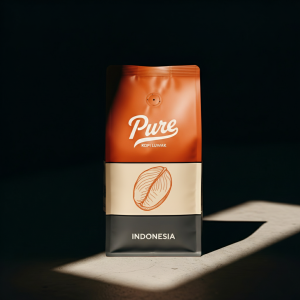
Pure Kopi Luwak
Wild-sourced. Organic. Arabica. From $125.
The practical result is an espresso shot with full body, rich crema, and a finish that reads as earthy and complex rather than sharp. The mouthfeel tends toward smoothness. The aftertaste lingers without biting. For espresso drinkers who find most shots too aggressive — or who have switched to milk-based drinks primarily to tame bitterness — kopi luwak as espresso can be a recalibration.
Grind Setting for Espresso
Start finer than you might for a comparable Arabica, because kopi luwak’s lower bitterness means you can extract more aggressively without punishment. On a standard burr grinder with a 0-40 scale (like a Baratza Sette), begin around setting 3-4 and adjust based on shot time. Target 25-28 seconds for a 1:2 ratio (18g in, 36g out).
If your shot runs fast (under 20 seconds), go finer. If it’s bitter even at this setting, which is rare with wild kopi luwak, go coarser. The typical adjustment pattern is the opposite of what you’d do with a standard commercial espresso blend: you’re trying to maximize extraction because the bean’s chemistry tolerates it.
Water Temperature
For espresso, the standard recommendation is 90-96°C (194-205°F). With kopi luwak, favor the higher end of this range — around 93-95°C. The lower acid content means the coffee won’t read as sour even with higher temperatures, and higher temperatures help extract the earthy, complex notes that define the cup.
Water quality matters here too. Minerals in water interact with extraction chemistry — specifically, magnesium ions increase the solubility of flavor compounds while calcium carbonate builds up as scale. Filtered water with moderate mineral content (80-150 ppm total dissolved solids) is ideal. The interaction between water chemistry and kopi luwak’s flavor is worth understanding before you dial in your espresso setup.
Dose and Ratio
A standard double shot uses 18-20g of coffee to produce 36-40g of liquid (1:2 ratio). For kopi luwak espresso, you can go slightly higher on the dose — up to 22g — to amplify the body and richness without adding bitterness. This is where the chemistry advantage becomes tangible: at 22g in, a standard espresso blend would produce an overwhelmingly bitter shot. With wild kopi luwak, it produces a dense, complex, smooth extraction.
For lungo-style shots (longer pulls, more volume), kopi luwak performs unusually well because the extended extraction time doesn’t trigger the late-stage bitterness that ruins a lungo with most coffees.
Milk-Based Drinks
In a flat white, cappuccino, or latte, kopi luwak’s earthiness and body hold up well against milk. The absence of sharp bitterness means the coffee flavor stays present even at high milk ratios — something standard dark-roast espresso blends achieve through brute force (heavy roasting), but kopi luwak achieves through different chemistry.
For flat whites specifically, the smoothness of wild kopi luwak and a well-steamed whole milk creates a textural experience that reads as genuinely luxurious. If you’ve been using wild-sourced kopi luwak for pour over or French press, trying it as an espresso-based drink reveals a different side of the same bean.
Common Mistakes in Kopi Luwak Espresso
The most frequent error is treating it exactly like a standard espresso bean — same grind, same temperature, same expectation of what needs taming. Wild kopi luwak doesn’t need the same interventions. The brewing mistakes that flatten kopi luwak’s flavor include under-extraction more often than over-extraction, because brewers who assume bitterness-risk back off too early.
The second error is using stale beans. Espresso amplifies everything, including staleness. Ground kopi luwak oxidizes quickly — within a week of grinding. Whole beans hold better. If you’re brewing espresso, grind fresh each time. The flavor difference between fresh-ground and week-old ground is substantial enough to misrepresent the coffee entirely.
Wild kopi luwak as espresso is not a common configuration — most people who encounter this coffee brew it gently, which is the right instinct for a first encounter. But if you’re a committed espresso drinker curious about what the world’s smoothest coffee does under pressure: the answer is something worth experiencing.
Pure Kopi Luwak
Wild-sourced. Organic. Arabica. From $125.

Roger Abbott is the founder of Pure Kopi Luwak. He has spent over a decade sourcing wild kopi luwak directly from farmers and collectors in the highlands of Java, Indonesia — working exclusively with wild civets, never caged. He writes about specialty coffee, Indonesian origins, and the science behind what makes kopi luwak taste the way it does.
