Coffee contains more than 30 distinct organic acids — citric, malic, tartaric, phosphoric, and others — each contributing differently to what baristas call “brightness” in the cup. When a roaster describes a coffee as “vibrant” or “sparkling,” they’re describing the sensory effect of those acids at work, not the kind of stomach-irritating acidity that concerns sensitive drinkers. The two concepts are distinct, and understanding the difference changes how you read a coffee menu. Most brewed coffee sits between 4.85 and 5.10 pH — mildly acidic, similar to a banana, and far gentler than the citric acid in orange juice.
What Coffee Acidity Actually Means
When coffee professionals discuss acidity, they’re describing perceived flavor characteristics, not measurable pH levels. Coffee acidity refers to bright, sparkling, wine-like qualities that create complexity and liveliness in the cup — and it’s distinct from scientific pH measurement. Most brewed coffee averages 4.85–5.10 pH, which tells you relatively little about how “bright” or “flat” it will taste. Ironically, many coffees with intense flavor acidity have higher pH levels (less chemically acidic) than dark-roasted coffees that taste flat and dull, because roasting destroys the specific acids responsible for brightness while creating new ones that register differently to the palate.
The Chemistry Behind Bright Flavors
Coffee contains over 30 different organic acids that contribute to flavor complexity without necessarily making the beverage more acidic in a chemical sense. Citric acid — most concentrated in African coffees — creates lemony, bright characteristics. Malic acid provides apple-like tartness and wine-like qualities found in many Central American cups. Tartaric acid contributes a grape-like character that makes some coffees taste almost like a dry white wine. Phosphoric acid creates sparkling, effervescent sensations. Acetic acid is the double-edged one: in small amounts it adds complexity, but in excess it tips into vinegar notes that signal fermentation problems.
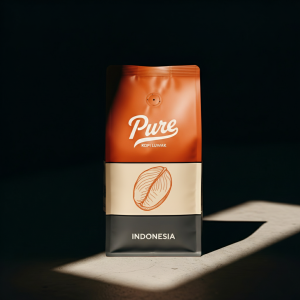
Pure Kopi Luwak
Wild-sourced. Organic. Arabica. From $125.
Chlorogenic acids represent the largest group and significantly impact both flavor and perceived acidity. These compounds increase with higher growing altitudes, break down during roasting to create new flavor compounds, contribute to coffee’s antioxidant properties, and create much of the “brightness” that distinguishes specialty coffee. The specific chlorogenic acid profile of a bean — shaped by altitude, variety, and processing — is why two coffees with identical pH readings can taste completely different in terms of brightness and complexity.
How Growing Conditions Influence Acidity
The perception of coffee acidity directly correlates with growing conditions, which explains why certain origins consistently produce brighter coffees. Higher elevations create environmental stress that increases acid production in coffee cherries: at 1,000–1,500 meters, acidity development is moderate. At 1,500–2,000 meters, pronounced brightness and complexity become characteristic. Above 2,000 meters, the effect intensifies dramatically — wine-like characteristics that make Ethiopian high-altitude coffees taste almost like fruit juice. Temperature fluctuations between day and night at altitude slow cherry development, giving the fruit longer to accumulate the acids and sugars that translate to flavor complexity.
Processing methods dramatically affect how those acids are preserved or transformed. Washed processing preserves and enhances the natural fruit acids, producing the cleanest expression of origin brightness. Natural processing adds fermented fruit complexity but can mask underlying origin acidity. Honey processing balances fruit sweetness with bright acidity. Anaerobic fermentation is the wildcard: under controlled conditions it can create extraordinary acidity profiles; managed poorly, it introduces unpleasant fermentation notes that overwhelm the original character.
Regional Acidity Profiles: A World Tour
East African coffees — Ethiopia and Kenya in particular — produce the most intense acidity globally. Wine-like, citrusy, with flavor descriptors ranging from lemon and bergamot to black currant and grape, they represent acidity as a feature rather than a flaw. Extreme altitudes, ancient varietals adapted to highland conditions over centuries, and traditional processing methods all contribute to this intensity.
Central American coffees from Guatemala and Costa Rica express a brighter, apple-like acidity that’s more balanced than East Africa’s intensity. Green apple, stone fruit, and chocolate undertones are common descriptors. The volcanic soils, consistent processing traditions, and moderate altitudes combine to produce approachable brightness that rewards both casual and analytical drinkers.
South American coffees, particularly from Colombia and Peru, tend toward moderate, caramel-sweet, rounded acidity. Orange notes, brown sugar, and nutty undertones characterize the profile. Island coffees from Jamaica and Hawaii sit at the opposite end of the spectrum — mild, refined, subtle. Gentle citrus, floral notes, and overall smoothness define the profile. Marine climates and consistent temperatures preserve delicacy over intensity, which is part of what makes Jamaican Blue Mountain’s balance so prized.
Roasting’s Impact on Acidity Perception
The roasting process fundamentally alters acid profiles. Light roasting keeps chlorogenic acids largely intact, allowing origin characteristics to shine through clearly — brightness reaches its maximum, though under-development risks a sour, thin cup lacking sweetness to balance the acids. Medium roasting breaks down some acids while creating new compounds through caramelization, adding sweetness that creates the most approachable balance. Dark roasting destroys most original acids through heat while creating new ones through pyrolysis, with roast flavors dominating and drowning origin characteristics. Dark-roasted coffee is often perceived as “less acidic” — even though its pH may be lower than lighter roasts — because the specific acids responsible for brightness have been eliminated, not because the coffee has become chemically gentle.
Brewing’s Role in Acidity Management
Brewing variables can significantly shift how acidity presents in the final cup. Cooler water (185–195°F) preserves delicate acid compounds that would be altered at higher temperatures. Faster extraction pulls acids before bitter compounds develop. Coarser grinds prevent over-extraction that masks brightness. Pour-over methods naturally highlight clarity and acidity by keeping the extraction clean and controlled.
Conversely, hotter water (200–205°F) extracts more body-building compounds that moderate perceived brightness. Longer extraction times bring sweetness and bitterness into balance with acids. Finer grinds increase overall extraction and body. French press, by keeping grounds in contact with water throughout, emphasizes body and texture over brightness. Understanding these relationships means you can take the same bag of beans and produce genuinely different cups depending on what you want to highlight.
Developing Your Acidity Palate
The most effective way to calibrate your perception of brightness is through direct comparison. Brew an Ethiopian Yirgacheffe and a Brazilian Santos side by side at identical parameters — the difference in brightness will be immediate and dramatic. The Yirgacheffe’s electric citric and berry acidity against the Brazilian’s smooth, low-acid nuttiness is coffee education in a single tasting.
From there, start distinguishing types of acidity. Citric acidity reads as lemon, lime, grapefruit — the sharp brightness you get in a good Kenyan. Malic acidity is the apple and stone fruit tartness common in Central American coffees. Tartaric acidity is grape-like and wine-inflected — this is what people mean when they call a coffee “vinous.” Phosphoric acidity creates sparkling, effervescent sensations more than actual flavor notes. Learning to identify these types rather than just noting “bright” or “flat” unlocks far more precise vocabulary for describing what you taste.
Acidity Sensitivity: When Bright Becomes Problematic
Some drinkers genuinely experience sensitivity to coffee’s bright characteristics — a real phenomenon, though often conflated with caffeine sensitivity or general digestive issues. For those who find high-acid coffees uncomfortable, the practical response is choosing lower-acid origins (Brazilian, Sumatran, Hawaiian) and preferring medium to dark roasts, which reduce perceived acidity. Adding dairy or plant milk buffers acid perception through protein binding. Cold brew is worth trying: the extended cold extraction creates significantly smoother, less bright results than hot brewing from the same beans. Hard water can enhance bitter notes while soft water emphasizes acidity — water quality is an overlooked variable in acidity management.
Acidity in Premium Coffees
Understanding acidity explains why many of the world’s most expensive coffees exhibit pronounced brightness. Record-breaking Panama Gesha lots at auction consistently feature electric acidity with floral complexity as the defining characteristic. Ethiopian Geshas and high-altitude Kenyan lots command premiums partly because their acid profiles express terroir with unusual precision — brightness correlates with flavor complexity, processing integrity, and freshness in ways that make it a reliable proxy for overall quality. High acidity fades with age, meaning bright coffees are almost by definition fresh; a flat, dull cup from what should be a high-acid origin is a warning sign about roast date or storage conditions.
Understanding acidity is ultimately about understanding what makes coffee interesting — why some cups demand your full attention while others are simply warm and brown. The next time a roaster’s tasting notes mention “bright” or “sparkling,” you’ll know they’re describing the organic chemistry of highland agriculture and skilled processing, not a warning that the coffee will irritate your stomach. Whether you prefer the electric intensity of a Yirgacheffe or the refined subtlety of a wild-sourced kopi luwak, acidity is part of what separates coffee worth paying attention to from coffee that merely exists.
Pure Kopi Luwak
Wild-sourced. Organic. Arabica. From $125.

Roger Abbott is the founder of Pure Kopi Luwak. He has spent over a decade sourcing wild kopi luwak directly from farmers and collectors in the highlands of Java, Indonesia — working exclusively with wild civets, never caged. He writes about specialty coffee, Indonesian origins, and the science behind what makes kopi luwak taste the way it does.
