A 2019 chemical analysis published via ResearchGate found something that seems counterintuitive at first: kopi luwak contains lower concentrations of chlorogenic acid than conventionally processed Arabica from the same origin. Chlorogenic acid is coffee’s primary antioxidant compound — the one most frequently cited when health researchers talk about coffee’s antioxidant properties. Lower chlorogenic acid, lower antioxidants, end of story? Not quite. The same analysis and subsequent DPPH radical-scavenging assays showed that kopi luwak’s overall antioxidant activity is higher — meaning its total ability to neutralize free radicals exceeds regular coffee despite having less of the most famous antioxidant compound.
Reconciling those two findings — less chlorogenic acid, more total antioxidant capacity — requires understanding what the civet actually does to coffee bean chemistry, and why antioxidant measurement is more complicated than a single compound’s concentration.
What Happens to Chlorogenic Acid in the Civet’s Gut
Chlorogenic acids (CGAs) are a family of esters formed between quinic acid and hydroxycinnamic acids including caffeic, ferulic, and p-coumaric acids. They account for roughly 5-8% of the dry weight of green Arabica beans and are one of the most abundant classes of phenolic compounds in the human diet globally. During the civet’s digestive process, the bacterial microbiota in the gut — particularly the Gluconobacter species identified in kopi luwak microbiome research — metabolize chlorogenic acids through enzymatic degradation.

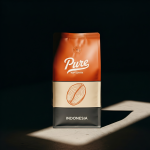
Pure Kopi Luwak
Wild civet coffee from Java. 88.5 SCA cupping score. From $125 for 100g.
The degradation products are smaller phenolic compounds: caffeic acid, ferulic acid, and p-coumaric acid, among others. These compounds are themselves antioxidants, and some research suggests they may be more bioavailable in humans than intact CGAs because they don’t require the same intestinal enzymatic breakdown before absorption. The civet, in effect, pre-digests some of the antioxidant compounds into forms that may be more readily used by the body. The DPPH assay measures total radical-scavenging capacity, and the metabolic products of CGA degradation contribute to that total even though the parent CGA is reduced.
The Antioxidant Picture Beyond Chlorogenic Acid
Coffee’s antioxidant capacity comes from a broader mix of compounds than chlorogenic acid alone. Melanoidins — the brown, high-molecular-weight polymers produced during the Maillard reaction in roasting — are major contributors to the antioxidant activity of roasted coffee. Caffeic acid and ferulic acid (the CGA degradation products mentioned above) are active antioxidants in their own right. Quinic acid, present in elevated concentration in kopi luwak according to the 2023 PMC metabolomics study, is a precursor to chlorogenic acid biosynthesis and contributes independently to antioxidant activity.
A 2023 PMC study analyzing metabolite profiles of kopi luwak versus conventional Arabica coffees using LC-MS/MS found that the two coffee types had notably different distributions of phenolic compounds — not simply higher or lower across the board, but a restructured antioxidant profile. Kopi luwak showed different concentrations of the six CGA isomers, altered levels of ferulic, caffeic, and p-coumaric acids, and distinct quinic acid ratios. This profile is the chemical fingerprint of civet processing, and it’s measurably different from any other post-harvest treatment applied to Arabica beans.
Try the coffee this article is about
Wild-sourced from Java, 88.5 SCA cupping score, free US shipping. From $125 for 100g.
Shop Pure Kopi Luwak →What “Higher Antioxidants” Actually Means
The claim that kopi luwak has higher antioxidant activity than regular coffee needs precision to be meaningful. The studies showing this use in-vitro assays — DPPH or ABTS radical-scavenging tests — which measure antioxidant capacity in a controlled chemical environment, not in the human body. In-vitro antioxidant activity doesn’t translate directly to in-vivo health effects, which depend on how compounds are absorbed, metabolized, and distributed in biological tissues.
What the research supports: kopi luwak has measurably different antioxidant chemistry than conventional Arabica, with comparable or higher total radical-scavenging capacity in laboratory conditions, achieved through a different distribution of phenolic compounds. Whether that translates to meaningfully different health outcomes for people who drink it regularly is not established by the current research — the human clinical trials haven’t been done at the specificity required to make that claim.
What’s established is that kopi luwak is not antioxidant-poor by any measure. It retains robust phenolic content and significant free-radical scavenging capacity. The civet’s processing rearranges the antioxidant profile rather than depleting it, and there’s reasonable basis to think the resulting compounds may be more bioavailable than intact CGAs. That’s a more nuanced story than “kopi luwak has more antioxidants,” but it’s also a more interesting one.
Antioxidants and the Low-Acid Connection
One notable intersection between kopi luwak’s antioxidant profile and its flavor characteristics: chlorogenic acid, in addition to being an antioxidant, is also a precursor to the acidic compounds that make coffee taste sharp and can irritate sensitive stomachs. When the civet’s gut bacteria degrade CGAs, they reduce both the acidity potential and some of the chlorogenic antioxidant activity simultaneously. The result is a coffee that’s lower in acidity and gentler on the stomach — properties that are directly connected to the same enzymatic process that restructures the antioxidant profile.
This is documented in the research: studies have found lower concentrations of malic and citric acids in kopi luwak compared to conventionally processed beans from the same origin. The smoothness and low acidity that kopi luwak is famous for isn’t a separate phenomenon from its antioxidant modifications — it’s the same chemistry expressing itself in different sensory dimensions. For more on the acidity dimension, the low acid kopi luwak guide covers the mechanism in detail.
For people drawn to coffee’s health potential, wild kopi luwak represents a coffee whose unique processing genuinely alters its chemical composition in ways that distinguish it from conventional coffee. The antioxidant story is real — just more nuanced than marketing language usually conveys. And it’s connected to the same natural process that makes the taste profile exceptional: everything interesting about this coffee comes from the same biological transformation.
Pure Kopi Luwak
Wild civet coffee from Java. 88.5 SCA cupping score. From $125 for 100g.

Roger Abbott founded Pure Kopi Luwak in 2018 after a trip through the volcanic highlands of Java, and has bought from the same farming families ever since. He only works with collectors of wild civet coffee, never caged. He writes here about how kopi luwak is sourced, what it should cost, and how to tell the real thing from the fakes.