In 2015, a Brooklyn-based food biotechnology startup called Afineur announced a project explicitly inspired by kopi luwak: using controlled microbial fermentation to modify the flavor profile of coffee beans without involving any animals. The company’s founders, both with backgrounds in synthetic biology, understood that the civet’s digestive process was essentially a fermentation environment with a specific microbial community acting on the coffee bean’s surface chemistry. If you could replicate the microbiome, could you replicate the result?
The answer turned out to be: partially. And that partial answer is the most honest response to the question of whether you can make kopi luwak at home — or anywhere, by any means, without an actual wild civet.
What the Civet Actually Does
Understanding why home replication fails requires understanding what’s actually happening during the 12-to-24 hours a coffee cherry spends in a wild civet’s digestive system. Two distinct processes operate in sequence.
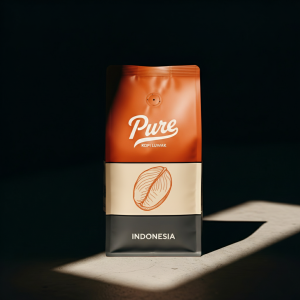
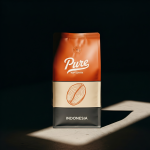
Pure Kopi Luwak
Wild civet coffee from Java. 88.5 SCA cupping score. From $125 for 100g.
First, the proteolytic enzymes in the civet’s stomach begin hydrolyzing specific proteins in the outer layers of the coffee seed. These proteins are precursors to the bitter compounds produced during roasting. Their partial breakdown reduces bitterness potential before the bean ever sees heat. This is the mechanism responsible for kopi luwak’s characteristic smoothness — not fermentation chemistry, not the specific civet involved, but enzyme-driven protein modification in an acidic gastric environment.
Second, and more recently understood, the gut microbiome of a healthy wild civet performs oxidative fermentation on the bean’s surface during the transit period. A 2020 study published in PeerJ identified Gluconobacter species as dominant in the civet’s gut microbiome — acetic acid bacteria known for oxidative metabolism. Their activity during the coffee bean’s transit modifies surface chemistry in ways that affect flavor development during roasting. Vietnamese producers have marketed enzyme-soak treatments claiming to replicate this process; the results have been consistently described as approximations rather than equivalents.
The Enzyme Soak Approach
The simplest home attempt at kopi luwak replication involves soaking green coffee beans in a solution containing proteolytic enzymes — papain (from papaya), bromelain (from pineapple), or commercially available digestive enzyme preparations. The logic is sound in principle: these enzymes perform similar hydrolysis of surface proteins as the civet’s gastric enzymes.
In practice, the results miss several critical variables. The concentration and specificity of enzymes in a wild civet’s stomach are the product of millions of years of evolutionary optimization for processing fruit and small prey. Commercial enzyme preparations work on different substrates, at different pH levels, with different selectivity. The acidic gastric environment that activates the civet’s enzymes and provides the chemical context for their specific action is not replicable by soaking beans in a bowl of water with enzyme powder.
The 2018 study by Hadipernata and Nugraha used civet gut bacterial isolates in a bioreactor designed to simulate intestinal peristaltic action and maintain conditions matching the civet’s digestive environment. The researchers described their result as closer to kopi luwak than standard enzyme soaks but still distinguishable from the genuine article by trained tasters. Even with laboratory-grade conditions and actual civet gut bacteria, the simulation produced an approximation.
Try the coffee this article is about
Wild-sourced from Java, 88.5 SCA cupping score, free US shipping. From $125 for 100g.
Shop Pure Kopi Luwak →The Cherry Selection Problem
Even if the fermentation chemistry were perfectly replicable in a home setting, there’s a sourcing problem that cannot be solved at home: the starting cherry quality. Wild civets select peak-ripe cherries through highly developed olfactory discrimination. The coffee entering a wild civet’s digestive system is pre-sorted to a quality standard that no human harvesting operation reliably achieves across an entire batch. The enzymatic and microbial processes then act on this premium starting material.
Any home replication attempt starts with whatever beans are available — typically commercially processed green or roasted beans that were not selected by a discriminating wild forager. The enzymatic modifications may reduce bitterness in those beans, but they cannot add the complexity and flavor depth that began with a wild civet choosing the best cherries on a Javanese hillside. You can replicate some of the processing steps. You cannot replicate the input quality.
What Home Experiments Actually Produce
Home enzyme-treatment experiments with proteolytic soaks on quality green coffee beans produce a reduced-bitterness coffee that may taste smoother and less harsh than the untreated beans. This is a genuine improvement in some cases, particularly for beans with aggressive bitterness precursors. But it lacks the full-body, complex earthiness, and characteristic smoothness that wild kopi luwak produces because it replicates only one of several contributing mechanisms.
Afineur’s fermentation-modified coffee — commercially launched as “Cultured Coffee” and sold for approximately $25 per 100g at its introduction — was well-reviewed as a distinctive specialty coffee product in its own right, but was consistently identified as different from kopi luwak by tasters familiar with both. The company was honest about this: the goal was not counterfeit kopi luwak but a genuinely fermented coffee with its own flavor identity. That distinction between “inspired by” and “equivalent to” is important.
The Case for the Real Thing
The impulse to make kopi luwak at home is understandable — the price of authentic wild kopi luwak reflects genuine scarcity, and the appeal of achieving similar results at lower cost is obvious. But the question isn’t whether enzyme soaks can reduce bitterness in cheap beans. They can. The question is whether the result is kopi luwak. It isn’t, and the gap between a competent enzyme treatment and the genuine product is large enough that anyone who has tasted authentic wild kopi luwak from verified Javanese sourcing can identify it immediately.
The smoothness, the earthy complexity, the full body with clean finish — these characteristics emerge from a specific combination of wild civet cherry selection, proteolytic enzyme activity in a wild animal’s gut, Gluconobacter-dominated microbial fermentation during transit, and careful post-collection processing. The biology of the Asian palm civet is not incidental to the product. It is the product. Understanding why wild sourcing matters ethically and scientifically makes clear why there’s no shortcut that preserves what makes authentic kopi luwak worth experiencing.
Pure Kopi Luwak
Wild civet coffee from Java. 88.5 SCA cupping score. From $125 for 100g.
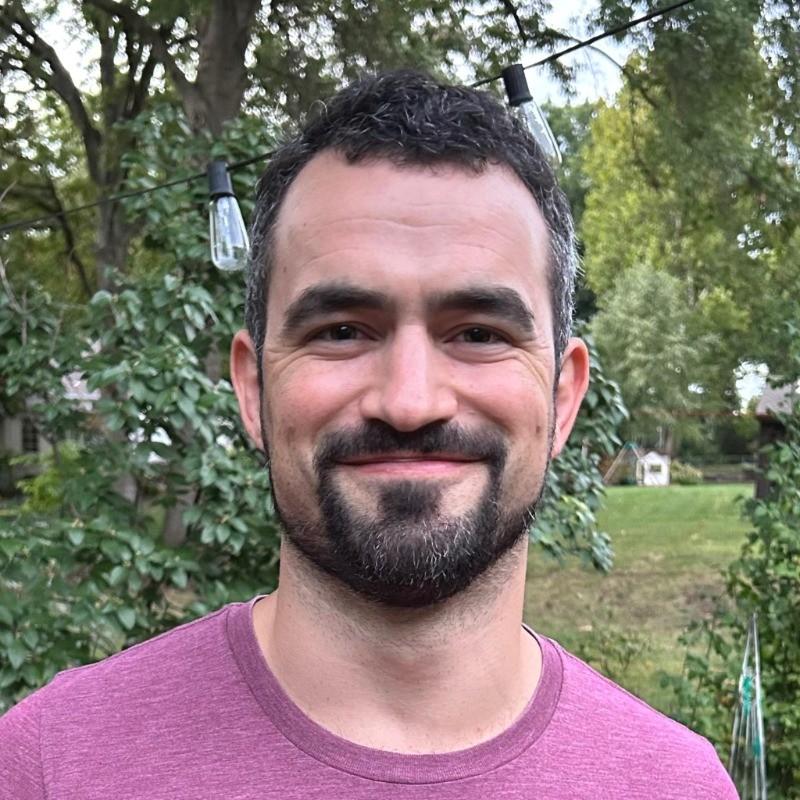
Roger Abbott founded Pure Kopi Luwak in 2018 after a trip through the volcanic highlands of Java, and has bought from the same farming families ever since. He only works with collectors of wild civet coffee, never caged. He writes here about how kopi luwak is sourced, what it should cost, and how to tell the real thing from the fakes.