A 2019 study published in IOP Conference Series: Earth and Environmental Science put two batches of Javanese Arabica through a laboratory comparison: regular green beans came in at 0.70% caffeine by weight, while kopi luwak green beans from the same origin measured 0.51%. After roasting, the gap held — 0.61% for conventional, 0.47% for civet-processed. That 27% reduction in green bean caffeine is the most cited data point in this conversation, and it’s a useful starting place. But it’s not the whole story.
The reality is that caffeine levels in kopi luwak are genuinely variable — and some research points in the opposite direction. A 2023 PMC study analyzing brews from multiple coffee types found that kopi luwak showed higher caffeine levels than several conventional Arabica coffees it was compared against. The apparent contradiction dissolves once you understand what actually happens inside the civet, and why origin, species, and brewing method all matter at least as much as processing.
What the Civet Does to Caffeine
Caffeine in coffee exists as part of a complex alkaloid system alongside trigonelline and xanthine. All three are present in the bean and all three are affected — to varying degrees — by the civet’s digestive process. The PMC metabolomics study from 2023 found that kopi luwak contained 2.85 µg/mg of caffeine, compared to higher values in several conventional Arabica types tested, though the ratios depended heavily on the specific comparison coffee.
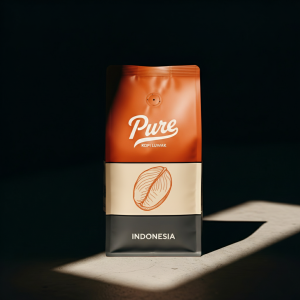
Pure Kopi Luwak
Wild civet coffee from Java. 88.5 SCA cupping score. From $125 for 100g.
The mechanism that reduces caffeine is related to the Gluconobacter bacteria found in civet gut microbiota. These bacteria carry genes encoding enzymes that metabolize caffeine through N-demethylation and xanthine oxidation — essentially breaking some of the caffeine molecule down during the 12-to-24-hour transit time. This isn’t the dominant transformation happening inside the civet’s digestive tract, but it’s a real and measurable one. The same bacterial activity that degrades caffeine also modifies amino acids and breaks down structural polysaccharides in the bean’s outer layers, which has cascading effects on flavor development during roasting.
For a deeper look at what else happens during this biological processing, the civet digestion process guide covers the full chemistry of the gut transformation.
Try the coffee this article is about
Wild-sourced from Java, 88.5 SCA cupping score, free US shipping. From $125 for 100g.
Shop Pure Kopi Luwak →Why the Numbers Don’t Tell a Simple Story
Most caffeine comparisons between kopi luwak and regular coffee suffer from the same methodological problem: they’re comparing different beans. If you take a Javanese Arabica, run it through a civet, and compare it to a baseline of the same unprocessed beans, you’ll likely see a reduction. But market comparisons often pit kopi luwak against whatever Arabica is handy — different farm, different altitude, different harvest year — and the starting caffeine content of Arabica varies widely by itself, from roughly 0.8% to 1.4% of dry bean weight depending on cultivar, elevation, and soil.
Robusta adds more complexity. Robusta beans contain approximately twice the caffeine of Arabica — around 2.2% vs 1.2% — and some kopi luwak on the market is produced from Robusta cherries, particularly in mass-market or cage-farmed operations. If you’re comparing authentic wild Javanese Arabica kopi luwak against a Robusta-base commercial coffee, the luwak will look dramatically lower in caffeine. That comparison says more about the species difference than about the civet processing.
Roast level further complicates things. While caffeine is relatively heat-stable — it doesn’t degrade dramatically during roasting — darker roasts produce a lighter bean by weight due to moisture and CO₂ loss. When you measure caffeine by volume (a typical scoop), a dark roast actually contains slightly less caffeine per gram because the bean is physically lighter. Most kopi luwak is medium-roasted to preserve its enzymatic nuances, which means it’s already in a range where caffeine concentration per gram is fairly high relative to darker roasts.
The Practical Caffeine Picture
A reasonable estimate for a well-prepared cup of wild, Arabica-base kopi luwak brewed at standard ratio: somewhere between 60 and 90 milligrams of caffeine per 8-ounce cup. That puts it toward the lower-to-mid range of the Arabica spectrum, where a typical drip Arabica might hit 80 to 120 milligrams. Espresso is a different calculation entirely — caffeine per ounce is higher, but the serving size is small, so a 1-ounce kopi luwak shot likely contains 50 to 70 milligrams.
These are estimates, not guarantees. If you’re managing caffeine intake for health reasons, treat kopi luwak the same way you’d treat any single-origin Arabica: moderate, not negligible. The civet’s processing introduces a slight downward effect on caffeine in most cases, but the difference isn’t large enough to treat kopi luwak as a low-caffeine coffee in any clinical sense.
What Kopi Luwak Is Actually Exceptional At
The caffeine question is often the wrong question. Caffeine content is not what distinguishes kopi luwak from other coffees — its taste profile is. The civet’s enzymatic processing reduces bitterness by breaking down bitter proteins, modifies the acid composition of the bean (resulting in notably lower malic and citric acid content), and produces the characteristic smooth, full-bodied cup that drives its reputation. Those changes happen to the flavor compounds in the bean, not primarily to the caffeine.
The research that tends to catch people’s attention is about what the civet does to everything else in the bean — the proteins, the polysaccharides, the volatile compounds that become aroma precursors during roasting. Caffeine rides along as a passenger in that transformation, slightly reduced in many cases, but not the main event. If you’re buying genuine wild-sourced kopi luwak, the caffeine reduction is a minor footnote to a much more interesting chemistry story.
For those interested in comparing kopi luwak to other rare coffees, the kopi luwak vs regular coffee comparison covers where the meaningful differences actually lie.
Pure Kopi Luwak
Wild civet coffee from Java. 88.5 SCA cupping score. From $125 for 100g.

Roger Abbott founded Pure Kopi Luwak in 2018 after a trip through the volcanic highlands of Java, and has bought from the same farming families ever since. He only works with collectors of wild civet coffee, never caged. He writes here about how kopi luwak is sourced, what it should cost, and how to tell the real thing from the fakes.