Peter Schlumbohm designed the Chemex in 1941, sketching it on a napkin in New York City. Today it sits in MoMA’s permanent collection alongside the Jeep and the ball-point pen — objects defined by their absolute rightness of form. The same qualities that made the Chemex a design icon also make it one of the most revealing brewing methods for rare coffee. Nothing hides in a Chemex.
For kopi luwak specifically, that transparency is an asset. The enzymatic changes that occur during civet digestion — documented in peer-reviewed research published in Chemistry World, showing elevated citric and malic acid profiles distinct from conventionally processed beans — express themselves with unusual clarity in a Chemex. You taste the transformation directly, without the clouding effect of oils or fine particles.
Why Chemex Works for Kopi Luwak
The Chemex filter is approximately 20 to 30 percent thicker than standard paper filters, a design choice that significantly slows the flow of water through the coffee bed and removes oils and suspended solids that other pour-over methods leave behind. For most coffees, this produces a clean, bright cup. For kopi luwak, which already has reduced bitterness due to protein breakdown during civet digestion, the filtration amplifies the cleaner qualities while preserving the complex mid-palate sweetness.
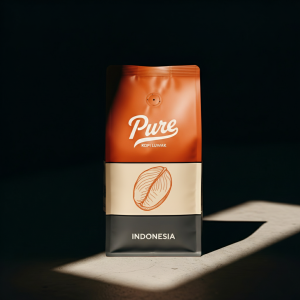
Pure Kopi Luwak
Wild-sourced. Organic. Arabica. From $99.
This matters because kopi luwak’s most prized characteristic — its smooth, almost syrupy finish — can easily get lost in brewing methods that introduce competing flavors. The Chemex’s paper filter eliminates interference. What you get in the cup reflects the bean directly.
The slow extraction also benefits kopi luwak’s modified bean density. Research on civet-processed coffee has noted structural changes in the endosperm — the result of extended enzymatic contact during digestion — that affect extraction kinetics. A longer contact time, as the Chemex’s thick filter enforces, allows complete extraction of flavor compounds without the rushed extraction profile of faster methods.
Equipment
Use a 6-cup Chemex for single or double servings — the wider carafe surface gives you better control over pour distribution than a smaller vessel. Genuine Chemex bonded filters (the square or folded type, not generic alternatives) are non-negotiable; third-party filters alter extraction characteristics in ways that change the cup. A gooseneck kettle with temperature control, a digital scale accurate to one gram, and a burr grinder complete the setup.
Water quality matters more in Chemex brewing than in immersion methods. Target water with total dissolved solids between 150 and 250 ppm — soft enough to extract cleanly, mineralized enough to carry flavor. Most bottled mineral waters fall in this range; heavily chlorinated tap water should be filtered.
Grind
Grind medium-coarse — slightly finer than the French press setting but coarser than standard drip. The particle size should resemble coarse kosher salt. Because kopi luwak beans have undergone structural modification during civet processing, they may extract slightly faster than conventionally processed beans at the same grind setting. Start with your standard medium-coarse Chemex setting and adjust based on pour time: if the total brew runs under three and a half minutes, go slightly coarser; if it drags past five minutes, go finer.
Grind immediately before brewing. Kopi luwak costs more per gram than almost any coffee you’ll brew, and the volatile compounds responsible for its distinctive aroma degrade within minutes of grinding. Pre-ground beans are a waste of what makes the coffee special.
Ratio
Use 1:15 — one gram of coffee to fifteen grams of water. For a single large cup, that’s 25 grams of coffee to 375 grams of water. For a double serving, 40 grams to 600 grams. These ratios produce a concentrated, satisfying cup that showcases kopi luwak’s body without pushing into extraction imbalance. If you prefer something lighter, move toward 1:16; if you want a more intense, espresso-forward character, try 1:14.
Step-by-Step Brew
Heat water to 200°F (93°C) — just off a rolling boil, or about thirty seconds after removing from heat if you lack a thermometer. Fold the Chemex filter into a cone with the three-layered side facing the spout, and rinse it thoroughly with hot water. This eliminates paper taste and preheats the vessel. Discard the rinse water.
Add your ground kopi luwak. Start the bloom: pour 40 to 50 grams of water over the grounds in a slow spiral, saturating all the coffee. Wait 45 seconds. This allows carbon dioxide to degas — the bubbling you’ll see is CO2 escaping from the freshly ground coffee. Skipping the bloom leads to channeling and uneven extraction.
After the bloom, pour in slow, controlled spirals, keeping the water level consistent rather than letting it drain between additions. Aim for the full water weight by the three-and-a-half to four-minute mark. Total brew time, including the bloom, should fall between four and five minutes.
If the brew runs too fast, grind finer or pour more slowly. If grounds sit wet at the top without draining, go coarser. Each bag of beans will behave slightly differently depending on roast level and age, so treat the first brew as calibration.
What to Expect
A well-brewed Chemex kopi luwak will be exceptionally clear in the cup — often visibly transparent in a way that immersion-brewed coffee is not. The aroma will be complex, with clean fruity and earthy notes that reflect the bean’s processing. The palate should be smooth with low perceived acidity, a characteristic that research has linked to the altered acid profiles of civet-processed beans. The finish typically lingers longer than comparable specialty coffees.
Drink it without milk or sugar, at least the first time. You’re paying for a specific sensory experience that dairy fat and sweeteners will obscure. If you want to explore authentic wild kopi luwak in a Chemex, start with a medium roast — it preserves more of the enzymatic complexity than dark roasts, which tend to homogenize flavor profiles across any origin.
For context on what distinguishes kopi luwak from other pour-over candidates, read our comparison of the kopi luwak taste profile versus regular arabica. And if you’re choosing between pour-over methods, our guide to the French press approach covers the opposite end of the extraction spectrum — immersed, oil-rich, and equally rewarding in different ways.
Pure Kopi Luwak
Wild-sourced. Organic. Arabica. From $99.