The retail price of authentic wild kopi luwak — $100 to $150 per 100 grams in most markets — is not a number that emerged from a marketing meeting. It is the output of a cost structure with several distinct layers, each of which adds expense that cannot be engineered away. Here is where the money actually goes.
Raw Material Collection: The Most Expensive Layer
Collection is where most of kopi luwak’s cost originates. Wild Asian palm civets in Java and Sumatra cannot be directed, scheduled, or concentrated. An experienced collector working the plantation edges at dawn might spend three to four hours searching a familiar area and return with 200 to 400 grams of raw droppings. Some mornings yield nothing useful. The labor cost per kilogram of raw material collected — accounting for wages, transportation to remote collection areas, and the significant proportion of mornings that produce subminimal yields — is substantial relative to the finished product volume.
The yield math compounds this: it takes approximately 5 to 10 kilograms of raw collected material to produce one kilogram of finished dried green beans, once washing losses, defect rejection during hand-sorting, and moisture reduction during drying are accounted for. Industry estimates place collection and initial processing labor at 40 to 50 percent of wholesale production cost for small-scale Javanese producers.
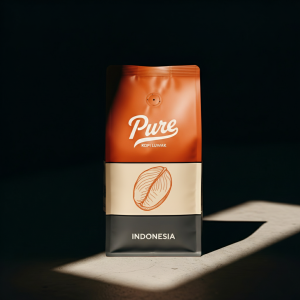
Pure Kopi Luwak
Wild civet coffee from Java. 88.5 SCA cupping score. From $125 for 100g.
Multi-Stage Cleaning and Washing
Cleaning is not a single wash — it is a sequential protocol requiring temperature-controlled water (20 to 25°C), multiple wash cycles with progressively clean water, skilled manual bean extraction and inspection, and potentially enzymatic treatment to remove surface biological residue. The facility infrastructure required — clean water access, drainage, protective equipment, inspection tables — and the skilled labor to operate it correctly add another 15 to 20 percent to per-kilogram production cost.
Shortcutting the cleaning protocol is where low-quality producers save money and where the safety and quality gap with premium producers originates. The cleaning cost is not discretionary; it is what makes the product legitimate.
Drying Infrastructure and Time
Traditional sun-drying on raised bamboo platforms takes 7 to 14 days, with workers manually raking beans every 2 to 3 hours during daylight. The time cost — involving ongoing labor, facility space, and weather-dependent scheduling — is real. Mechanical drying systems that could reduce this to 24 to 48 hours represent capital costs that small producers cannot typically justify, and some evidence suggests that slow sun-drying produces better flavor outcomes by allowing gradual concentration of volatile compounds without thermal damage. Whether producers use traditional or hybrid drying methods, this stage represents 8 to 12 percent of production cost.
Hand-Sorting and Quality Control
After drying, beans are sorted by hand — examining each one for cracks, discoloration, irregular fermentation marks, and size abnormalities. A thorough sort of one kilogram of dried beans takes two to four hours. Defect rejection at this stage removes another 8 to 15 percent of the dried bean weight. The remaining Grade 1 beans are sized using mesh screens to separate large uniform beans (commanding the highest prices) from smaller secondary-grade material. Sorting labor adds 10 to 15 percent to production cost.
Authentication and Documentation
Because fraud is endemic in the kopi luwak category — with industry estimates suggesting 70 to 80 percent of globally sold “kopi luwak” is adulterated or counterfeit — reputable producers invest in authentication. Laboratory testing to verify wild sourcing and rule out conventional bean substitution adds 5 to 8 percent to per-kilogram costs. Traceability documentation, certifications, and the ongoing compliance infrastructure needed to maintain them add another percentage point or two.
Small-Batch Roasting
Kopi luwak’s value is best preserved through careful small-batch roasting. Large industrial roasters designed for tons per hour are inappropriate for a coffee where each kilogram represents days of skilled labor — the precision and attention required for optimal results necessitates artisan roasting. Small-batch roasting costs per kilogram run 4 to 6 times higher than industrial roasting on a per-unit basis.
International Logistics
Shipping authenticated kopi luwak from Indonesian mountain regions to international markets involves CITES documentation for animal-product exports, export permits, quality testing at Indonesian customs, air freight (the per-kilogram value makes air economically justified over ocean shipping), import duties, and final-mile distribution. Logistics typically account for 12 to 18 percent of retail pricing, with air freight alone representing the largest component.
The total accumulation — collection labor, cleaning infrastructure, drying, sorting, authentication, roasting, and logistics — produces a per-kilogram cost of $800 to $1,200 before international wholesale margins or retail markup. There is no step in this chain that can be eliminated without compromising what the product is. For context on what each stage involves in practice, the guides on the cleaning process and bean sorting cover the operations in detail.
Pure Kopi Luwak
Wild civet coffee from Java. 88.5 SCA cupping score. From $125 for 100g.

Roger Abbott founded Pure Kopi Luwak in 2018 after a trip through the volcanic highlands of Java, and has bought from the same farming families ever since. He only works with collectors of wild civet coffee, never caged. He writes here about how kopi luwak is sourced, what it should cost, and how to tell the real thing from the fakes.