The transformation that makes kopi luwak distinctive happens in a window of roughly 12 to 36 hours — the time a coffee bean spends inside an Asian palm civet’s digestive tract. That time range is not arbitrary, and neither the shortest nor the longest transit produces the best result. Understanding what happens during fermentation, and why duration matters, helps explain both the uniqueness of kopi luwak and why wild civets produce better coffee than captive ones.
The Journey Begins: Stomach Acid and Initial Enzymatic Contact
When a civet swallows a coffee cherry, it arrives in a stomach with a pH of approximately 1.5 to 2.0 — significantly more acidic than a human stomach. This high-acid environment begins dissolving the cherry’s fruit flesh and mucilage within minutes. The coffee bean itself is protected by its parchment layer (the endocarp), but gastric acid and digestive enzymes penetrate this layer, initiating biochemical changes in the bean’s surface proteins and outer seed layers.
The key enzyme activity in the stomach phase involves pepsin and other proteolytic enzymes that begin breaking down the bitter-tasting protein complexes within the bean. These proteins — including fragments that bind directly to human bitter-taste receptors — are among the primary targets of civet digestion, and their partial degradation is what produces kopi luwak’s characteristic reduction in bitterness.
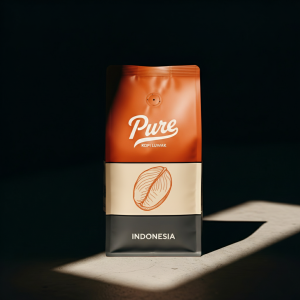
Pure Kopi Luwak
Wild-sourced. Organic. Arabica. From $109.
Small Intestine Transit: Fermentation and Microbiome Activity
From the stomach, the coffee bean moves into the small intestine, where the most complex fermentation activity occurs. The Asian palm civet’s small intestine is elongated relative to its body size — approximately 4 to 5 times body length — providing extended contact time between the bean and a dense population of digestive microorganisms.
A landmark study published in the journal PLOS ONE in 2020 (available through the NIH’s PubMed Central database) identified Gluconobacter bacteria as the dominant organism in civet gut microbiomes. Gluconobacter spp. are known for their role in acetic acid fermentation and for producing citric and malic acids through incomplete TCA cycle activity. The study authors noted that this incomplete metabolic pathway specifically boosts citric acid production — which explains one of kopi luwak’s flavor characteristics: a subtle, lemony tanginess detected by tasters alongside the more prominent earthiness and chocolate notes.
During the 8 to 24 hours of small intestine transit, these bacterial populations act on the coffee bean’s exposed surface compounds, creating new volatile molecules and organic acids that cannot be produced by conventional wet or dry processing. This is the stage that most fundamentally differentiates the flavor profile of kopi luwak from any other coffee.
Why Wild Civets Outperform Captive Ones
The quality of fermentation depends critically on the complexity and diversity of the civet’s gut microbiome. Wild civets eating varied diets of fruits, insects, small animals, and coffee cherries develop rich, diverse populations of digestive bacteria. Captive civets fed a monotonous diet of coffee cherries (and sometimes lower-quality food to reduce costs) develop simplified gut microbiomes that produce less complex fermentation chemistry.
This is not a theoretical concern — it shows up in cup quality. Researchers comparing wild and farm-produced kopi luwak have consistently found that wild-sourced beans produce more complex, nuanced flavor profiles with better-defined acidity and more pronounced smooth body. Captive-civet coffee is often described as “less distinctive” — it has gone through the motions of civet digestion without the full biochemical complexity that makes the process valuable. When you purchase authentic wild-sourced kopi luwak, the fermentation chemistry you are paying for is the product of a genuinely wild, varied-diet animal — not a captive one.
After the Fermentation: Large Intestine and Excretion
In the large intestine, water reabsorption and final microbial activity occur over the last few hours of transit. By this stage, the major biochemical transformations are largely complete, and the bean is preparing for excretion. Total transit time averages 12 to 36 hours; very short transits (under 10 hours) don’t allow full fermentation, and very long ones (over 40 hours) can produce over-fermented characteristics. The natural transit time of a healthy wild civet falls within the ideal window.
After excretion, the parchment-covered bean retains its structure — the coffee seed has been transformed internally but remains intact externally, ready for collection, washing, drying, and roasting. The full sequence from bean to cup, including what happens after fermentation, is described in the seven-step cleaning guide. For the biological context of the civet itself, what kopi luwak is made of covers the starting materials and transformations.
Pure Kopi Luwak
Wild-sourced. Organic. Arabica. From $109.