Coffee researchers at the University of Nantes published findings in 2007 identifying citric acid and malic acid concentrations as chemical markers that distinguish civet-processed coffee from conventional beans — the first scientific confirmation that kopi luwak is chemically distinct from regular arabica, not just differently branded. A 2023 metabolite profiling study in PMC identified a broader set of markers: altered caffeine-to-trigonelline ratios, modified protein-derived compounds, and a suite of organic acids and fatty acids that differ systematically between wild civet coffee and conventionally processed alternatives. The flavor differences that kopi luwak drinkers describe aren’t marketing; they have a molecular basis.
Here is what those differences actually taste like — and why they occur.
Acidity: Reduced but Transformed
Regular arabica is characterized by its acidity. A well-grown, washed Kenyan coffee will show bright, wine-like malic acidity. A Colombian will lean toward clean citric brightness. A natural Ethiopian Yirgacheffe will add fruity tartness. Acidity in coffee is not a flaw — in specialty circles it’s often the most prized characteristic, and perceived brightness is a primary quality indicator.
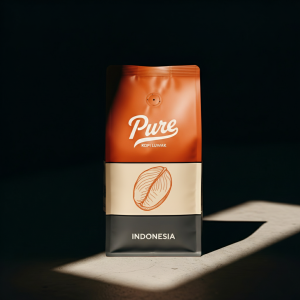
Pure Kopi Luwak
Wild-sourced. Organic. Arabica. From $100.
Kopi luwak’s acid profile is different from conventional arabica in a specific way: it shows elevated citric and malic acid concentrations relative to the bitter chlorogenic acids that dominate regular coffee. The effect on the palate is not simply less acidic — it’s more complex than that. The coffee feels smooth and rounded rather than bright and cutting, but there’s still acidity present; it’s just integrated differently, softened by the presence of other compounds and the absence of the harsh chlorogenic fraction. Drinkers who find specialty coffee’s brightness too aggressive often find kopi luwak immediately accessible.
Bitterness: Protein Breakdown Changes the Baseline
The dominant bitters in coffee come from caffeine and from the degradation products of chlorogenic acids during roasting — compounds like phenylindanes that build with darker roast levels. Kopi luwak’s reduced bitterness comes from a different mechanism: digestive enzymes during civet processing break down storage proteins in the bean into shorter peptide chains and free amino acids. These proteins, in conventional processing, contribute to bitter and astringent compounds during roasting. When they’re already broken down before roasting, the precursors to bitterness are reduced.
The practical result: kopi luwak tastes smooth in a way that doesn’t require milk or sugar to be enjoyable. Regular arabica — even excellent specialty grade — often benefits from some intervention for palates sensitive to bitterness. Kopi luwak almost never does.
Body and Mouthfeel: The Enzymatic Texture
The full-body, almost syrupy texture that kopi luwak is known for also traces to the protein changes during digestion. Modified bean structure, altered cellular density from enzymatic activity, and the concentration of lipid compounds that persist through the civet’s digestive tract all contribute to a mouthfeel that feels richer and more viscous than comparably roasted regular arabica. This effect is most noticeable in immersion brewing methods like French press, where oils remain in the cup, but it’s perceptible in pour-over methods as well.
Regular arabica body varies significantly by origin and processing: Ethiopian naturals can be quite full-bodied; washed Kenyan or Colombian coffees tend toward medium-to-light body. But even the fullest-bodied conventional arabica rarely achieves the specific texture of well-prepared kopi luwak, which results from modifications to the bean at a structural level that conventional processing cannot replicate.
Flavor Complexity and the Finish
The secondary metabolites produced during civet fermentation — compounds generated by gut microbiota acting on the bean over 24 to 72 hours of transit — contribute flavor dimensions that don’t appear in conventionally processed coffee. The earthy, mushroom-adjacent notes sometimes described in kopi luwak are partly these fermentation by-products. The clean sweetness at the mid-palate reflects the elevated malic acid fractions and the reduced bitterness that together create the impression of natural sweetness even without added sugar.
The finish of well-prepared kopi luwak typically persists longer than comparable conventional arabica. This is partly the texture effect — the modified proteins coat the palate more persistently — and partly the complexity of the aromatic compounds, which volatilize at different rates and extend the sensory experience beyond the swallow.
What Kopi Luwak Doesn’t Taste Like
It does not taste like what the civet’s digestive system might lead you to expect. The thorough washing and careful processing of authentic kopi luwak removes every trace of the collection origin. There is no gaminess, no barnyard quality, no unpleasant fermentation note in genuinely well-produced wild kopi luwak. Unpleasant fermentation notes in kopi luwak are a processing defect — usually the result of contaminated collection or inadequate washing — not an intrinsic quality of civet-processed beans.
Comparing kopi luwak to regular arabica in a direct side-by-side tasting reveals the differences most clearly. Brew both using the same method, same roast level, same ratio. The kopi luwak will be noticeably smoother, more integrated, and slightly fuller in body. The regular arabica may show more brightness, more variety-specific flavor expression, and more acidity. Which you prefer is a matter of taste; that they’re genuinely different is not a matter of opinion.
For the brewing method that best expresses kopi luwak’s texture advantages, see our French press guide. For the full breakdown of what determines authenticity and why the chemistry differs between wild and farm-raised, see our guide to wild versus caged kopi luwak. And if you want to experience the flavor profile directly, our wild kopi luwak from Java highland is sourced with documented provenance.
Pure Kopi Luwak
Wild-sourced. Organic. Arabica. From $100.