In the cloud forests above Quetzaltenango, Guatemala, coffee farmers have discovered something that has happened with remarkable consistency across the world’s premium coffee regions: wild animals, given access to ripe coffee cherries and left undisturbed, sometimes produce a better cup than anything the farmers could achieve alone. In Guatemala’s case, the animal is Ateles geoffroyi — the black-handed spider monkey — and the process is not digestion but something stranger: partial chewing and expectoration, which applies salivary enzymes to the bean for several minutes before the monkey spits out the harder inner seed.
The result is one of the most limited and least commercially developed animal-processed coffees in the world.
Guatemala’s Coffee Context
Guatemala is the sixth-largest coffee producer globally, and its Specialty Coffee Association has cultivated a strong reputation for single-origin Arabica from regions including Huehuetenango, Antigua, and the Atitlán basin. The volcanic highlands provide exceptional growing conditions — mineral-rich soil, dramatic diurnal temperature variation, consistent cloud cover that slows cherry development and concentrates sugars. This is the coffee substrate that spider monkeys encounter in the canopy of shade-grown farms.
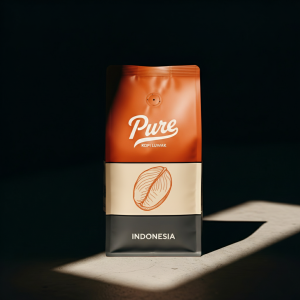
Pure Kopi Luwak
Wild civet coffee from Java. 88.5 SCA cupping score. From $125 for 100g.
The black-handed spider monkey (Ateles geoffroyi) is classified as Endangered on the IUCN Red List, with populations fragmenting as Guatemala’s forests continue to be converted for agriculture and cattle ranching. Their remaining strongholds include the cloud forest corridors along the Sierra de los Cuchumatanes and the Verapaz highlands — areas that overlap with Guatemala’s premium highland coffee production zones. Spider monkeys are highly intelligent, with documented problem-solving abilities and strong social organization, and their feeding behavior in shade-grown coffee farms has been observed for decades by farmers who learned to distinguish their work from ordinary cherry fall.
The Chewing Mechanism
Spider monkeys do not have the digestive transit relationship with coffee beans that civets, elephants, and birds do. Their process is entirely different: they pick a ripe cherry, bite through the outer fruit skin to access the sweet mucilage and pulp, and chew for several minutes. The coffee bean inside the cherry’s parchment layer is too hard and bitter to be of nutritional interest, so the monkey does not swallow it — eventually expectorating the chewed material, including the parchment-covered bean that has now spent time in contact with salivary enzyme secretions.
Monkey saliva contains amylase (which breaks down starches), lipase (which modifies fats), and several protease compounds. The interaction between these salivary enzymes and the outer surface of the coffee bean is brief — typically three to ten minutes — compared to the 12–72 hours of enzymatic exposure in gut-transit processing methods. This shorter exposure creates more subtle flavor modifications than civet or elephant processing: reduced astringency, slightly enhanced sweetness, better-preserved fruit notes, but not the fundamental flavor transformation associated with full digestive processing.
Try the coffee this article is about
Wild-sourced from Java, 88.5 SCA cupping score, free US shipping. From $125 for 100g.
Shop Pure Kopi Luwak →Production Reality
Monkey spit coffee from Guatemala exists in very small quantities and lacks the commercial infrastructure of established animal-processed coffee products. The farms most frequently associated with its collection are in the Huehuetenango and Quiché departments, where spider monkey populations overlap with specialty coffee cultivation. Collection requires workers to follow spider monkey troops through the canopy, identify where expectorated material has fallen, and gather it quickly before contamination occurs.
The practical difficulty is significant. Spider monkeys are arboreal and fast-moving; they do not gather in predictable locations. Expectorated material falls randomly within the canopy and undergrowth below. Annual collection volumes are typically measured in tens of kilograms — not hundreds. This extreme scarcity means that monkey-processed Guatemalan coffee almost never appears at retail, surfacing occasionally at specialty coffee auctions or through direct relationships with the handful of farms that attempt systematic collection.
Flavor Profile
Tasters who have evaluated monkey-processed Guatemalan coffee describe enhanced brightness and fruit expressiveness over conventionally processed beans from the same farm, with slightly reduced astringency and a cleaner finish. The Guatemalan Arabica terroir — typically showing dark chocolate, stone fruit, and citrus characteristics — remains dominant; the monkey processing provides refinement rather than transformation. This contrasts with kopi luwak’s more dramatic flavor shift, where the civet’s longer digestive processing substantially changes the coffee’s character.
Brewing recommendations from the few producers who have worked seriously with monkey-processed Guatemalan coffee favor light to medium roast profiles and precision brew methods — pour-over or Chemex — that allow the subtle processing effects and terroir character to express fully. These are coffees for attentive drinkers, not for high-extraction espresso contexts where the delicate modifications would be overwhelmed.
Ethical Considerations
Spider monkeys are wild and endangered; their involvement in coffee production is entirely voluntary and undirected. No monkey is captured, confined, or fed. The interaction is incidental to their natural foraging behavior in shade-grown coffee environments. Unlike some commercial civet operations where animal welfare is a serious concern, monkey spit coffee raises no captivity or cruelty issues — it can only be produced where wild spider monkeys are present and their habitat is intact.
This makes the ecological health of Guatemala’s cloud forest corridors directly relevant to the future of this product. If spider monkey populations continue declining, the coffee disappears with them. The conservation and agricultural stories are inseparable. For coffee buyers who value animal-processed alternatives and want to understand the full landscape of what exists, the complete guide to animal-processed coffees provides comparison context — and shows where monkey spit coffee fits relative to more established products like wild kopi luwak from Indonesia.
Pure Kopi Luwak
Wild civet coffee from Java. 88.5 SCA cupping score. From $125 for 100g.

Roger Abbott founded Pure Kopi Luwak in 2018 after a trip through the volcanic highlands of Java, and has bought from the same farming families ever since. He only works with collectors of wild civet coffee, never caged. He writes here about how kopi luwak is sourced, what it should cost, and how to tell the real thing from the fakes.