The Hario V60 was born from a 60-degree angle. That’s literally where the name comes from — V for the conical shape, 60 for the precise slope of the dripper’s walls. When Hario introduced it in 2004, the Japanese glassware company had been making heat-resistant glass since 1921, and this particular geometry was engineered to do one thing unusually well: let the brewer control extraction with a level of precision that no drip machine could match. By 2008, specialty coffee shops in the United States had started tracking it down. Within a decade it had become the default brewing method at serious coffee bars on every continent.
Pour over is not a method for people who want their coffee to happen automatically. It rewards attention — to ratio, to pour rate, to the temperature of the water, to the behavior of the grounds during the bloom phase. For exceptional coffee, that attention is worth it. The method strips out the variables that obscure what makes a bean distinctive, and lets the coffee speak clearly.
Why Pour Over Reveals What Other Methods Conceal
Every brewing method makes tradeoffs. French press keeps oils in the cup, adding body but also introducing compounds that can increase LDL cholesterol with regular consumption. Espresso uses pressure to extract quickly and intensely, which builds complexity but can overwhelm delicate origin notes. Automatic drip machines are convenient but cycle water through at inconsistent temperatures and flow rates, which means you never fully control the extraction.
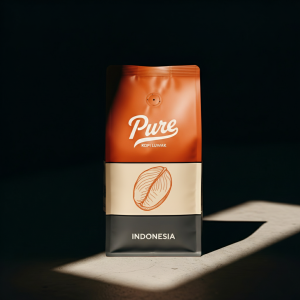
Pure Kopi Luwak
Wild civet coffee from Java. 88.5 SCA cupping score. From $125 for 100g.
Pour over uses a paper filter and gravity, and that combination has a specific effect on what ends up in the cup. The paper catches the lipid-bearing fines that cloud French press coffee, producing a clean, transparent liquid where acidity, sweetness, and individual flavor notes — the jasmine, the stone fruit, the brightness of high-elevation Arabica — come through without interference. For specialty-grade beans, including wild-sourced kopi luwak, this clarity is an advantage. The filter removes nothing that the bean’s terroir and processing put there; it only removes what would obscure those qualities.
The Science of the Bloom
Before pouring begins in earnest, freshly roasted coffee needs a bloom. Pour a small amount of water — about twice the weight of your coffee — over the grounds and wait 30 to 45 seconds. The grounds will bubble and swell visibly. What’s happening is degassing: carbon dioxide trapped inside the bean during roasting escapes when it contacts hot water. If you skip the bloom and pour directly, that CO2 creates turbulence that pushes water around the coffee bed unevenly, and the gases themselves form a barrier that inhibits extraction. The bloom releases them first, so the main pour can extract smoothly and evenly.
The older the roast, the less dramatic the bloom. A bag roasted two weeks ago will show a modest rise. Coffee roasted within the past five days will nearly overflow the dripper. This is one of the reasons freshness matters: the same bean, under the same pour technique, will extract differently at different points in its post-roast life. Most specialty roasters recommend brewing between 5 and 21 days after the roast date, when the bean has off-gassed its most volatile CO2 but before oxidation begins softening the aromatics.
Try the coffee this article is about
Wild-sourced from Java, 88.5 SCA cupping score, free US shipping. From $125 for 100g.
Shop Pure Kopi Luwak →Water Temperature and What It Actually Does
The SCA recommends brewing water between 90°C and 96°C (195°F to 205°F). Most pour over guides land at 93°C as a middle-ground default. The logic: water below 90°C doesn’t have enough energy to dissolve the acids, sugars, and aromatic compounds that make up balanced extraction. Water above 96°C starts pulling the bitter phenolic compounds that develop at the end of extraction before the desirable compounds have fully dissolved.
For lighter roasts — which tend to be denser and have more preserved sugars from the green bean — water at the higher end of the range (around 94°C to 96°C) extracts more evenly. Dark roasts have more porous structure from the longer roasting process, so they can extract well at lower temperatures, around 90°C to 92°C. A 2020 UC Davis study found that if total dissolved solids and extraction yield were held constant, trained tasters couldn’t reliably distinguish between brews made at 87°C, 90°C, and 93°C — which suggests that temperature matters primarily through its effect on extraction rate, not as an independent flavor variable.
Ratio, Flow Rate, and Technique
The standard starting ratio for pour over is 1:16 — one gram of coffee for every 16 grams of water. For 20 grams of coffee, that’s 320 grams of water, yielding a cup that sits at the brighter end of the SCA’s preferred extraction range. If the coffee tastes hollow or thin, use 1:15. If it tastes sharp or overwhelming, stretch to 1:17 and slow the pour to give the water more contact time.
The gooseneck kettle matters more than it looks like it should. A wide-mouthed kettle pours too fast and too chaotically, creating channels through the coffee bed where water finds the path of least resistance and bypasses large sections of grounds. A gooseneck delivers a thin, controlled stream that you can move in slow spirals from the outside of the bed toward the center, keeping the entire surface wet and extracting evenly. This is especially important for lighter roasted single-origin coffees like kopi luwak, where uneven extraction shows up clearly in the cup — you’ll taste astringency on one side and brightness on the other rather than the complex unity the bean is capable of.
Grinders and Why They’re the First Variable
No technique corrects for a bad grind. A blade grinder doesn’t grind — it shatters, creating a chaotic mix of powder and boulders. The fine particles over-extract immediately and go bitter; the large chunks under-extract and stay sour. The result is a cup that’s simultaneously too bitter and too sour, not because of anything wrong with the brewing technique, but because the particle distribution made even extraction physically impossible.
Burr grinders use two precisely engineered surfaces to cut coffee to a consistent size. High-quality burr grinders produce 75 to 85 percent of particles within the target size range. That uniformity is what allows extraction to progress evenly, so the water pulls the right compounds in the right order. For pour over, a medium-fine grind — roughly the consistency of coarse beach sand — lets water flow through in the 3 to 4 minute total brew time that produces balanced extraction. Grind finer and you’ll slow the flow and risk over-extraction. Grind coarser and the water rushes through without picking up enough.
Matching Method to Bean
Pour over works with any high-quality coffee, but it earns its place most clearly with single-origin Arabica — the beans where origin character is the point. High-elevation Javanese coffees with their clean, complex profiles, Ethiopian naturals with berry and floral aromatics, Central American washed coffees with their precise citrus acidity — pour over reveals these qualities without adding variables. For lower-quality beans, the clarity becomes a liability. Flaws that espresso’s intensity or French press’s body can partially mask become obvious in a pour over.
That relationship between method and material is the real argument for learning pour over properly. The technique isn’t about ritual for its own sake. It’s about removing every obstacle between an exceptional bean and the person drinking it — and finding out exactly what the farmers, processors, and roasters actually did.
Pure Kopi Luwak
Wild civet coffee from Java. 88.5 SCA cupping score. From $125 for 100g.

Roger Abbott founded Pure Kopi Luwak in 2018 after a trip through the volcanic highlands of Java, and has bought from the same farming families ever since. He only works with collectors of wild civet coffee, never caged. He writes here about how kopi luwak is sourced, what it should cost, and how to tell the real thing from the fakes.