A 2022 study published in Food Packaging and Shelf Life tested what happens to roasted coffee when it’s transferred from its original bag into consumer containers — glass jars, ceramic canisters, clip-sealed bags, and re-taped foil pouches — and measured oxygen and CO₂ levels over the following weeks. The results were unambiguous: beans transferred into any container not specifically designed for one-way valve storage experienced faster flavor loss than those kept in their original packaging. Re-sealing with tape or clips accelerated the decline. In every tested scenario, oxygen ingress was the primary driver of deterioration.
For kopi luwak, where you’ve paid $125 or more for 100 grams, the stakes of getting storage wrong are different from the stakes of improperly storing a $15 bag of grocery store beans. The same chemistry applies to both, but the ratio of cost to volume means a single storage mistake with kopi luwak can turn a week of exceptional cups into something flat and unremarkable.
The Four Enemies of Coffee Freshness
Roasted coffee has four adversaries: oxygen, light, moisture, and heat. They operate through different mechanisms, but they converge on the same result — degradation of the aromatic compounds that make premium coffee worth its price.
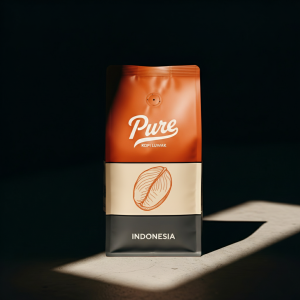
Pure Kopi Luwak
Wild civet coffee from Java. 88.5 SCA cupping score. From $125 for 100g.
Oxygen is the primary threat. Oxidation is the reaction between oxygen molecules and the lipids and aromatic compounds in roasted coffee, and it happens continuously from the moment the beans are roasted. The Maillard reaction products and volatile aromatics responsible for coffee’s complexity are particularly susceptible — they degrade into flat, stale compounds through oxidation at a rate that increases with temperature and surface area. Ground coffee, with its dramatically increased surface area, oxidizes measurably within 15–30 minutes of grinding. Whole beans degrade more slowly but still noticeably over days and weeks.
Light, particularly UV radiation, contributes through photodegradation — UV rays break down the organic compounds in coffee through a separate mechanism from oxidation, accelerating the same loss of aromatic complexity. This is why most quality coffee packaging uses opaque or darkened materials rather than transparent containers.
Moisture is the third enemy. High-humidity environments — including refrigerators that aren’t perfectly sealed, kitchen counters near stovetops, and any storage near dish-washing or coffee-brewing steam — allow water molecules to bind with coffee’s hygroscopic surface, triggering premature extraction of soluble compounds and promoting mold growth in extreme cases. Coffee doesn’t need to get visibly wet to be damaged by moisture — even elevated ambient humidity accelerates staling.
Heat accelerates all three processes simultaneously. A kitchen counter near the stove, a windowsill in direct afternoon sun, or a cabinet above the refrigerator compressor — all of these common storage locations significantly shorten the life of roasted coffee. The ideal storage temperature is cool and stable, not necessarily cold.
Try the coffee this article is about
Wild-sourced from Java, 88.5 SCA cupping score, free US shipping. From $125 for 100g.
Shop Pure Kopi Luwak →The Optimal Storage Container
The best storage for kopi luwak whole beans is the original packaging if it includes a one-way degassing valve and opaque construction — the valve allows CO₂ produced by freshly roasted beans to escape without allowing oxygen in. If the original packaging is a simple heat-sealed foil pouch without a valve, transfer to a purpose-designed coffee storage container.
The container specifications that matter: airtight seal, opaque walls (or UV-blocking material), and no additional flavors or porous materials (never store coffee in wooden or ceramic containers without airtight lids). Stainless steel canisters with silicone-sealed lids and one-way CO₂ exhaust valves represent the current best practice for home storage. They’re inexpensive relative to what you’ve spent on the beans.
The container should be sized for the quantity you have. A 100g kopi luwak purchase in a 1-liter canister means a large air headspace above the beans — even with an airtight lid, that trapped air is available for oxidation. Use a container appropriately sized for the volume of coffee, or place a CO₂-safe insert pad (available from specialty coffee retailers) to fill the headspace.
Should You Freeze Kopi Luwak?
Freezing coffee is a genuinely controversial topic in specialty coffee circles, but the evidence increasingly supports it as a valid preservation strategy when done correctly. The controversy stems from incorrect freezing practice: putting a bag of beans in a standard refrigerator-freezer, opening it repeatedly to scoop out a few beans at a time, and allowing condensation to form on the cold beans when they’re exposed to room-temperature air. This repeatedly introduces the moisture problem that freezing is supposed to prevent.
The correct approach for kopi luwak, given its cost, is portion freezing. Divide your 100g purchase into 10-gram portions immediately upon receiving (use sealed zip-lock freezer bags with air squeezed out, or better, vacuum-seal bags). Freeze all portions. Remove one portion at a time, allow it to come to room temperature in the sealed bag before opening (this prevents condensation forming on cold beans exposed to warm air), and use the entire portion within 3–5 days. Never refreeze.
This approach extends kopi luwak’s peak quality from 2–4 weeks post-roast to potentially 2–3 months, with minimal flavor loss. The research on CO₂ content in frozen versus unfrozen coffee also suggests that frozen coffee retains more CO₂, which correlates with preserved aromatic freshness. For an even broader look at the science behind coffee freshness dating, why roast date matters more than expiration date provides the foundational context.
Grind Timing and Its Impact on Freshness
The most important freshness decision you make with kopi luwak happens not in storage but at brewing time: grind immediately before brewing, not in advance. Whole beans stored correctly retain their character for weeks post-roast. Ground coffee exposed to air begins meaningful degradation within 30–60 minutes.
If you don’t own a burr grinder capable of consistent particle size, it’s worth acquiring one before investing in kopi luwak. The two are paired investments — the beans’ quality only becomes accessible through correct grinding, and their freshness after grinding is measured in minutes. A quality hand grinder capable of consistent particle size at appropriate settings costs less than 50g of authentic kopi luwak and will pay for itself in flavor quality across dozens of brewing sessions.
How Long Does Kopi Luwak Stay Fresh?
Whole bean kopi luwak stored in an airtight, opaque container at cool room temperature (16–20°C) is at peak quality for approximately 2–4 weeks post-roast, and remains entirely acceptable for up to 6–8 weeks. After that, flavor begins to flatten noticeably — not spoilage, but diminishment. The specific notes that make kopi luwak worth its price — the chocolate depth, the caramel sweetness, the earthy bass register — soften and eventually become indistinguishable from a mediocre medium-roast of any origin.
The shelf life guide at how long kopi luwak lasts covers the timeline in more detail, including how different packaging types and storage conditions affect longevity. And when you’re ready to use what you’ve carefully preserved, Pure Kopi Luwak ships in packaging designed to maintain quality from roasting through delivery — the first step in a storage chain that correct home practices extend through to the last cup.
Pure Kopi Luwak
Wild civet coffee from Java. 88.5 SCA cupping score. From $125 for 100g.

Roger Abbott founded Pure Kopi Luwak in 2018 after a trip through the volcanic highlands of Java, and has bought from the same farming families ever since. He only works with collectors of wild civet coffee, never caged. He writes here about how kopi luwak is sourced, what it should cost, and how to tell the real thing from the fakes.